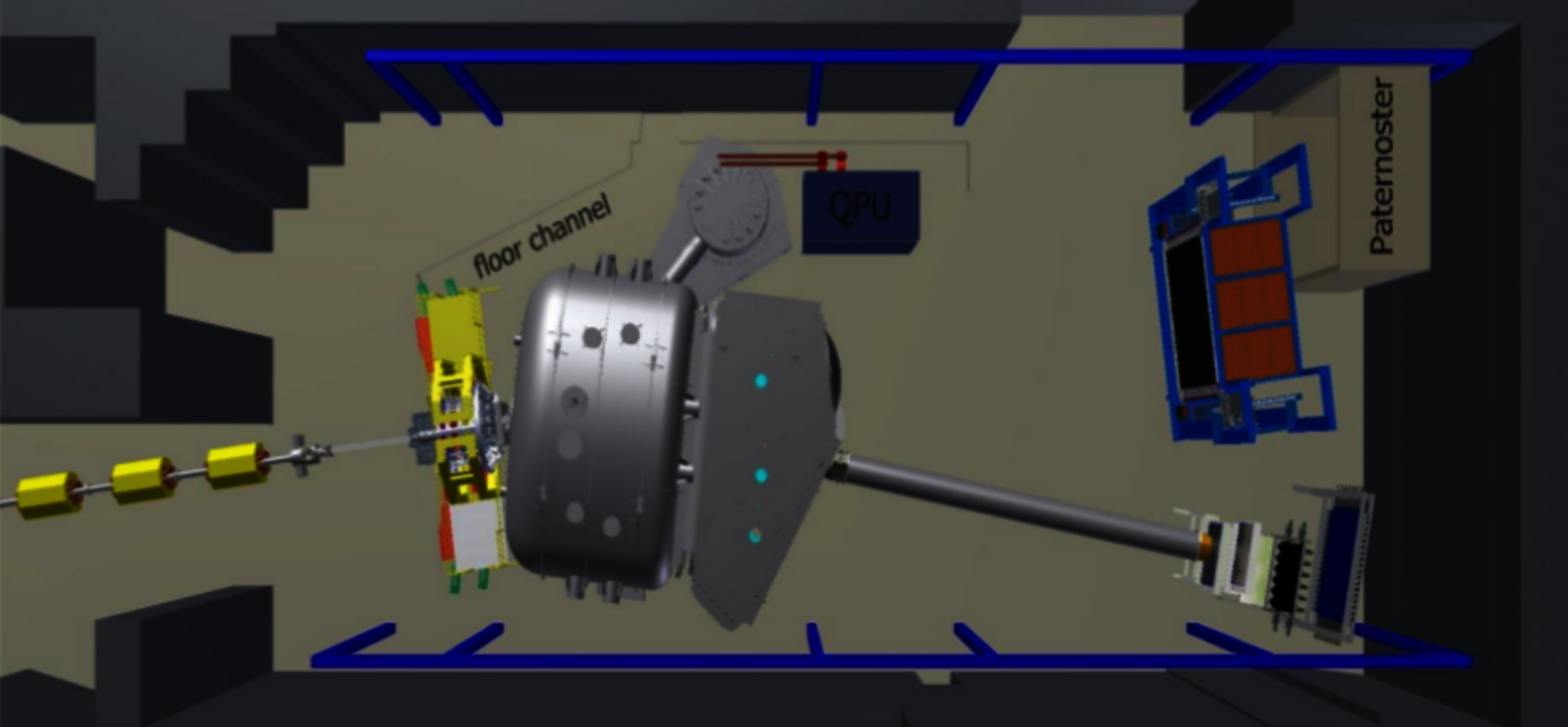
R3B setup in Cave C at GSI
Evolution of the R3B Setup
The R3B experimental setup was designed and developed on the basis of more than 20 years of experience with the LAND/ALADIN setup in Cave C at GSI. Compared to its predecessor, R3B is engineered to deliver significantly increased detection efficiency and resolution while providing high-rate capability and handling nuclei with higher magnetic rigidity.
Using the facilities in Cave C and secondary beams delivered by the FRS, individual components of the setup were rigorously tested. Cave C provided excellent conditions not only for validating subsystems, but also for performing successful physics experiments with the new setup during Phase-0 of FAIR.
Phase-0 Setup Configuration
The standard R3B setup operated in Cave C comprised several key detection layers (see figure below):
- Upstream of the target: Specialized detectors placed before the target for unique identification of incoming radioactive beams.
- Target Area: The target surrounded by the CALIFA detector alongside a prototype of the target-recoil detector.
- Forward Detection: The NeuLAND detector for precise neutron measurement, while heavy-ion fragments were tracked using fiber detectors and the time-of-flight wall TOFD.
Transition to HEC at FAIR
In 2026, the relocation to the High-Energy Cave (HEC) at FAIR commenced, marked by the transfer and installation of the large GLAD vacuum chamber as the first major component.