


Immune reaction upon radiation exposure
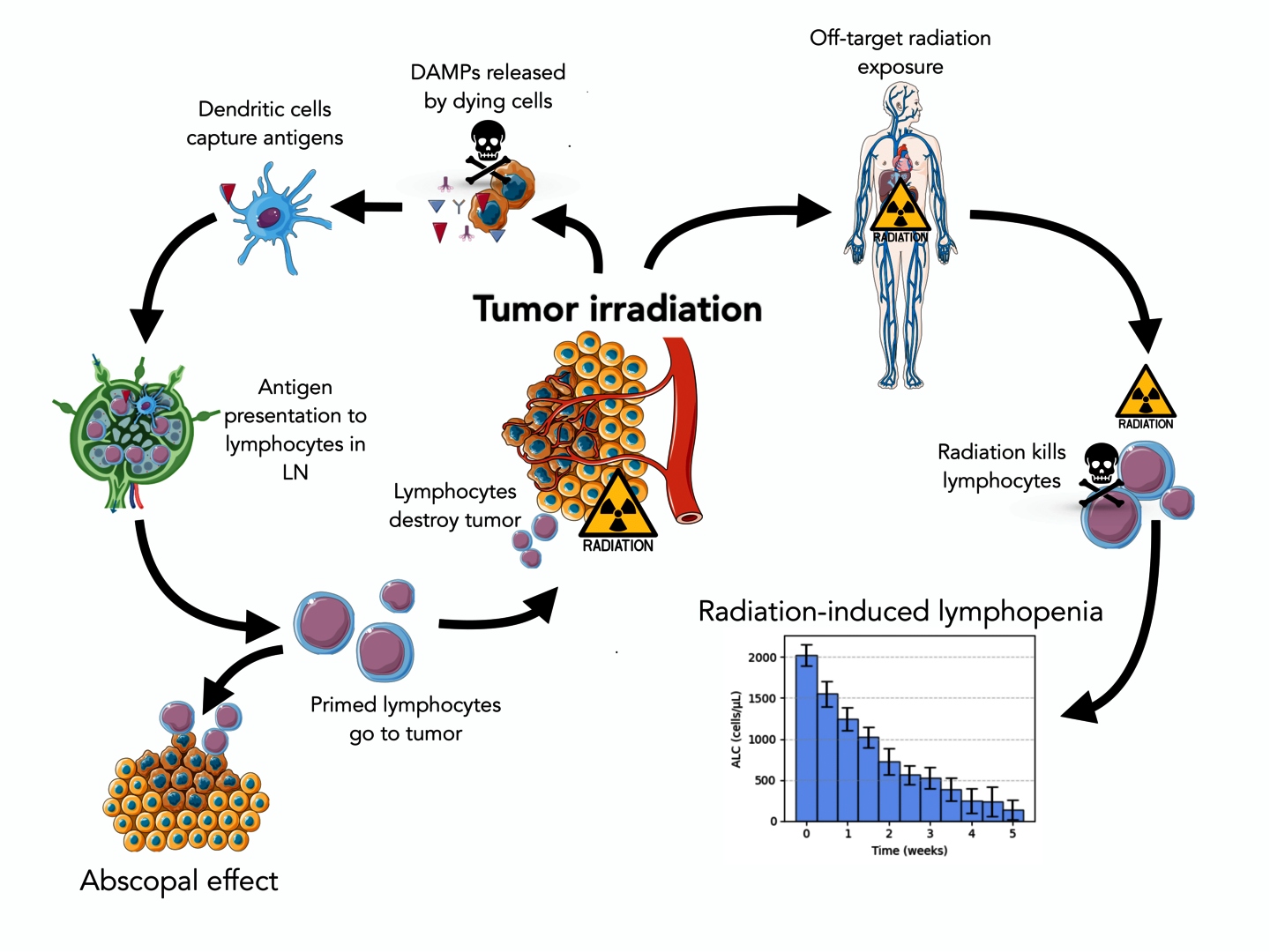
The interaction between immunotherapy and radiotherapy is complex and not yet fully understood. On one hand, combining these treatments can enhance anti-tumor immunity by increasing tumor antigen presentation and stimulating immune responses. On the other hand, radiotherapy can also lead to radiation-induced lymphopenia, depleting circulating lymphocytes and potentially compromising the effectiveness of immunotherapy. Understanding and optimizing this balance is crucial for improving treatment outcomes.
In our group, we use mathematical modeling to study this intricate interplay between the immune system and radiotherapy in cancer treatment. These models help us to understand comprehensive influence of RT on immune system, aiming to minimize the negative impact of radiotherapy on the immune system while maximizing the synergy between immunotherapy and radiation.
Specifically, we:
- develope a Predictive Biophysical Model to describe the combined effects of radiation therapy and immunotherapy on tumors.
- maintain a Database of Lymphocyte Count Dynamics during radiotherapy by systematically analyzing data from published studies.
- create a Biokinetic Model of Radiation-Induced Lymphopenia to better understand the depletion and recovery of lymphocytes during and after treatment.
- combine these tools to investigate lymphopenia and its relevance for radioimmunotherapy, in particular after radiotherapy with ions.
Publications
Sandul V, Al-Hamami SS, Kubeš J, Durante M, Friedrich T. Radiation-induced lymphopenia: A data compilation to unveil relevant factors and mitigation strategies. Clinical and Translational Radiation Oncology 56:101071 (2026). doi:10.1016/j.ctro.2025.101071
Friedrich T, Scholz M, Durante M. A Predictive Biophysical Model of the Combined Action of Radiation Therapy and Immunotherapy of Cancer. International Journal of Radiation Oncology*Biology*Physics 113:872-884 (2022). doi:10.1016/j.ijrobp.2022.03.030
Friedrich T, Henthorn N, Durante M. Modeling Radioimmune Response—Current Status and Perspectives. Frontiers in Oncology 11:647272 (2021). doi:10.3389/fonc.2021.647272
Project contributors
Group Leader:
Dr. Thomas Friedrich
Master Students:
Josué Ponce de León Cabrera