


Application of CMOS particle tracker
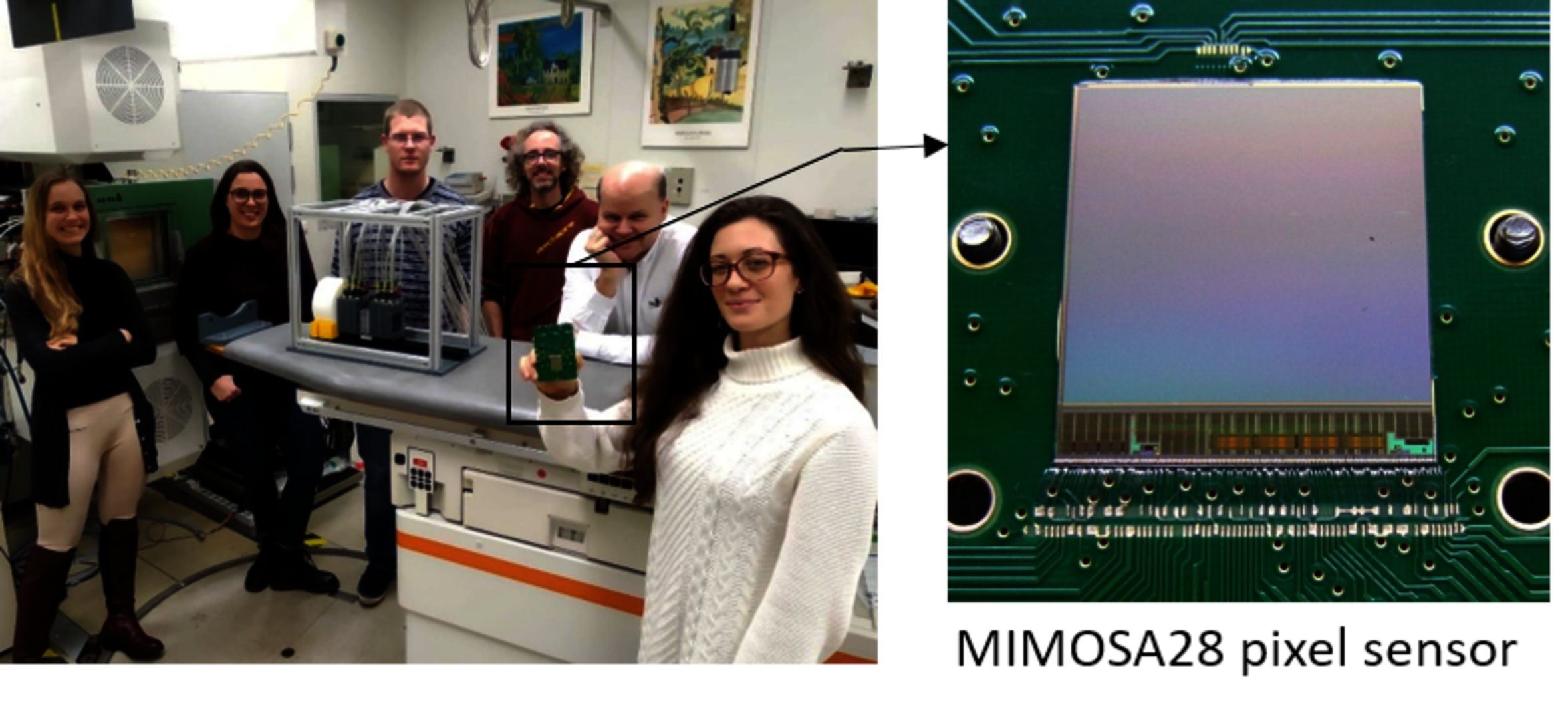
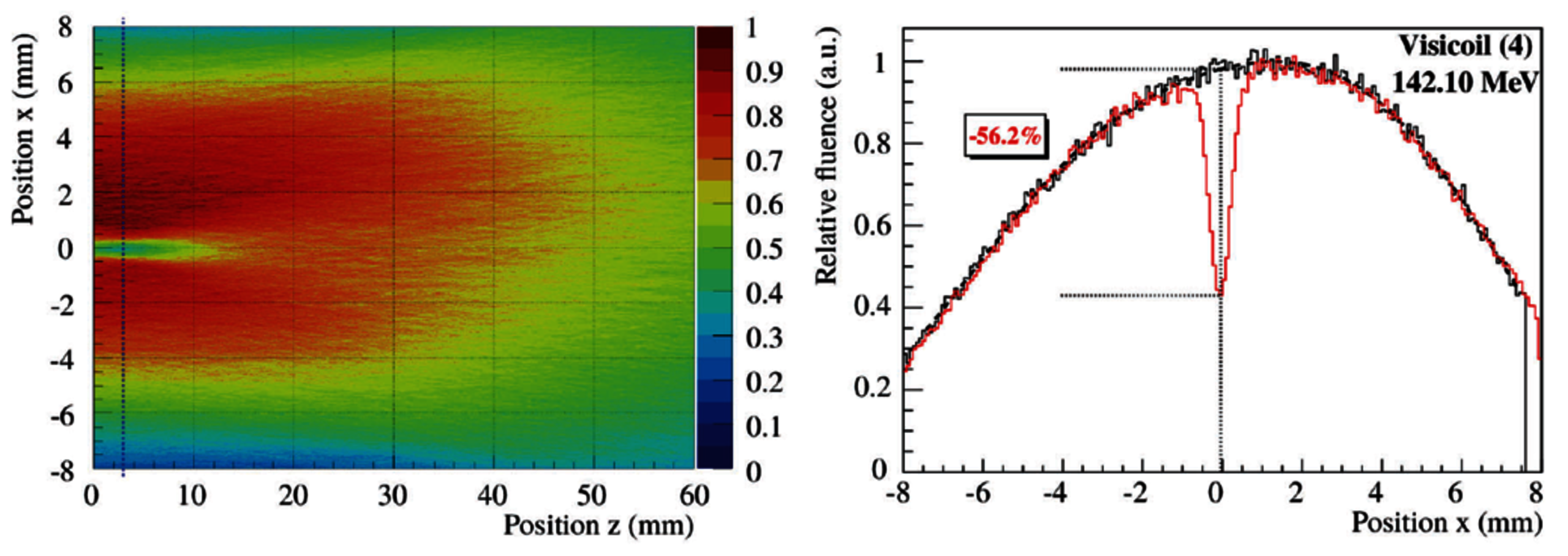
CMOS Mimosa-28 pixel sensors were used for several applications by measuring single charged particle trajectories with high spatial resolution. These sensors have been used as online beam monitoring for low-intensity experiments to verify the beam profiles. In addition, fluence perturbations due to fiducial markers used for image guidance in particle therapy were evaluated for proton and carbon ion beams [1] . The sensors were also used in a recent experiment for 4D online monitoring by measuring secondary charged particles and detecting high-density gradients in the case of lung cancer.
References:
[1] Reidel et al, Experimental Comparison of Fiducial Markers Used in Proton Therapy: Study of Different Imaging Modalities and Proton Fluence Perturbations Measured With CMOS Pixel Sensors, Front. Oncol. (2022), doi: 10.3389/fonc.2022.830080