


FAIR Fellow and Associate Program

The FAIR Fellow and Associate Programme aims at attracting the brightest scientists in the field, by offering individuals unique opportunities for scientific and technological work at FAIR for a limited period. FAIR Fellows are the most prestigious early-career positions available at FAIR. Established scientists may be offered a rewarding research/development stay at FAIR as a FAIR Associate.
FAIR is an international accelerator facility, which is currently being built in Darmstadt. FAIR is progressively being taken into operation and offers unique research opportunities for nuclear structure, nuclear astrophysics and nuclear reaction studies, hadronic physics, atomic and quantum physics, biophysics, plasma physics, materials research, accelerator science and IT. FAIR research is organized in four pillars:
- The compressed baryonic matter collaborations in the CBM pillar study QCD matter and the QCD phase diagram at highest baryon densities with heavy ion reaction which is complementary to LHC experiments focusing on very low baryon densities
- NUSTAR research concentrates on nuclear structure and nuclear astrophysics investigations with nuclei far off stability.
- APPA is devoted to precision stud-ies on fundamental interactions and symmetries employing highly charged ions; high density plasma physics; atomic and material science studies; radio-biological investigations and other application-oriented studies.
- And QCD studies with cooled anti-protons are the goal of the PANDA collaboration.
There are two types of support possible:
- Fellowships: Addresses early-career scientists, which seek a time-limited employment at FAIR (2 year with the possibility to extend for 1 additional year). Up to 5 fellowships per year are expected to be granted.
- Associates: Addresses mid-career and senior scientists with a position at a university or an institute in a partner country, who intend spending a prolonged period at FAIR (between 3 months and 1 year). The number of grants will depend on the excellence of applicants.
Candidates will be required to work on research topics relevant for FAIR. The programme offers successful candidates the opportunity to follow and contribute to experimental or theoretical research projects at FAIR.
The Fellow programme is open to applicants from all scientific and technological disciplines relevant for FAIR. They must be early-career scientists (a few years after their PhD), and must provide at least one of the reference letters from an institution in a FAIR partner country which contributes its share to the FAIR commissioning/operation costs.
The Associate programme is open to applicants from all scientific and technological disciplines relevant for FAIR (including accelerator and ASIC development, artificial intelligence, information technology). They must be mid-career or senior scientists associated with an institution in a FAIR partner country which contributes its share to the FAIR commissioning/operation costs.
In both cases, a PhD in natural sciences and at least few years of work experience is required. This must include a solid experience in laboratories other than GSI/FAIR.
Applications have to be addressed to the Scientific Management of FAIR and should be send to the personnel department in electronic form. They should contain:
- a cover letter,
- a CV,
- a copy of the PhD certificate,
- a publication list including contributions to conferences and workshops.
For the Fellow programme they should contain in addition to the above:
- a research plan (about two to three pages in total) (tied in programme, no beam-time granted implicitly),
- and two or three references, which should be sent directly by authors to fellow(at)fair-center.eu; at least one reference letter from an institution in the partner countries of FAIR is expected.
For the Associate programme they should contain in addition to first four items:
- an outline of planned work at FAIR, including the proposed starting date and duration of the stay (about one page),
- a declaration of the home institution, that this stay would be approved,
- and the FAIR Home Institute Declaration (or self-declaration) from the employer, guaranteeing that the candidate would continue to be employed at its institution including social and health insurance for at least the duration of the stay at FAIR.
Applications are usually reviewed twice a year: in Spring and Autumn. For the coming Autumn session, the deadline is set to the 31st of October 2026.
The following (Spring) session will be set to the 30th of April 2027.
The selection committee will consist out of 6 to 8 internationally known experts active at FAIR and working on the FAIR relevant research topics. Usually the composition should be: one scientist to represent each of the FAIR pillars, plus one expert for IT and one for accelerators, and one further scientist nominated by the Scientific Management of FAIR. In exceptional cases, a single expert may cover several topics or two experts may be nominated for one topic.
The selection committee is expected to meet once or twice a year, provided applications have been received. Applications, which should be considered in a specific committee meeting, should be submitted at least four weeks before the meeting date. The FAIR Scientific Man-agement will nominate a head of the selection committee. The head of the selection committee will be responsible to organize the meetings of the committee and communicate decisions to the FAIR Management.
The selection committee will
- decide on basis of the submitted documents on the final list of accepted applicants.
The FAIR Scientific Management will inform the committee on potential strategic goals which should be followed (e.g., strengthening of a certain FAIR pillar).
Selection criteria will be:
- the excellence of the candidate,
- the experience of the candidate in laboratories other than GSI/FAIR,
- the originality and uniqueness of the research project,
- the strategic importance for FAIR.
Applicants will be informed via e-mail of the outcome of the evaluation. In general, the earliest start of the Fellowship contract is three months after the committee meeting. Selected Fellows are expected to start their work within one year after the approval of their application. For As-sociates the starting dates will be negotiated between the home institution and FAIR.
A successful Fellowship candidate will by employed or receive a stipend by FAIR according to the national/local rules and tariffs including social security. Fellows will work within an organizational unit at GSI/FAIR which agreed to host the research activity. A single payment for the relocation within the legal boundaries is offered to new Fellows. For the running costs (travels, office equipment etc) a budget of up to 10,000 Euro per annum is foreseen.
A successful Associate candidate will receive funding from FAIR depending on the negotiation between the home institution and FAIR, but not exceeding salaries of a comparable full GSI/FAIR position. FAIR will not cover any social or health insurance costs for Associates.
Currently supported scientists
FAIR Associates
Priv.-Doz. Dr. Wolfram Korten
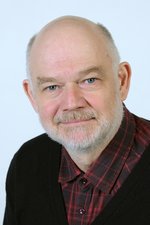
Start date: 1.08.2026
Research Director and CEA Fellow
Dr. Wolfram Korten completed his doctorate at Heidelberg University and worked as Postdoctoral researcher at Lawrence Berkeley National Laboratory and as GSI fellow at the Niels Bohr Institute. He pursued his habilitation to lecture physics at Bonn University, before taking a researcher position with the French Atomic Energy Commission (CEA). Since 2013, he has been nominated “Directeur de Recherche” at CEA and since 2022 a CEA Fellow. In addition, he served as NUSTAR Spokesperson and on the Board of FAIR Collaborations from 2018 to 2024.
His field of interest is the structure of the atomic nucleus with an emphasis on nuclear shape properties. For this work high-resolution in-flight gamma-ray spectroscopy is applied using radioactive ions beams in all energy domains, from relativistic energies available for example at GSI/FAIR down to the Coulomb barrier regime available at GANIL or CERN-ISOLDE. More recently, he has also initiated a program to study millisecond isomers at the GSI experimental storage ring (ESR) in order to search for the elusive nuclear two-photon decay using combined Schottky and Isochronous Mass Spectrometry (S+IMS). In future this newly develop technique will allow to also search for other “exotic” nuclear decay modes.
FAIR Fellows
Dr. Phillip Imgram
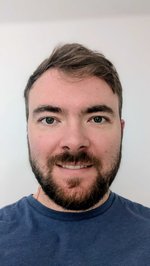
Start date: 1.08.2025
Dr. Phillip Imgram works in the field of laser spectroscopy of radioactive isotopes. He completed his Ph.D. at the Technical University of Darmstadt in 2022 in the group of Prof. Wilfried Nörtershäuser with his thesis “High-precision collinear laser spectroscopy of 12C4+”. Here, he implemented an electron beam ion source at the COALA beamline at the Institute for Nuclear Physics in Darmstadt to produce He-like carbon ions to perform collinear laser spectroscopy with them. It allowed to accurately test modern atomic structure calculations and to explore the possibility to extract an absolute nuclear charge radius purely from those optical measurements and corresponding atomic theory. Afterwards, he continued research as a postdoctoral researcher at KU Leuven in the group of Prof. Ruben de Groote. There, he established a new laboratory with a new ultra-high vacuum beamline for two new experiments, one focusing on collinear laser spectroscopy of ions
ejected from a multi-reflection time-of-flight mass spectrometer, and a second one targeting the deceleration, trapping and laser cooling of fast-ion beams. He designed, constructed and commissioned the full apparatus during his time there and demonstrated the feasibility of both approaches.
In the framework of the FAIR fellowship, he works on his project of “Collinear laser spectroscopy at the Super-FRS’ Cryogenic Gas Cell as an early LASPEC realization at FAIR”, which aims to perform collinear laser spectroscopy of radioactive isotopes at FAIR already before the completion of the experimental hall for low-energy experiments to take place after 2032.
Dr. Rui Han
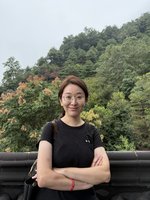
Start date: 1.11.2025
Dr. Rui Han is a nuclear theorist specializing in nuclear structure with a particular focus on nuclear density functional theory (DFT). She got her PhD in nuclear physics from Peking University and subsequently held postdoctoral positions at the Institute of Theoretical Physics of the Chinese Academy of Sciences, at Maria Curie-Skłodowska University in Poland, and, most recently, in the nuclear theory group at the University of Jyväskylä in Finland before joining GSI as a FAIR Fellow. Her research aims to improve Hartree–Fock–Bogoliubov frameworks and apply them to achieve higher-precision descriptions of electroweak process in nuclei. A key part of her work is the implementation of two-body currents derived from chiral effective field theory (chiral-EFT) into transition operators, allowing her to consistently combine them with DFT solutions. This approach provides more accurate theoretical predictions and builds a bridge between EFT developments and large-scale DFT applications. She also collaborates with theorists at the University of York and experimentalists at CERN on projects investigating the magnetisation distribution and the differential hyperfine anomaly in potassium isotopes using laser spectroscopy at ISOLDE. These efforts help refine our understanding of nuclear currents and finite-size effects by tightly connecting theoretical developments with high-precision experimental measurements.
Dr. Ali Mollaebrahimi
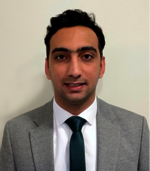
Start date: 2026
Dr. Ali Mollaebrahimi is a research scientist specializing in experimental nuclear physics. He earned his PhD in 2021 from the University of Groningen in the Netherlands. Following this, he completed a three-year postdoctoral fellowship (2021–2024) at the TRIUMF Accelerator Center in Vancouver, Canada, and subsequently a second postdoctoral position (2024–2025) at Justus Liebig University Giessen and the GSI Helmholtz Centre for Heavy Ion Research in Germany.
In 2024, Dr. Mollaebrahimi received the international Young Scientist Award from FAIR-GSI Exotic Nuclei Community (GENCO) in recognition of his contributions to nuclear structure research, particularly through the use of advanced time-of-flight mass spectrometers at the FRS Ion Catcher and the TITAN experiment at TRIUMF.
Dr. Mollaebrahimi’s research focuses on advancing the understanding of nuclear structure and nuclear astrophysics by investigating exotic nuclei produced in accelerator-based facilities at relativistic energies. He is leading a few experimental campaigns at FRS Ion Catcher at GSI Helmholtz Centre for Heavy Ion Research and the preparations for future experiments at Super-FRS Ion Catcher at FAIR.
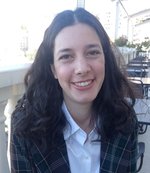
Dr. Marta Polettini
Start date: 2026
Dr. Marta Polettini is a research fellow in experimental nuclear physics and a member of the HISPEC-DESPEC collaboration at GSI-FAIR. Her main research interests are nuclear structure studies with decay and in-beam spectroscopy. She completed her PhD in nuclear structure at University of Milano (Italy), with a thesis focused on exploiting beta decay to study the structure of 220<A<230 Po-Fr nuclei and of Cd nuclei in the N=50 Sn region, respectively. These two experiments were performed by the HISPEC-DESPEC collaboration at GSI within the FAIR Phase-0 program in 2021. Her doctoral thesis was awarded with the ‘Claudio Villi’ prize for the best PhD thesis in nuclear physics discussed in Italy in the period from 1st June 2022 to 31st May 2023. In 2023-2024, Marta held a post-doctoral position at the University of Padova (Italy), contributing to the AGATA experimental program for in-beam spectroscopy at INFN-LNL and, in parallel, to the design and development of a new silicon detector for the DESPEC implantation setup.
As a FAIR Fellow, her research is focused on developing a new generation of state-of-the-art active stoppers by combining new electronics and machine-learning-based analysis techniques. These improvements will provide fast timing response, high efficiency, and precise position resolution for ion-decay correlations, supporting the Early Science and First Science campaigns of the NUSTAR pillar at FAIR.
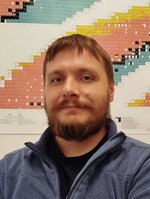
Dr. Bogusław Włoch
Start date: 1.1.2026
Dr. Bogusław Włoch obtained his Ph.D. in 2021 at the Institute of Nuclear Physics in Kraków, Poland, where he investigated the dynamics of few-nucleon systems. The experiments measured the differential cross sections for deuteron breakup reaction and were conducted at KVI Groningen and CCB Kraków using BINA detector. Afterwards, he led research grant aimed at studying relativistic effects in the deuteron breakup reaction using the KRATTA detector array.
In 2023, he moved to Bordeaux, France, to take a postdoctoral position within the NECTAR project (Nuclear rEaCTions At storage Rings). He participated in a successful experimental campaign in 2024, which aimed to measure the reaction of a uranium beam with a deuterium gas target in order to infer neutron-capture cross sections on uranium isotopes. He played a leading role in the data analysis of this experiment.
As a FAIR Fellow, he intends to continue this line of research and contribute to the further development of nuclear reaction measurements at the ESR storage ring.
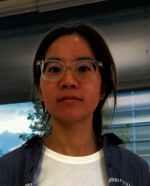
Dr. Yingjie Zhou
Start date: 16.01.2025
Dr. Yingjie Zhou obtained her PhD at the Central China Normal University in 2022, focusing on the production of strangeness in Au+Au collisions at √sNN=3 GeV with the STAR experiment. A key finding of this work is that the medium created at 3 GeV is dominated by hadronic interactions, implying that the transition between Quark–Gluon Plasma (QGP) and hadronic matter occurs at higher energies. She also organizes weekly meetings for the strangeness topical group, where BES-II analyses in the 3.2–7.7 GeV energy range are discussed, aiming to search for the onset of deconfinement and possible changes in expansion dynamics.
In terms of analysis technique, she was the first to apply the CBM-developed KFParticle package to STAR data for spectra, flow, and femtoscopy measurements. This method significantly improves the purity of rare signals at low energy, particularly for Ξ⁻, where yields are small. The femtoscopy correlation of p–Ξ⁻ pairs also provides a crucial probe of possible exotic multi-quark states. Although limited by statistics, she was able to demonstrate the feasibility of such studies.
To extend her research on hypernuclei and other rare probes at high baryon density, she joined GSI as a postdoctoral researcher and became a member of the CBM Collaboration. Her work focuses on physics performance studies of strangeness and hypernuclei, with particular interest in rare systems such as double-Λ hypernuclei, which provide unique constraints on hyperon–nucleon interactions. With CBM’s high interaction rates, it will be possible to access hypernuclei with unprecedented precision. In parallel, she still carries on hypernuclei measurements with STAR data, including the study of 5ΛHe, gaining valuable experience and preparation for future CBM measurements, expected to begin in 2028. She also conducts phenomenological studies with the PHQMD transport model to explore the sensitivity of hypernuclear observables to the equation of state at high baryon density.
Since 2025, she has been a FAIR Fellow, continuing her work on CBM simulations and software development, including the application of machine-learning algorithms for the identification and reconstruction of exotic hypernuclei.