


Ultra-high Dose Rate irradiation
Recent in vivo studies have shown that short pulses of electrons delivered at very high dose rates (>40 Gy s⁻¹) are less harmful to healthy tissues while remaining as effective as conventional dose-rate radiation in inhibiting tumor growth. These so-called FLASH irradiations can substantially enhance the therapeutic window in radiotherapy, an effect now referred to as the FLASH effect.
The underlying mechanism remains unclear, and a similar effect has not yet been demonstrated for heavy ion beam irradiation. While cyclotrons can achieve these dose rates for protons, it is more challenging with the synchrotrons used in heavy ion therapy.
3D-printed modulators, composed of fine, well-defined pyramid-shaped structures, can be used to deliver a highly conformal dose distribution of charged particles within a very short irradiation time (typically 1–2 seconds).
In our lab, we followed a multi-step protocol, beginning with a proof-of-principle study that verified the FLASH effect in vitro (figure 1), and then confirming it in an in vivo model. Our results demonstrated that a FLASH effect is achievable with ultra-high dose rate (UHDR) carbon-ion radiation, opening the possibility of using heavy ions with UHDR irradiation.
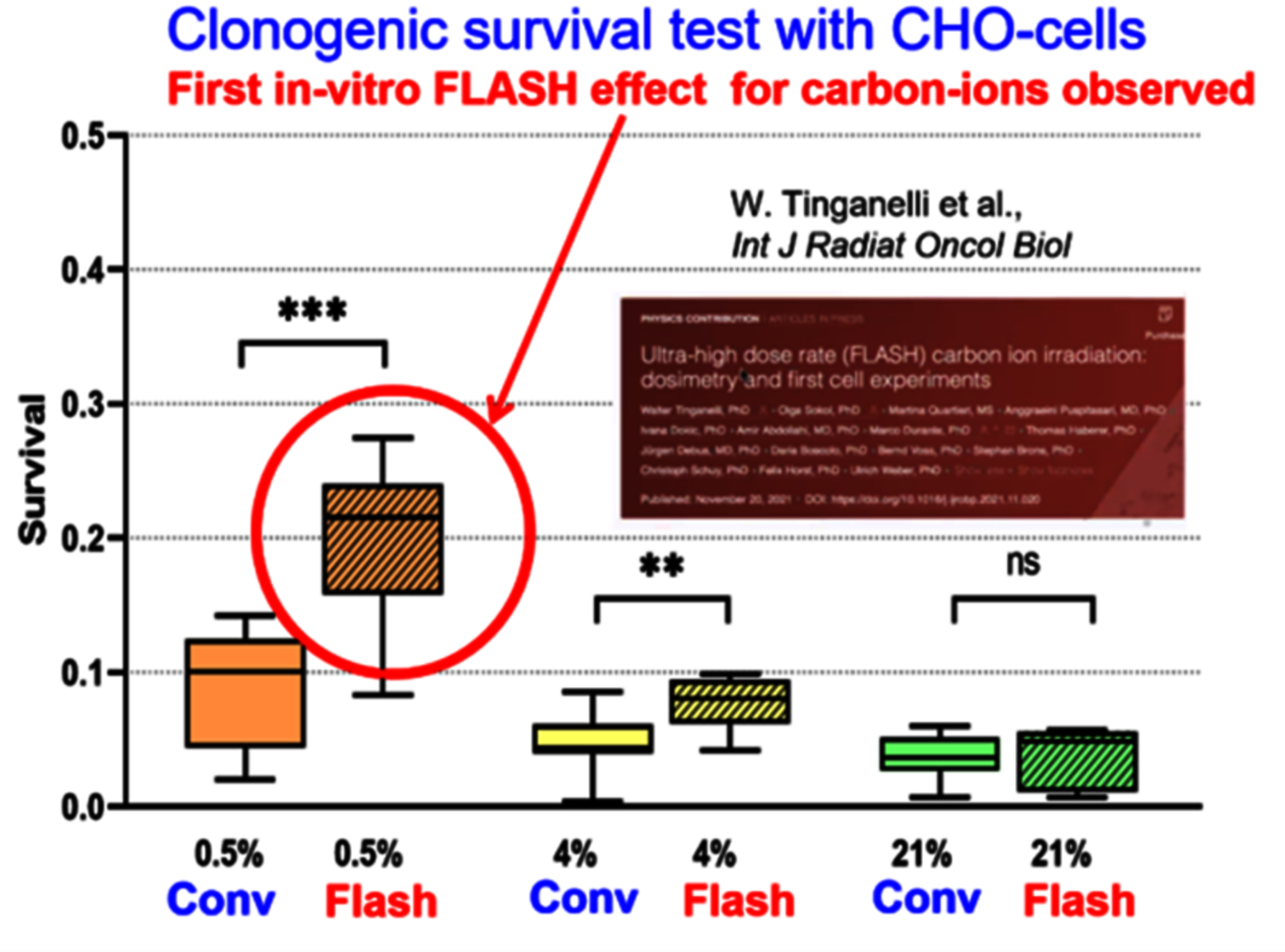
Figure 1: Cell experiment for Carbon-Ion FLASH showing higher cell survival at UHDR intensity.
Figure from Uli Weber: https://www.gsi.de/work/forschung/biophysik/forschungsfelder/particle-therapie-physics/proton-and-carbon-ion-flash
The next step in our research is to investigate the differences between UHDR and conventional dose rates in activating an immune response, and to study the potential effects of this new radiation modality in combination with immune checkpoint inhibitors drugs.