


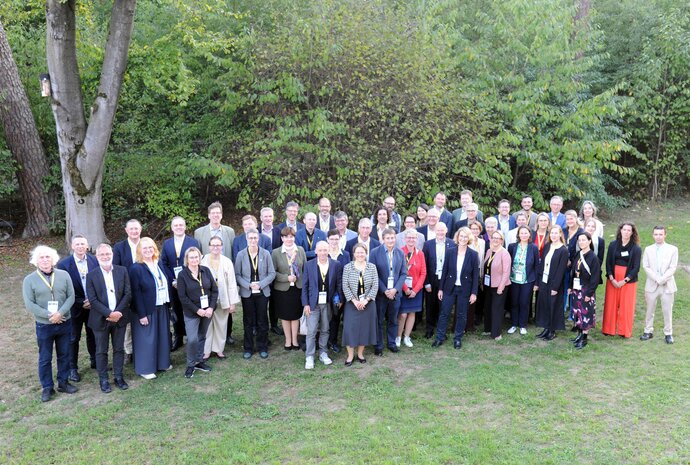
The Helmholtz Association held its most recent assembly of members at GSI in Darmstadt, one of its 18 research centers. The executive boards of the Helmholtz Centers met on the GSI/FAIR campus to discuss current developments, strategic priorities, and future collaboration within the research organization. The focus was on key topics in German cutting-edge research as well as the further development of joint research activities and programs.
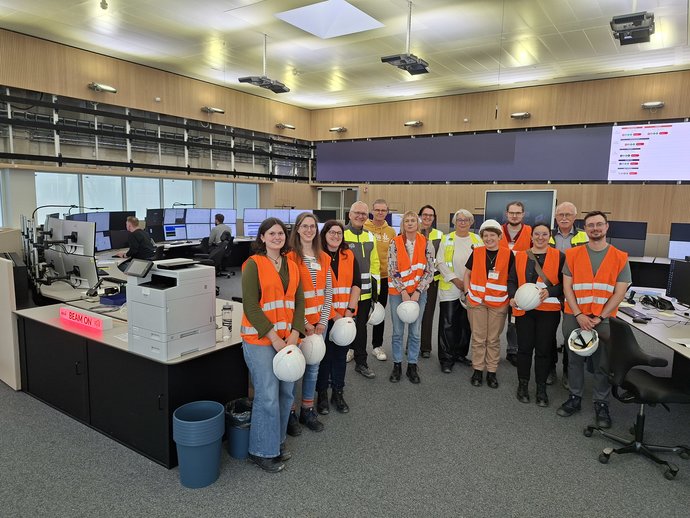
Nina Eisenhardt, a member of the Hessian State Parliament (Bündnis 90/Die Grünen) recently visited GSI/FAIR to learn about current scientific activities and the construction progress of the international accelerator center FAIR. She was accompanied by Alexander Link, advisor on education and higher education for Bündnis 90/Die Grünen parliamentary group in the German Bundestag, as well as by other members of the party’s working group (BAG) on science, higher education, and technology policy.
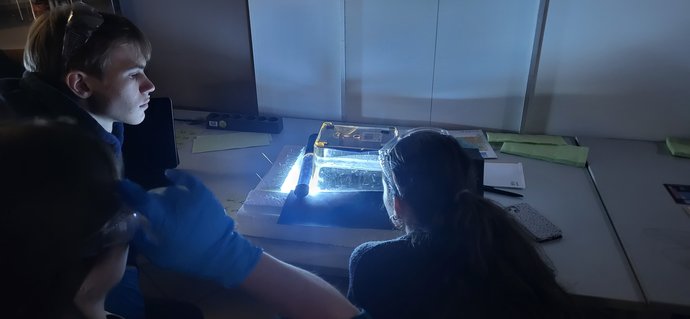
Experience science up close: GSI/FAIR and the Department of Physics at TU Darmstadt have launched a new collaborative project titled “Young Physicists@Darmstadt” to specifically support young talent. Shortly before the autumn holidays, physics-enthusiastic students in grades 9 through 11 from the region had the opportunity to immerse themselves in the day-to-day research work of physicists.
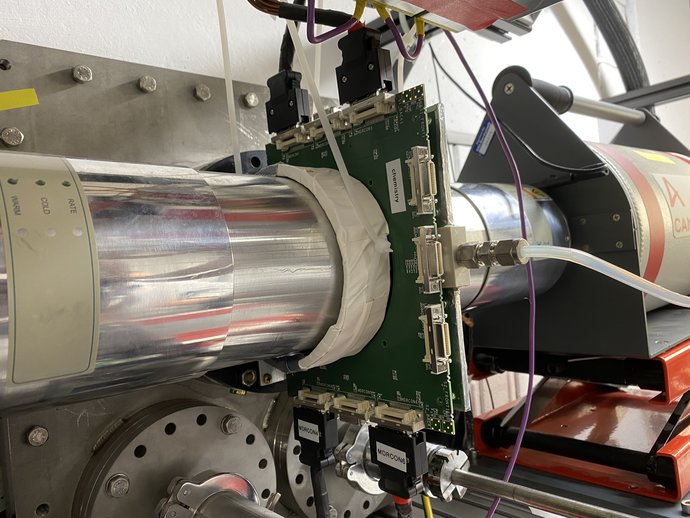
An international collaboration led by a research group from GSI/FAIR in Darmstadt, Germany, has achieved the first measurement of the chemical stability of a superheavy element compound. The focus was on the hexacarbonyl complex Sg(CO)₆ of seaborgium (Sg, element 106). The result: The bond between the seaborgium atom and a carbonyl ligand is weaker than expected based on its position in the periodic table. Relativistic effects are the cause. The results are published in the journal Nature.
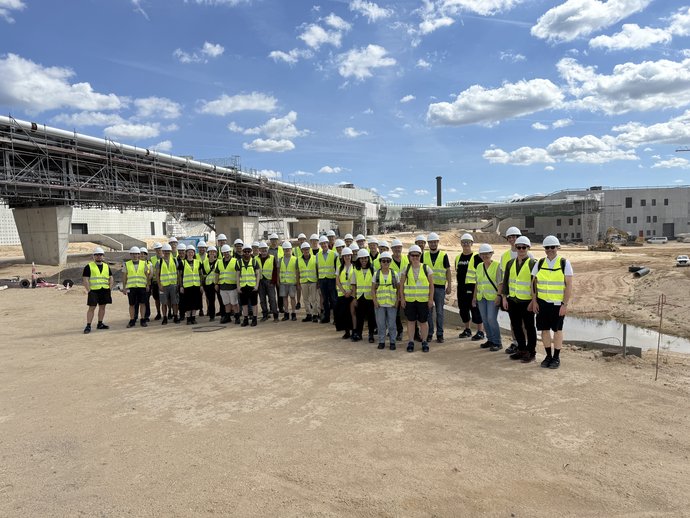
Staff members from the Heidelberg Ion Beam Therapy Center (HIT) recently visited GSI and FAIR. The focus was on the close connection between heavy-ion therapy developed at GSI —a groundbreaking innovation in modern cancer treatment that is continuously being advanced at GSI/FAIR—and its successful implementation in clinical practice at HIT. The visit offered the guests ...
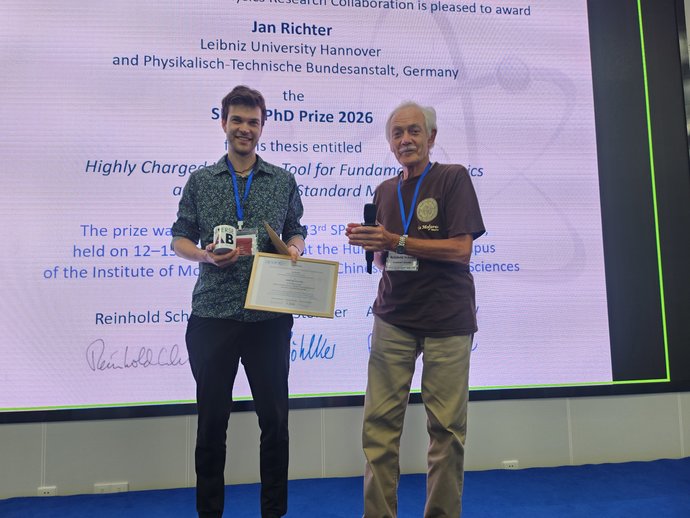
This year's SPARC collaboration PhD Prize was awarded to Dr. Jan Richter from Physikalisch-Technische Bundesanstalt (PTB) and the Leibniz University Hannover, Germany, for his thesis entitled “Highly charged ions as a tool for fundamental physics and tests of the Standard Model”. The ceremony took place during the 23rd SPARC Topical Workshop at the Institute of Modern Physics, Chinese Academy of Sciences, in Huizhou, China, where the award was handed over by Professor Reinhold Schuch from…
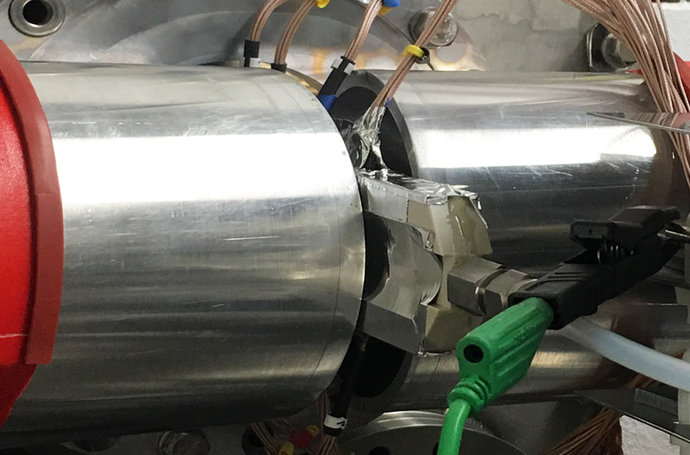
A research team from GSI/FAIR in Darmstadt, Johannes Gutenberg University Mainz, and the Helmholtz Institute Mainz has studied four superheavy nuclei with a newly developed experimental technique. ANSWERS measures thus far inaccessible properties, which are important for understanding element synthesis in the Universe. The results are published in Physics Letters B.

In March 2026, scientists succeeded in transporting antiprotons by road for the first time in a purpose-built trap loaded on a truck. The BASE collaboration, which realised this experiment at the European Organisation for Nuclear Research (CERN) in Geneva and of which GSI/FAIR is a member, now presents its findings and experiences from this pioneering experiment in the scientific journal Nature. Antiprotons could be stored for the first time ever for more than a month in a mobile transport…
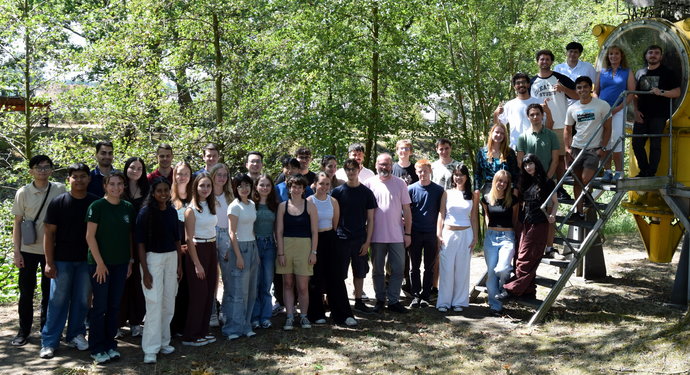
34 students came from 16 countries this summer to participate in the GSI/FAIR Summer Student Program. For eight weeks, they were able to immerse themselves in the daily life at an international particle accelerator center. Our yearly photo contest offers exclusive insights into the program.


