


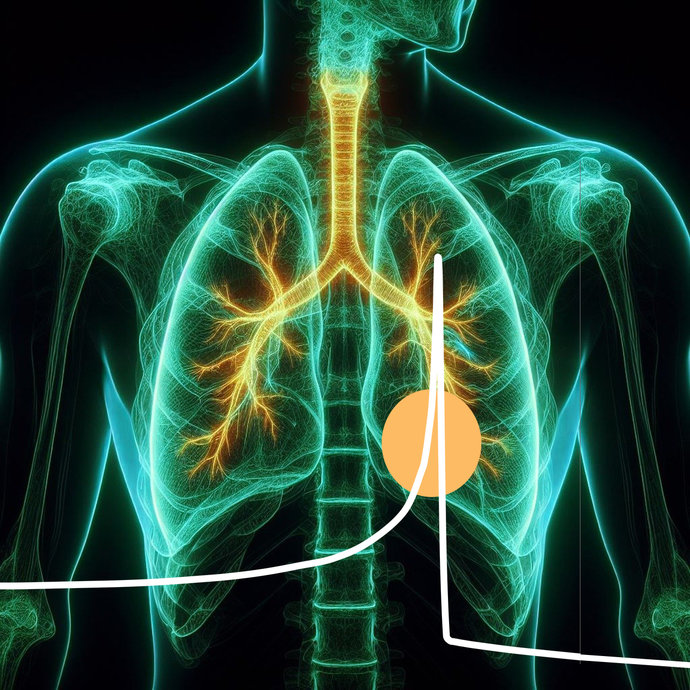
The first patients were treated with heavy ions 25 years ago – whereas therapy was long limited to the head and pelvis, today tumors in the upper body, for example in the lungs, liver and pancreas, can also be treated, even though they are constantly in motion due to breathing. Some methods are already in clinical routine, other developments from the GSI Helmholtzzentrum für Schwerionenforschung offer new hopes and opportunities for cancer treatment.
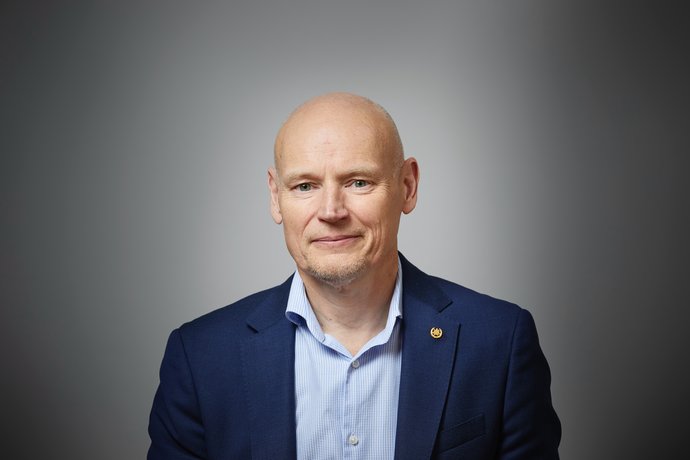
The GSI Helmholtzzentrum für Schwerionenforschung and the FAIR GmbH are delighted to announce that Prof. Dr. Thomas Nilsson, vice chair of the Joint Scientific Council FAIR/GSI and head of the physics department at Chalmers University of Technology, has been appointed a member of the Royal Swedish Academy of Sciences. In addition to Thomas Nilsson, the prestigious academy, which is responsible for selecting Nobel Prize winners in physics, chemistry and economics, has appointed four other new…
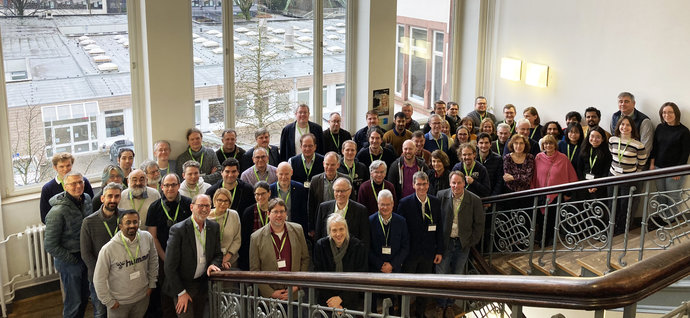
The workshop „Physics Opportunities with Proton Beams at SIS100” was held recently in Wuppertal. It was organized by the Helmholtz Research Academy Hesse for FAIR (HFHF), GSI/FAIR together with the Bergische Universität Wuppertal and the NRW-FAIR network. About 90 participants attended the three-day event and with 43 invited talks. Professor Birgitta Wolff, Rector of Bergische Universität Wuppertal, and Professor Paolo Giubellino, Scientific Managing Director of GSI and FAIR, welcomed the…
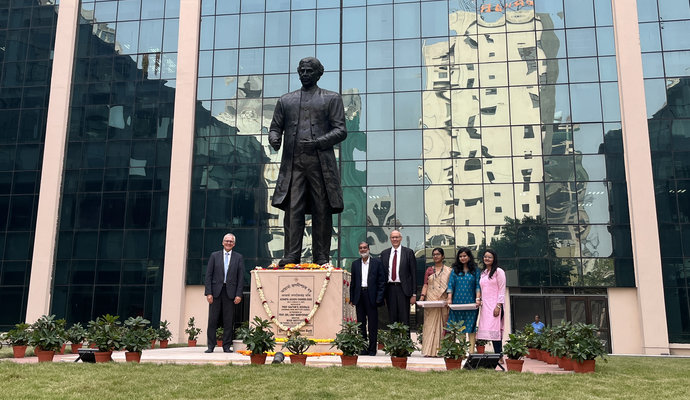
During visits to FAIR partner country India, the management of GSI and FAIR as well as expert delegations recently held important talks to set the course for further sustainable cooperation between GSI/FAIR and India within the FAIR project.

The President of the Max Planck Society has appointed Prof Dr Almudena Arcones from the GSI Helmholzzentrum für Schwerionenforschung and the Technische Universität (TU) Darmstadt as a Max Planck Fellow at the Max-Planck-Institut für Kernphysik (MPIK) in Heidelberg. Within the framework of the Max Planck Fellowship, she will lead the theoretical research group "Theoretical nuclear astrophysics and the origin of heavy elements in the universe" starting 1 March 2024, working closely with ....
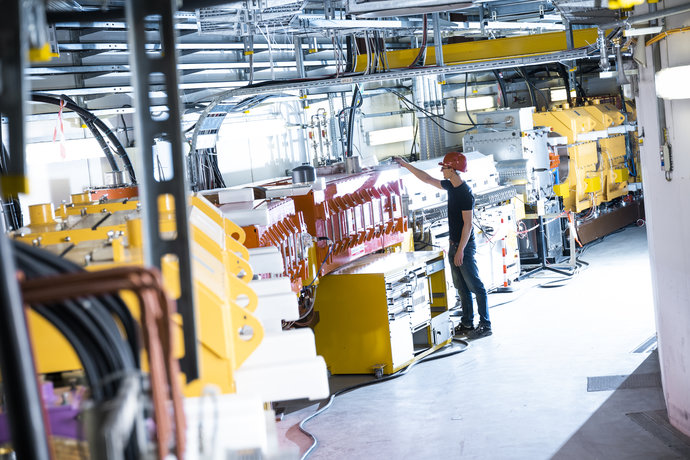
An innovative computer model of a human lung is helping scientists simulate, for the first time, how a burst of radiation interacts with the organ on a cell-by-cell level. This research, carried out at the University of Surrey and the GSI Helmholtzzentrum für Schwerionenforschung, Darmstadt, could lead to more targeted treatments for cancer and reduce the damage caused by radiotherapy.
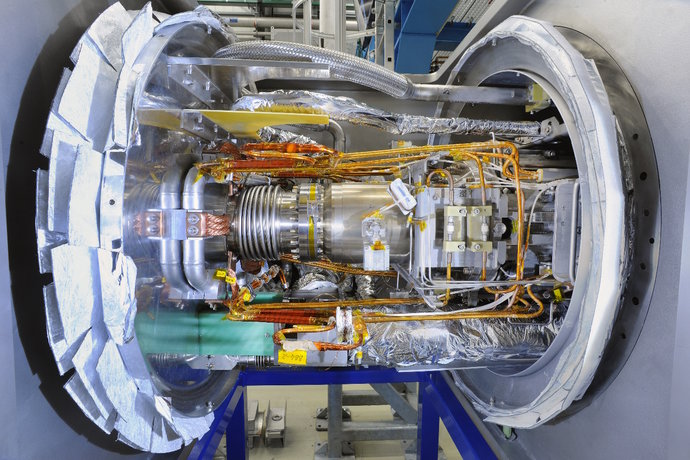
Recently, groundbreaking progress has been made for the large FAIR ring accelerator SIS 100: A section of the cryogenic part of the SIS100 was built at the STF series test facility on the GSI/FAIR campus and then tested for the first time at the required operating temperature of -269 degrees Celsius. This decisive step, the so-called string test, marks an important final milestone in the construction of large superconducting circular accelerators. It is mainly used to test the interfaces and...
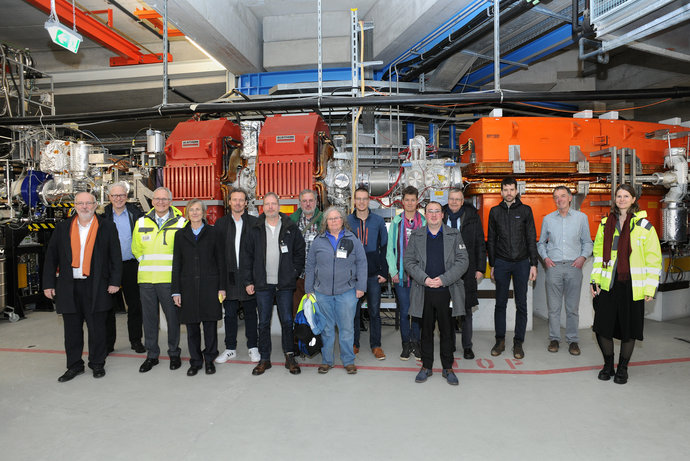
The Committee for Economic Development, Science and Citizen Participation of the City of Darmstadt recently visited the GSI Helmholtzzentrum für Schwerionenforschung and the FAIR Facility for Antiproton and Ion Research. The Darmstadt politicians learned about current research priorities and the FAIR accelerator center, which is currently under construction.

Since the turn of the century, six new chemical elements have been discovered and subsequently added to the periodic table of elements, the very icon of chemistry. These new elements have high atomic numbers up to 118 and are significantly heavier than uranium, the element with the highest atomic number (92) found in larger quantities on Earth. This raises questions such as how many more of these superheavy species are waiting to be discovered, where – if at all – is a fundamental limit in the…


