


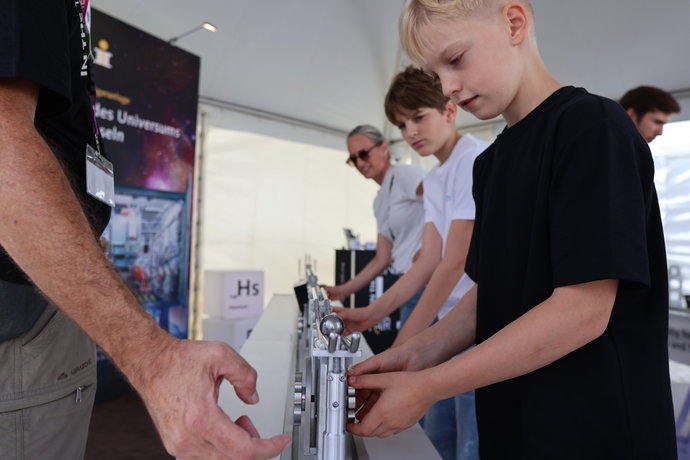
This Saturday, around 20 stations welcomed visitors to Frankfurt’s second Science Festival, bringing science to life for people of all ages. On stage and at interactive stations on the central Roßmarkt square, guests had the chance to explore the research of the Frankfurt Alliance, a network of 16 research institutions from the Frankfurt/Rhine-Main region. GSI/FAIR offered insights into the function of particle accelerators and their scientific work with two hands-on experiments.
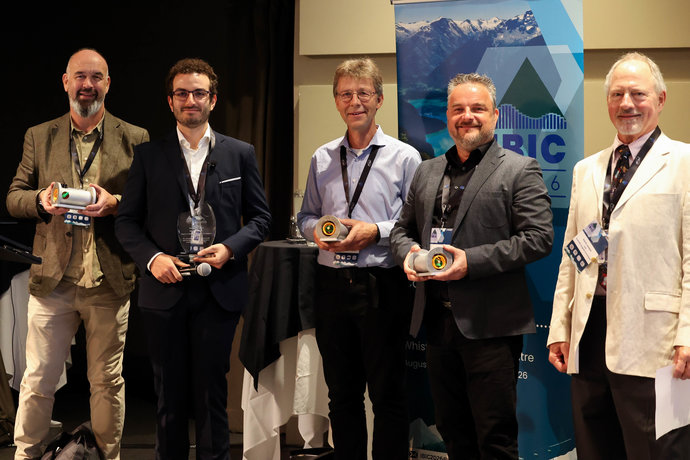
A consortium comprising persons from CERN, the Cockcroft Institute, GSI/FAIR, and the University of Liverpool has been awarded the prestigious “Faraday Cup Award” for the development of a beam-induced fluorescence monitor, referred to as the “Beam Gas Curtain Monitor.” The award for innovations in accelerator beam instrumentation was presented at the “International Beam Instrumentation Conference 2026 (IBIC).”
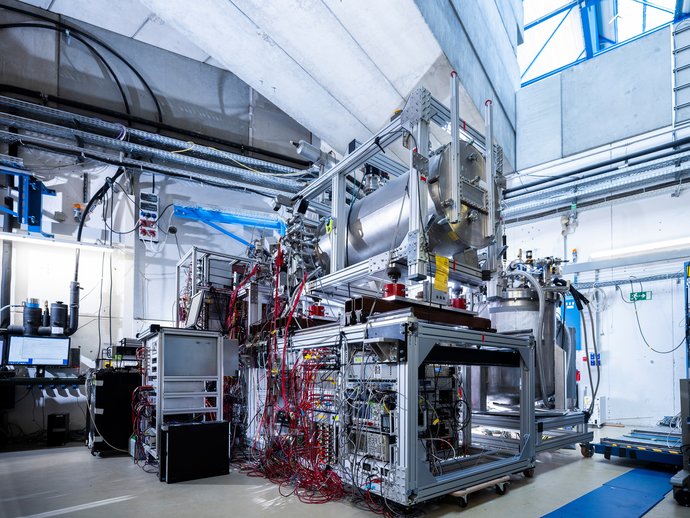
An international research team led by the University of Edinburgh, in collaboration with researchers from GSI/FAIR, Justus Liebig University Gießen (JLU), and other partner institutions, has developed a new experimental approach to studying short-lived radioactive molecules. This work lays the cornerstone for a new generation of precision experiments capable of investigating fundamental questions in physics — ranging from the search for physics beyond ...
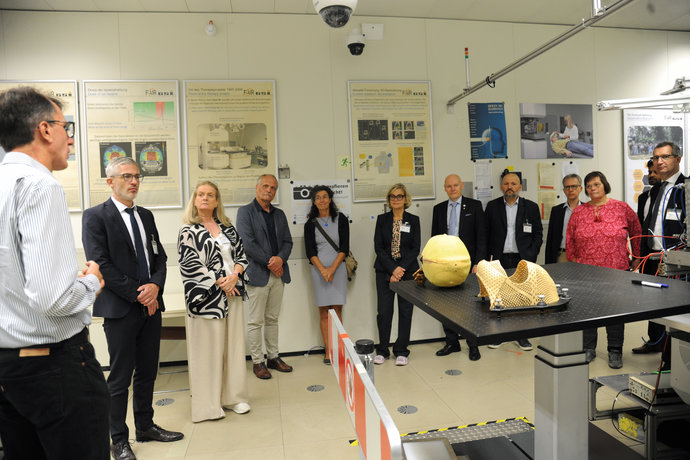
A high-level delegation from the European Commission’s Joint Research Centre (JRC) visited GSI and FAIR on 11 September 2026 to explore opportunities for closer cooperation in science and technology and in Science for EU Policies.
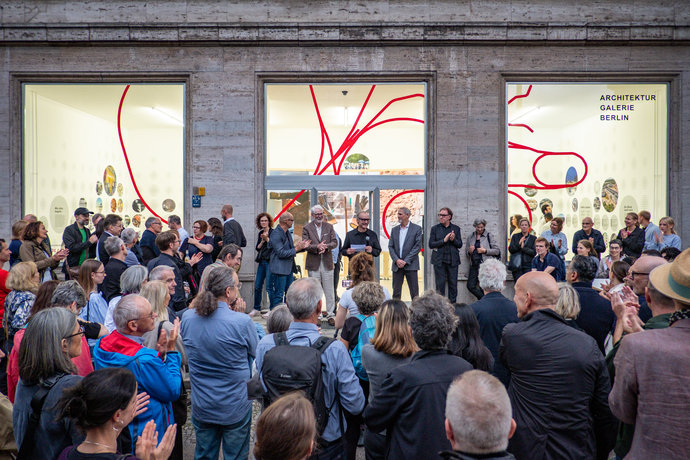
FAIR is a particle accelerator of superlative proportions. The exhibition “Form Follows Beam. Architektur für einen Teilchenbeschleuniger” at the Architektur Galerie Berlin showcases how its architecture is taking shape. From September 4 to October 10, 2026, the ion42 consortium (DGI Bauwerk and schneider+schumacher) will provide insights into the construction of this mega-research facility through photos and multimedia content. The exhibition opened on September 3.
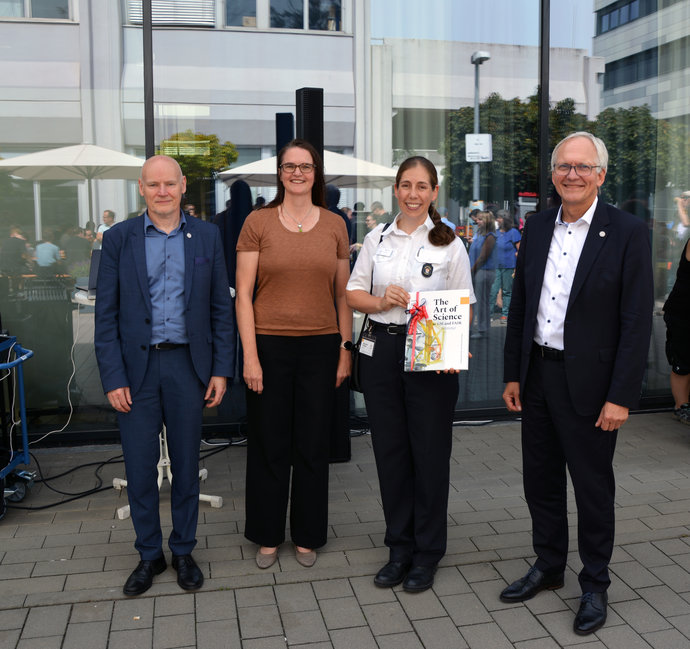
This year’s GSI and FAIR summer party featured a special highlight: expressing gratitude to the emergency services who extinguished the fire at GSI on February 5, 2026. As a token of appreciation, they were given exclusive tours of the campus, and the management presented an art book featuring drawings of GSI/FAIR’s research and facilities to incident commander Johanna Herdt on behalf of the entire team.
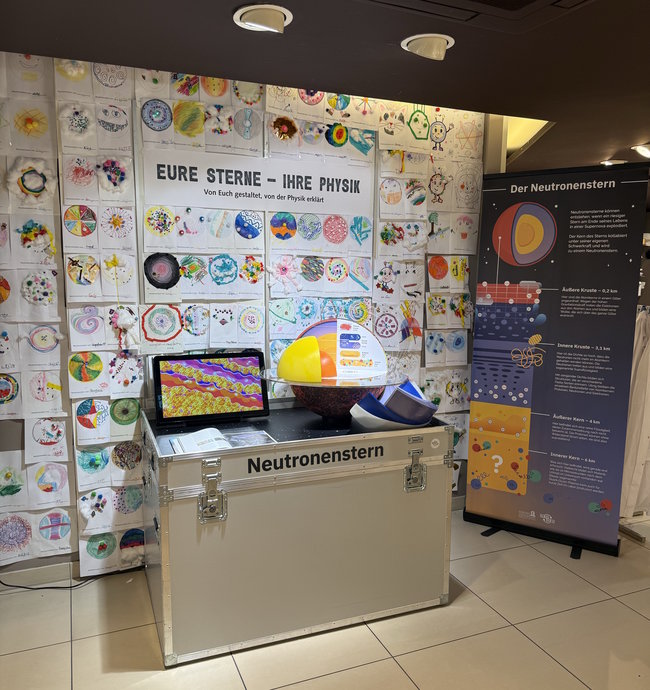
The 2026 summer outcome for the GSI/FAIR SCIENCE POP-UP is extremely positive: The activities in the interactive hands-on space were among the summer attractions in downtown Darmstadt. Despite the sometimes very hot temperatures, more than 1,200 science enthusiasts of all ages visited the exhibition space in Darmstadt’s pedestrian zone during the school vacation and took the opportunity to learn about cutting-edge research using particle accelerators.
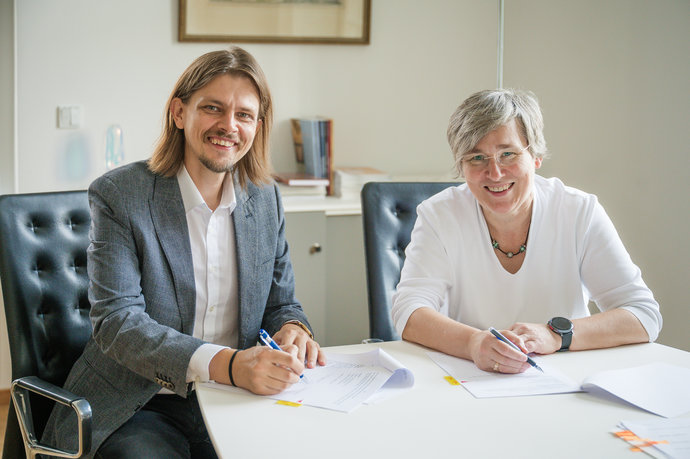
Physicist Professor Maxim Mai has been appointed to the professorial chair of Theoretical Hadron Physics at Justus Liebig University Gießen (JLU), starting on September 1, 2026. This is a joint appointment with the GSI Helmholtzzentrum für Schwerionenforschung in Darmstadt, to which JLU has been closely linked through a cooperative partnership for more than 15 years. The professorship is being established as part of the German Research Foundation’s (DFG) Heisenberg Program.
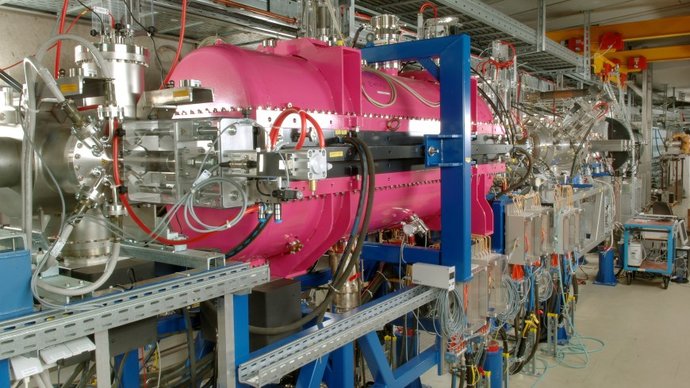
Researchers at the Technical University of Darmstadt and the GSI Helmholtzzentrum für Schwerionenforschung have succeeded for the first time in decelerating highly charged ions from the GSI accelerator to low energies and subsequently storing them in a Penning trap. They were also successful in performing the first-ever electron cooling of highly charged ions in such a trap. The results have now been published in the journal “Physical Review X (PRX)”.


