


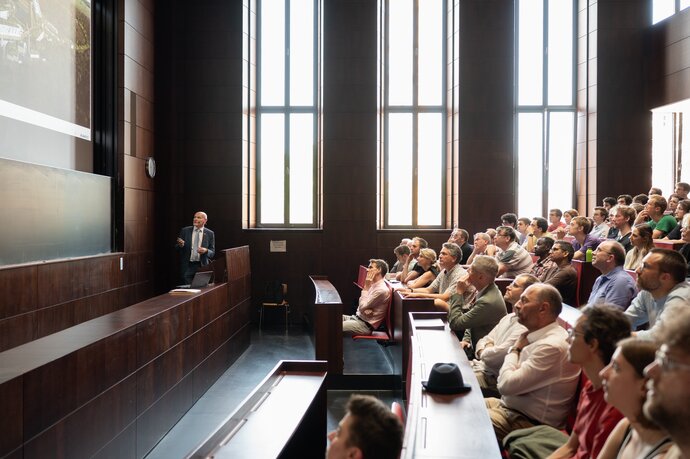
The GSI Helmholtzzentrum für Schwerionenforschung and the international accelerator center FAIR warmly congratulate their closely affiliated universities in Darmstadt, Frankfurt, Mainz, Jena, Bochum, and Cologne on their selection as Universities of Excellence. The locations were recently announced as part of the federal and state governments’ Strategy for Excellence. This funding, which will be provided through the most significant federal-state program from 2027 onwards, sends a strong signal…
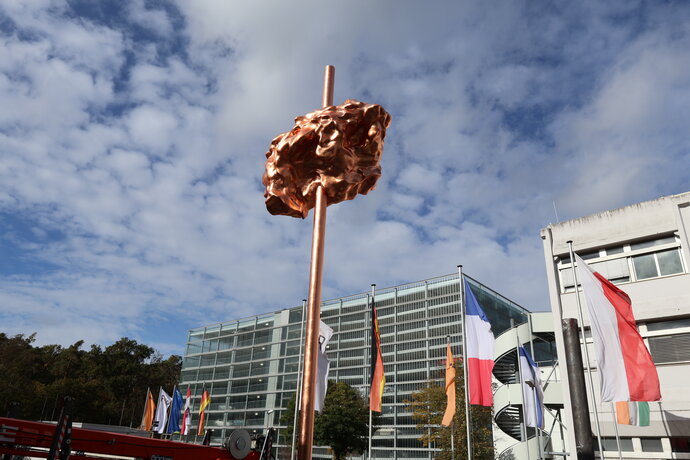
The GSI/FAIR campus has gained a new landmark: an eight-meter-tall copper column with an organically shaped, polished-metal body in its upper third—this is the artwork “Entschleunigtes Teilchen — the FCC meteor” by Atelier Thomas Stricker. The piece emerged as the winner of the art-in-architecture competition for the FAIR Control Center (FCC) and was recently installed in front of the building.
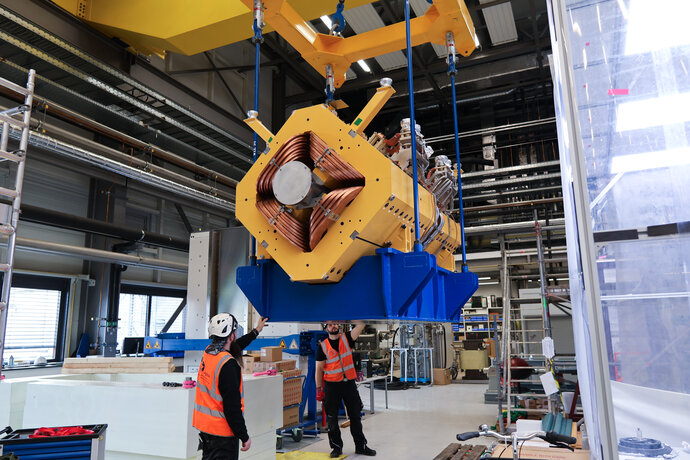
In late September 2026, the first quadrupole magnet for the Super-FRS (SFRS) was transported to the FAIR site and installed in the Super-FRS target building. The quadrupole doublet was transported from the test stand in the testing hall on the GSI campus to the target building as a heavy-haul shipment.
From 19 October to 6 December 2026, all 18 Helmholtz Centres are inviting the public to the Helmholtz Diversity Weeks for the first time. Under the theme “Standing together”, the campaign highlights the importance of diversity for our research centres. The seven-week series of talks offers practical ideas for working together in our day-to-day work.
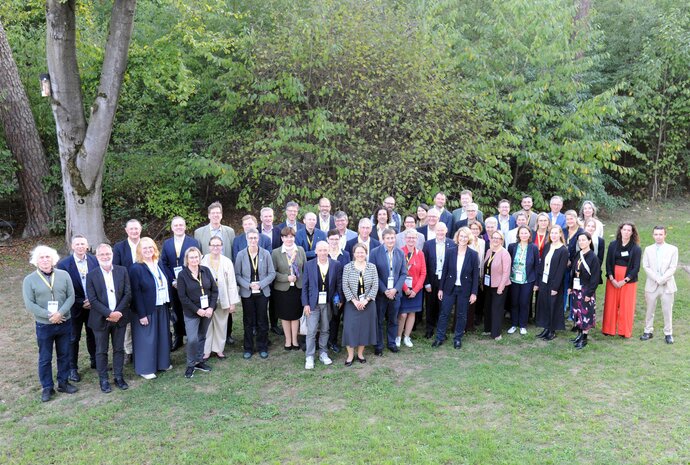
The Helmholtz Association held its most recent assembly of members at GSI in Darmstadt, one of its 18 research centers. The executive boards of the Helmholtz Centers met on the GSI/FAIR campus to discuss current developments, strategic priorities, and future collaboration within the research organization. The focus was on key topics in German cutting-edge research as well as the further development of joint research activities and programs.
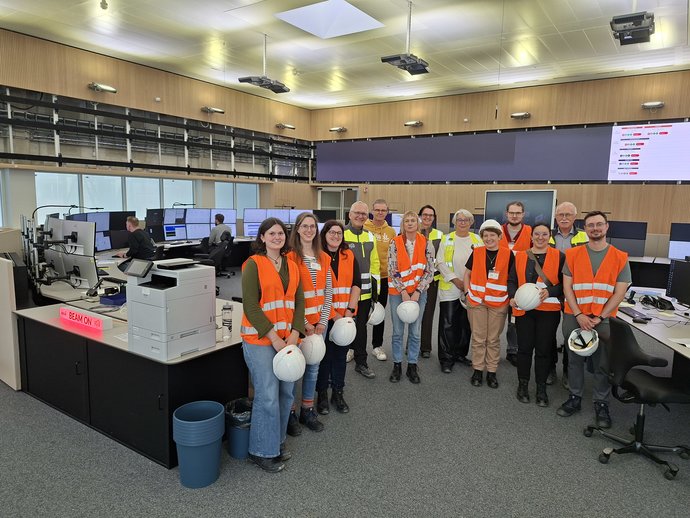
Nina Eisenhardt, a member of the Hessian State Parliament (Bündnis 90/Die Grünen) recently visited GSI/FAIR to learn about current scientific activities and the construction progress of the international accelerator center FAIR. She was accompanied by Alexander Link, advisor on education and higher education for Bündnis 90/Die Grünen parliamentary group in the German Bundestag, as well as by other members of the party’s working group (BAG) on science, higher education, and technology policy.
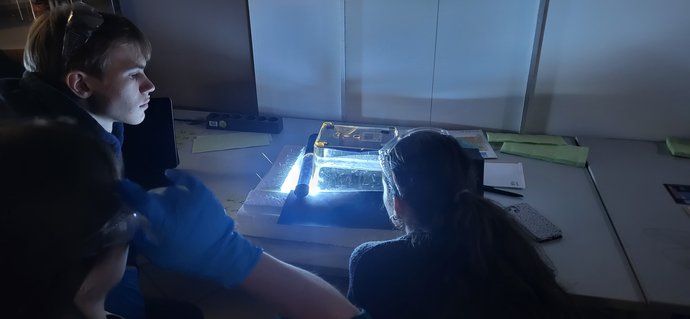
Experience science up close: GSI/FAIR and the Department of Physics at TU Darmstadt have launched a new collaborative project titled “Young Physicists@Darmstadt” to specifically support young talent. Shortly before the autumn holidays, physics-enthusiastic students in grades 9 through 11 from the region had the opportunity to immerse themselves in the day-to-day research work of physicists.
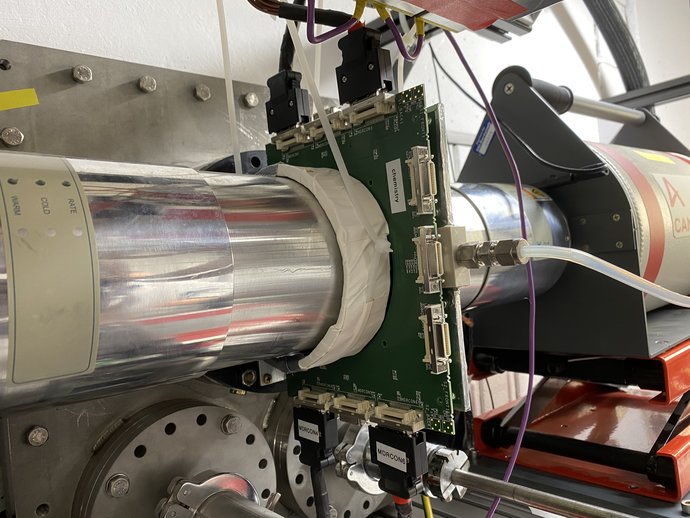
An international collaboration led by a research group from GSI/FAIR in Darmstadt, Germany, has achieved the first measurement of the chemical stability of a superheavy element compound. The focus was on the hexacarbonyl complex Sg(CO)₆ of seaborgium (Sg, element 106). The result: The bond between the seaborgium atom and a carbonyl ligand is weaker than expected based on its position in the periodic table. Relativistic effects are the cause. The results are published in the journal Nature.
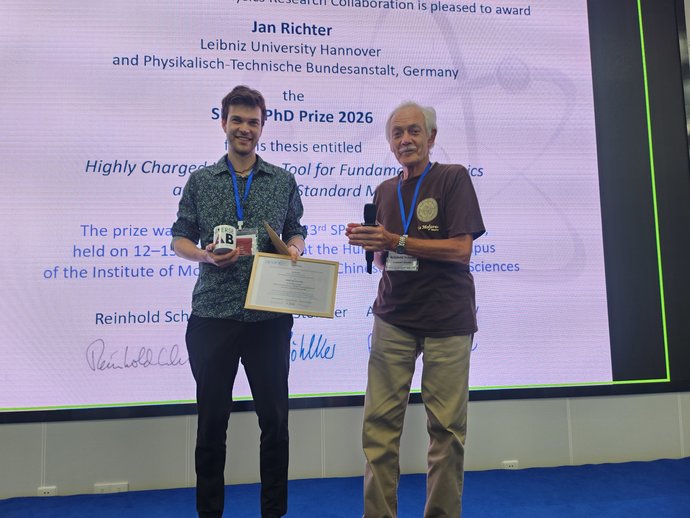
This year's SPARC collaboration PhD Prize was awarded to Dr. Jan Richter from Physikalisch-Technische Bundesanstalt (PTB) and the Leibniz University Hannover, Germany, for his thesis entitled “Highly charged ions as a tool for fundamental physics and tests of the Standard Model”. The ceremony took place during the 23rd SPARC Topical Workshop at the Institute of Modern Physics, Chinese Academy of Sciences, in Huizhou, China, where the award was handed over by Professor Reinhold Schuch from…


