


ExtremeField: Light with unparalleled intensity — ERC Synergy Grant for Helmholtz Institute Jena of GSI

12.11.2026 |
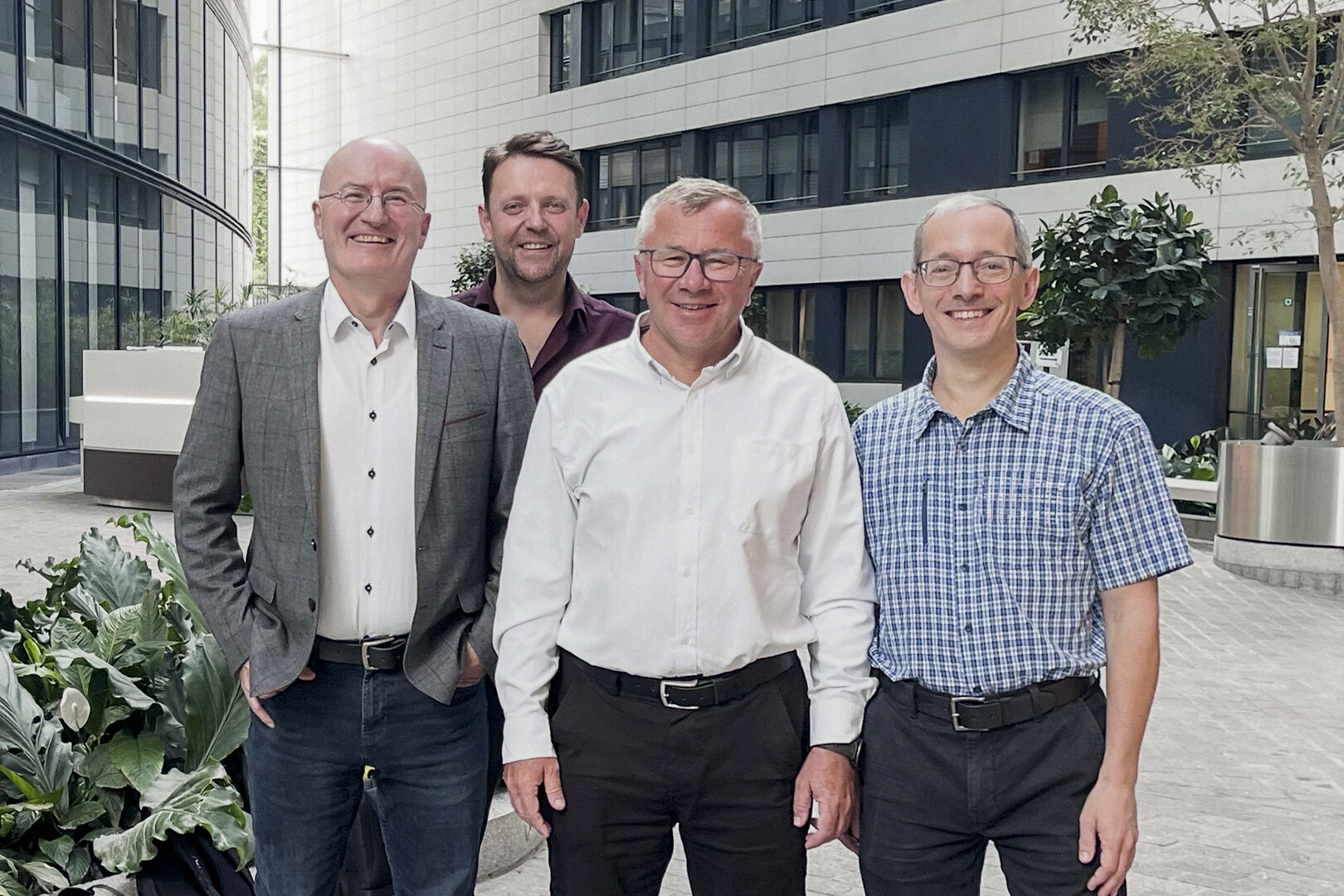
With their “ExtremeField” project, researchers from Germany, the United Kingdom, and Sweden aim to push the boundaries of physics by focusing laser light in a new way to reach the ultimate theoretical intensity limit — a million times beyond the current state of the art. The project is funded by an ERC Synergy Grant totaling 13.4 million euros. Professor Matt Zepf of the Helmholtz Institute Jena, a branch of GSI Helmholtzzentrum für Schwerionenforschung in Darmstadt, Germany, is coordinating the project.
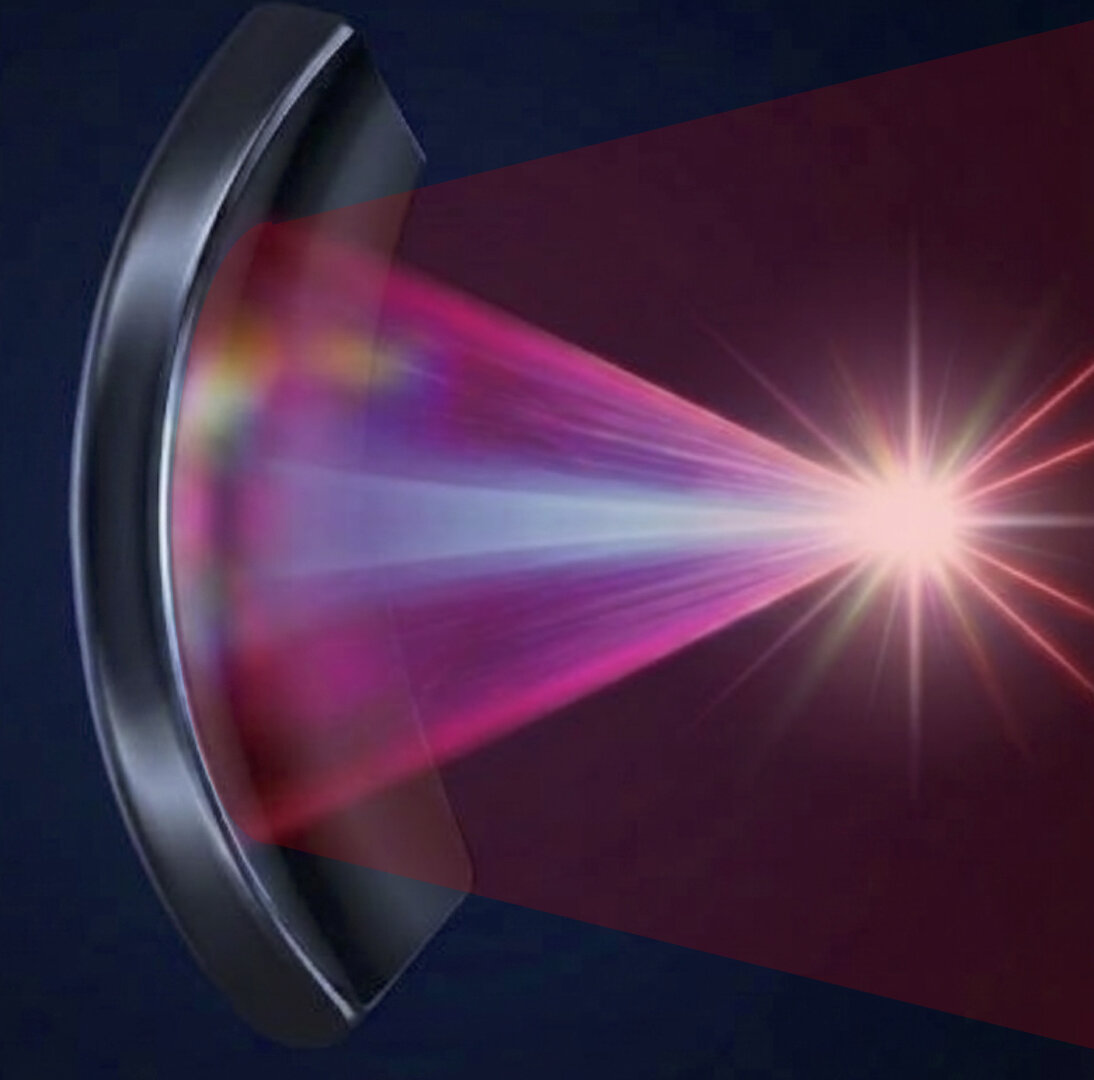
When an extremely powerful, ultrashort laser pulse strikes a glass surface, the surface transforms into a plasma — a state of matter where atoms are ionized: Electrons are released from the atomic nuclei and move freely. The electrons at the plasma surface oscillate at nearly the speed of light, acting like a moving mirror. When light is reflected off this mirror, the reflected light contains not only the original color of the laser’s light but also a whole comb of multiples of its frequency — so-called high harmonics. These frequencies extend into the extreme ultraviolet and soft X-ray ranges.
Because all components of the light oscillate at the same rate, they condense into flashes of light of unimaginably short duration in the range of attoseconds — one billionth of a billionth of a second. If the radiation pressure further curves the plasma surface into a tiny concave mirror, all harmonics are concentrated into a single point much smaller than the wavelength of the original laser light.
The basic idea behind this “coherent focusing of harmonics” is that the energy of the laser pulse is focused simultaneously in both space and time. Calculations predict that this method can increase the intensity of the light pulse by a factor of a million compared to what today’s lasers achieve at the focal point. Such intensities are close to the so-called Schwinger limit, named after the American physicist Julian Seymour Schwinger (1965 Nobel Laureate in Physics). Quantum electrodynamics predicts that, at such field strengths, particle-antiparticle pairs are spontaneously created in a vacuum and that light particles can be scattered by other light particles.
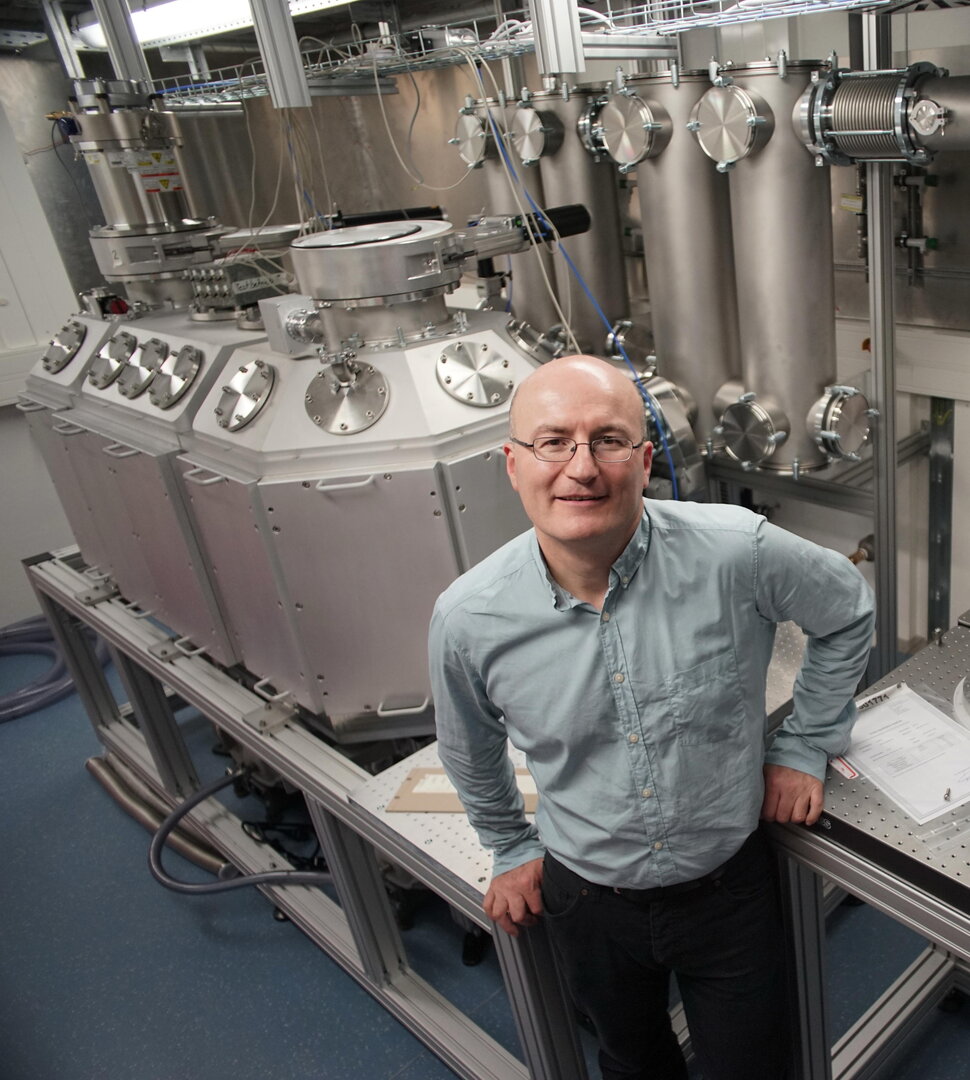
To date, these predictions have not been tested experimentally because the generation of such high electric fields has not been possible. “With ExtremeField, we aim to create, for the first time, experimental conditions near the Schwinger limit where quantum effects in a vacuum can be measured,” explains project coordinator Professor Matt Zepf of the Helmholtz Institute Jena, a branch of GSI. “ To do this, we need to achieve exquisite control of the plasma shape and response. We plan to conduct the required precision experiments at our high-power lasers JeTi in Jena and also at Taranis in Belfast and LWS in Umeå. LWS also forms the basis of a new class of lasers we will develop to achieve maximum performance.”
Three further partners take part in the project: At Heinrich Heine University in Düsseldorf, the team led by Professor Alexander Pukhov develops computer models in the field of strong-field laser-plasma physics and runs them on high-performance computers in Düsseldorf and Jülich. These models aim to describe the evolution of the plasma from the initial breakdown of the material to the generation of harmonics. The theoretical physicists continuously compare the models with the measurements from their experimental partners. “The simulations tell the experimenters where to look, and the experiments show us where our models are still off,” says Pukhov. “Closing this loop is at the heart of the project.”
At Queen’s University Belfast in Northern Ireland, Professor Brendan Dromey will investigate how the glass surface transitions into plasma at the start of the laser pulse. Professor László Veisz from Umeå University in Sweden is setting up the new “SUPER” laser there, whose pulses will be shorter than half a light cycle.
Professor Thomas Nilsson, Scientific Managing Director of GSI and FAIR, offers his congratulations: “The ERC Synergy Grant demonstrates the outstanding quality of the research being conducted at the Helmholtz Institute in Jena and, at the same time, highlights the significance of international collaboration. Together with our partners, we are breaking new ground in laser physics — into dimensions no one has ever explored before — and pushing the boundaries of what is physically possible.” (HHU/CP)


