


Hands-on science at Roßmarkt — Second Science Festival of the Frankfurt Alliance



22.09.2026 |
This news is based on a press release by Goethe University Frankfurt
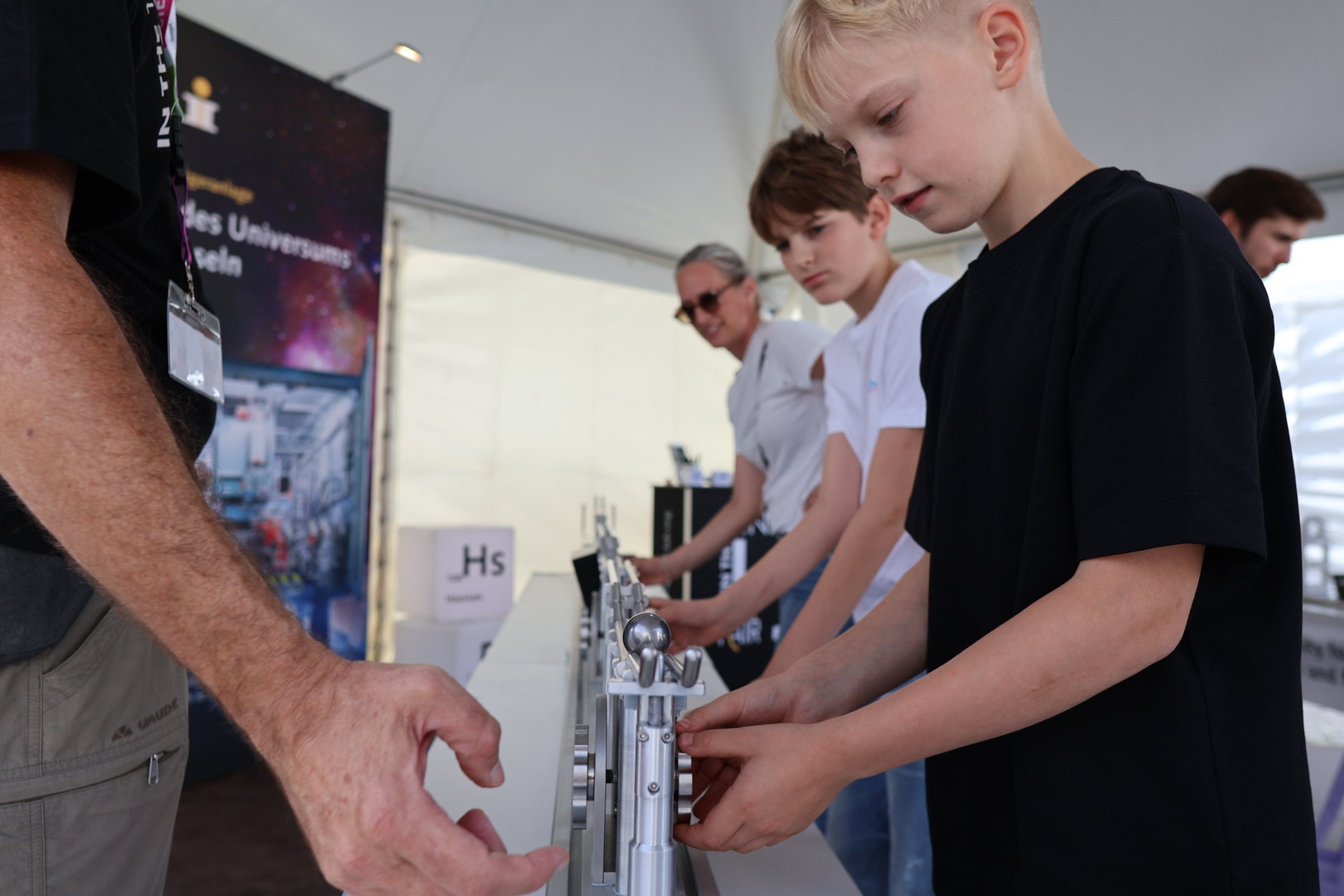
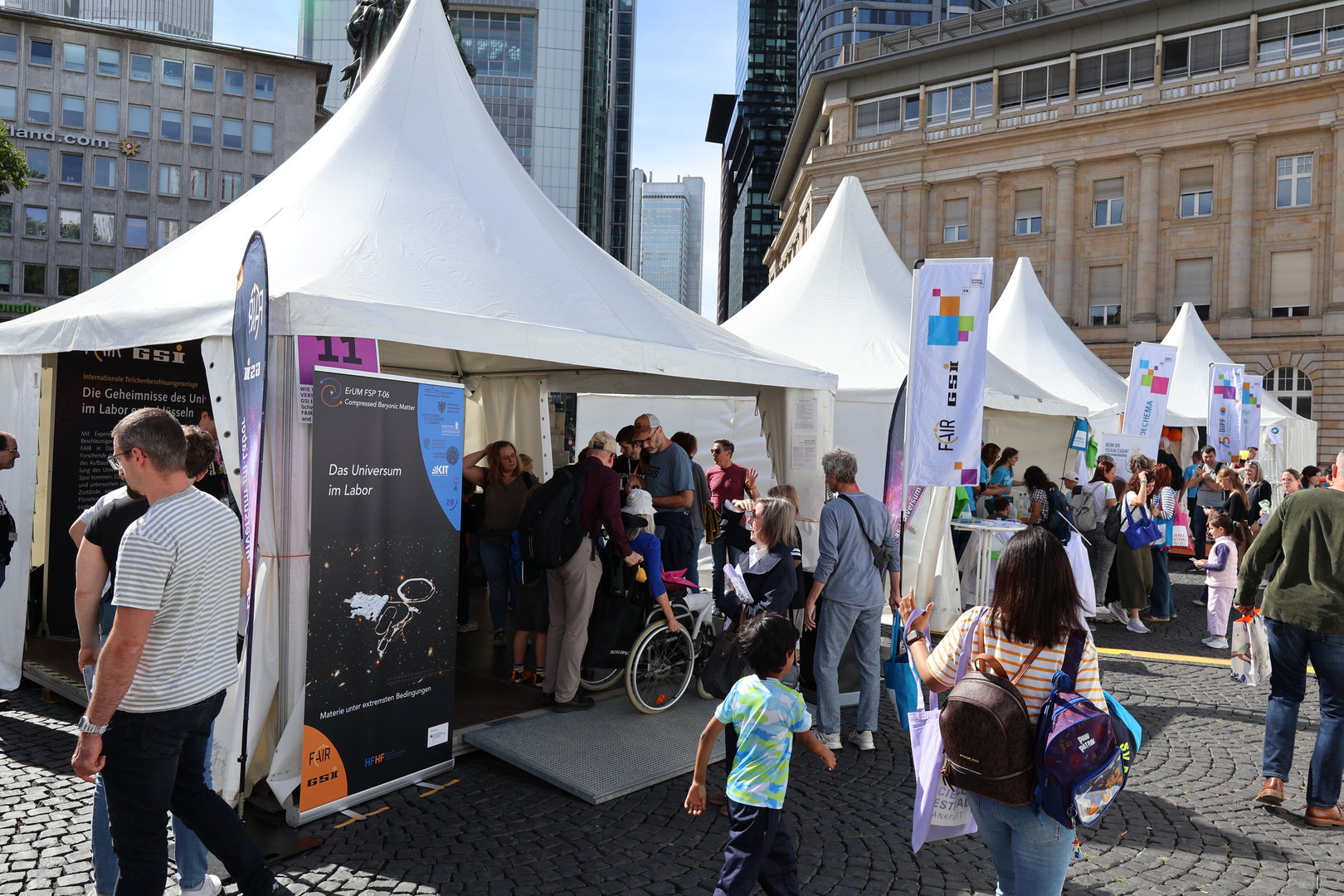
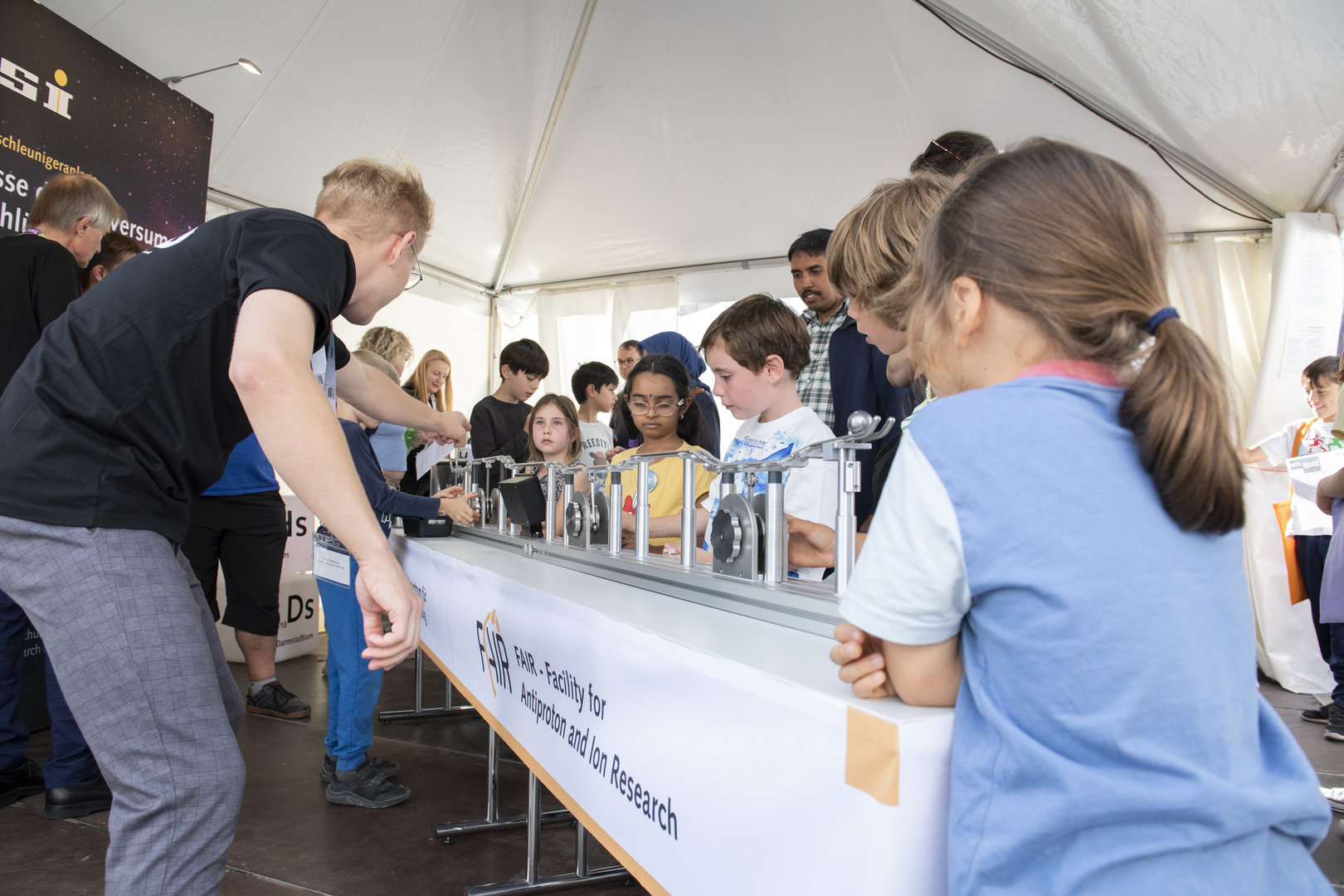
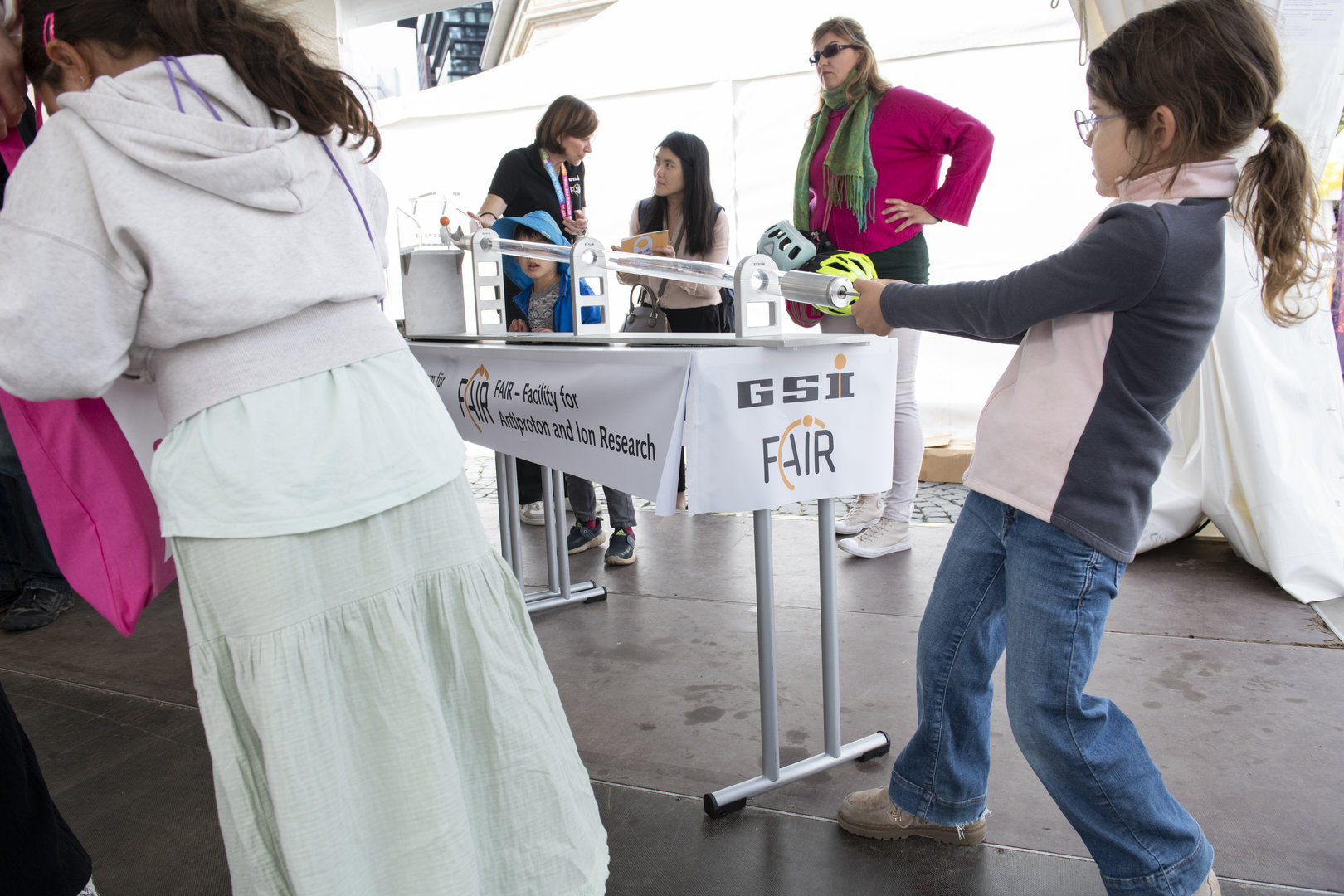
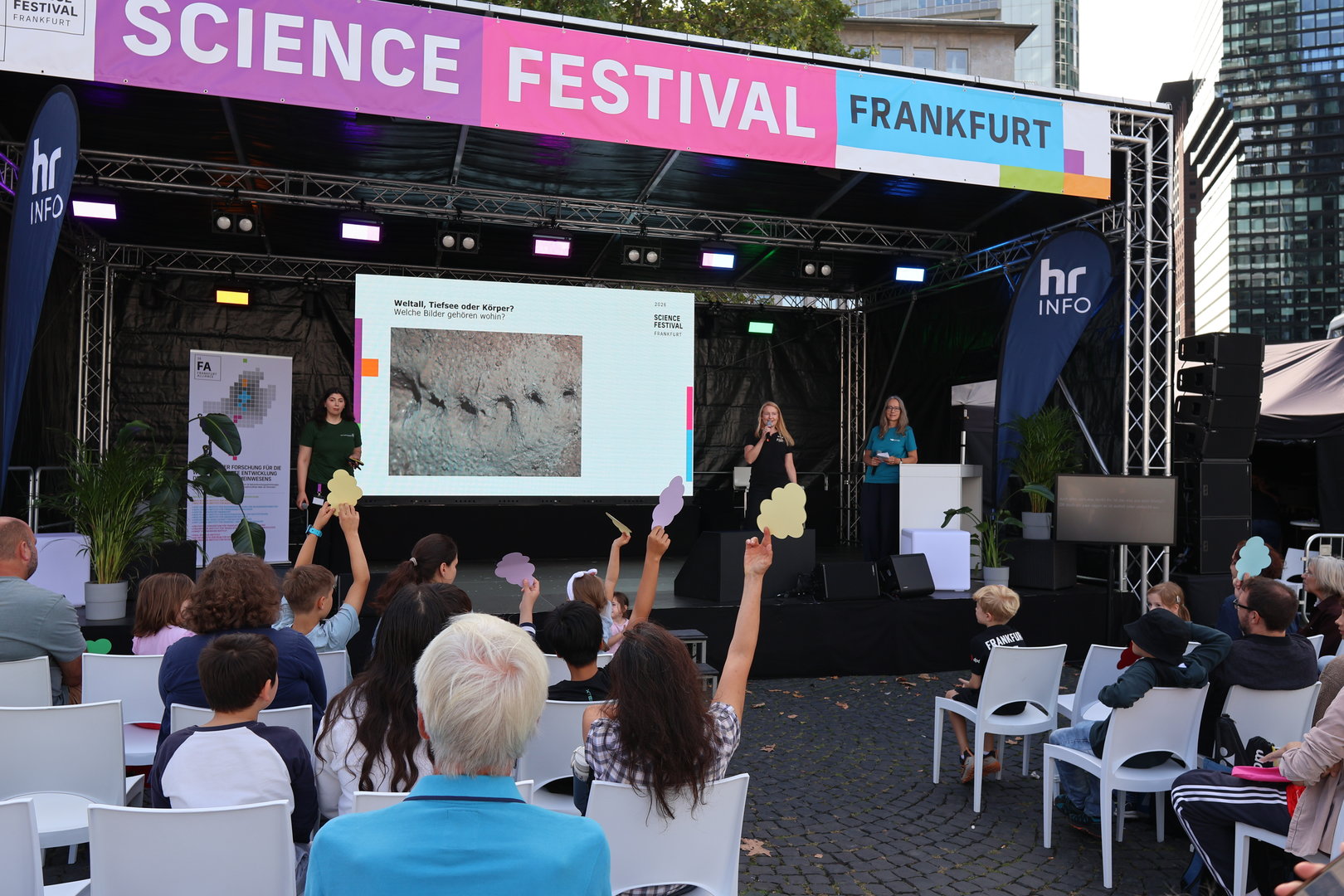
This Saturday, around 20 stations welcomed visitors to Frankfurt’s second Science Festival, bringing science to life for people of all ages. On stage and at interactive stations on the central Roßmarkt square, guests had the chance to explore the research of the Frankfurt Alliance, a network of 16 research institutions from the Frankfurt/Rhine-Main region. GSI/FAIR offered insights into the function of particle accelerators and their scientific work with two hands-on experiments.
For the second time, the Frankfurt Alliance hosted the Science Festival at Roßmarkt. At approximately 20 accessible stations, visitors explored a walk-through heart and a hands-on neutron star, tried their hand at programming, or guessed methods used in brain research. Other stations focused on topics such as compulsory military service, artificial intelligence in vocabulary learning, and extremist emojis on social media; the “Math Eagles” and the Taunus Observatory also presented their work in interactive ways.
At the GSI/FAIR booth, approximately 1,500 visitors of all ages took part in two hands-on experiments to find out how the particles are brought up to speed at the accelerator facilities and how a new element can be produced by nuclear fusion. A total of six elements were created at GSI/FAIR, including Darmstadtium (named after the city of Darmstadt) and Hassium (named after the federal state of Hesse).
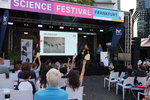
On stage, Stephan Hübner from Hessischer Rundfunk hosted talks, discussions, and shows, including a mentalist, a science musical, and a drumming workshop inviting children to discover science through rhythm. Here, GSI/FAIR, together with the Max Planck Institute for Biophysics and the Senckenberg – Leibniz Institution for Biodiversity and Earth System Research, presented a quiz on the topic “Space, the Deep Sea, or the Human Body?” The youngest visitors explored the festival grounds on a scavenger hunt, collecting stamps at the various stations.
“Science thrives on exchange – and that’s exactly what we want to foster with our science festival. After the first edition, we’re excited to once again showcase the diversity and relevance of research in Frankfurt and the Rhine-Main region. Whether it’s astrophysics, medicine, climate, or social issues: science is everywhere. Our festival brings researchers and the public together, makes current research accessible, and invites everyone to ask questions and discover something new. Because science shouldn’t just happen behind university doors – it belongs at the heart of society,” said Goethe University President Prof. Dr. Enrico Schleiff, who opened the festival for the Frankfurt Alliance together with Prof. Dr. Melanie Wald-Fuhrmann, Director at the Max Planck Institute for Empirical Aesthetics, and Christoph Degen, State Secretary at the Hessian Ministry of Science and Research, Arts and Culture, who also accelerated a particle at the GSI/FAIR hands-on experiment during a tour of the booths.
“The Science Festival demonstrates how science serves society and makes science accessible and engaging. Research is never an end in itself – not even fundamental research. We cannot tackle the big questions of our time without science and research. How do we address climate change? How can we stay healthy for as long as possible? How do we end wars? And how do we overcome inequalities of opportunity in the education system? The benefit of research for society comes from its transfer into the community and the direct dialogue between science and society, which plays a vital role. This exchange builds trust in science and is indispensable for fact-based opinion formation and decision-making,” said State Secretary Degen.
Most of the stage program was interpreted in both sign and spoken language and transcribed live; hearing assistance and resources for visitors sensitive to sensory stimuli were available at the info point. (CP)
The Frankfurt Alliance
The Frankfurt Alliance was established in 2024 as a partnership between Goethe University and 15 non-university research institutions from the Frankfurt/Rhine-Main region. The alliance includes institutes from the four major scientific organizations as well as a federal institution. The Frankfurt Alliance aims to make scientific collaboration easier through improved networking and to help make research topics more visible.
The following institutes are part of the Frankfurt Alliance:
- ATHENE – National Research Center for Applied Cybersecurity,
- German Consortium for Translational Cancer Research,
- DIPF | Leibniz Institute for Research and Information in Education,
- Ernst Strüngmann Institute (ESI) of the Max Planck Society,
- Fraunhofer Institute for Translational Medicine and Pharmacology ITMP,
- Goethe University Frankfurt,
- GSI Helmholtzzentrum für Schwerionenforschung GmbH / Facility for Antiproton and Ion Research in Europe (FAIR GmbH),
- Leibniz Institute for Financial Research SAFE,
- Max Planck Institute of Biophysics,
- Max Planck Institute for Empirical Aesthetics,
- Max Planck Institute for Heart and Lung Research,
- Max Planck Institute for Brain Research,
- Max Planck Institute for Legal History and Legal Theory,
- Paul Ehrlich Institute,
- PRIF – Leibniz Institute for Peace and Conflict Research,
- Senckenberg Society for Nature Research.


