


European Commission’s Joint Research Centre and GSI/FAIR explore closer cooperation
15.09.2026 |
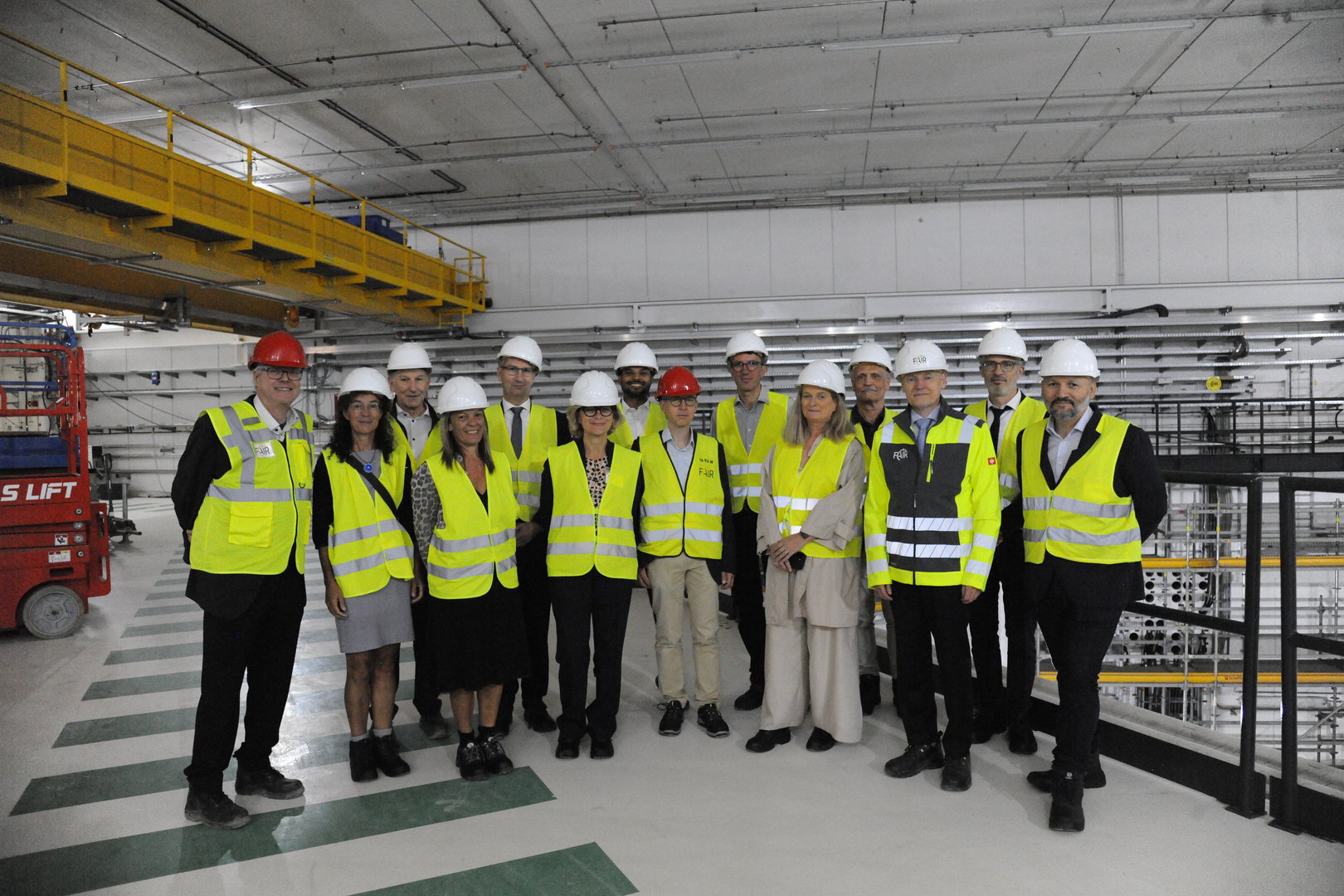
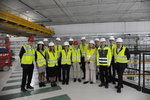
A high-level delegation from the European Commission’s Joint Research Centre (JRC) visited GSI and FAIR on 11 September 2026 to explore opportunities for closer cooperation in science and technology and in Science for EU Policies.
Europe’s major research infrastructures are built to push the boundaries of knowledge. But their impact increasingly extends far beyond science, into advanced technologies, new solutions and applications, skills and talent, industrial capabilities and the evidence needed to shape public policy. Against this backdrop, the visit opened a dialogue on how the complementary strengths of the JRC and GSI/FAIR could form the basis for a more structured, long-term partnership.
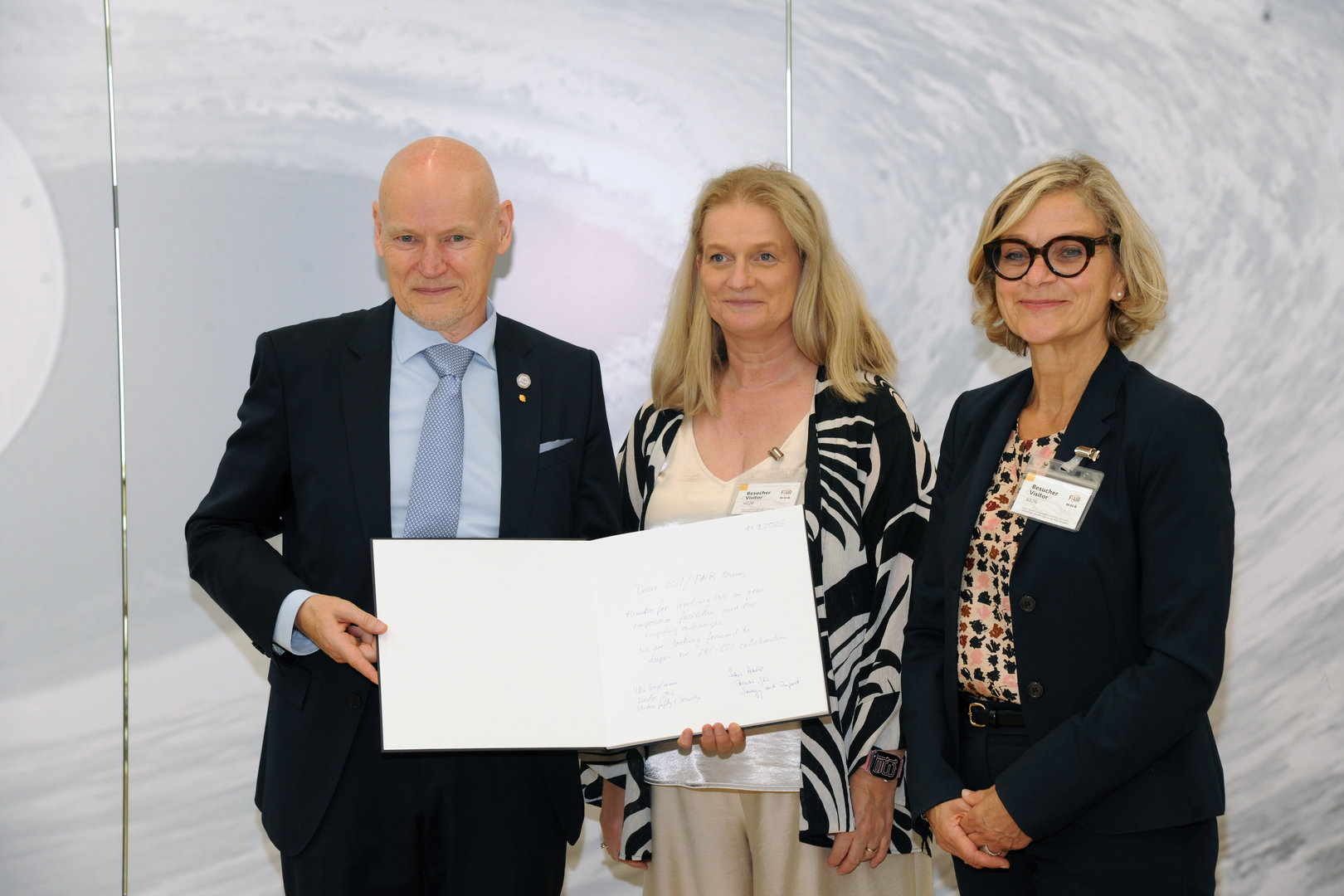
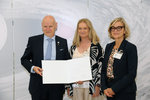
The JRC delegation was led by Sabine Henzler, Director of JRC Directorate A (Strategy and Impact), and Ulla Engelmann, Director of JRC Directorate G (Nuclear Safety and Security), and was welcomed by Professor Thomas Nilsson, Scientific Managing Director of GSI and FAIR, together with representatives of the GSI/FAIR research and management teams.
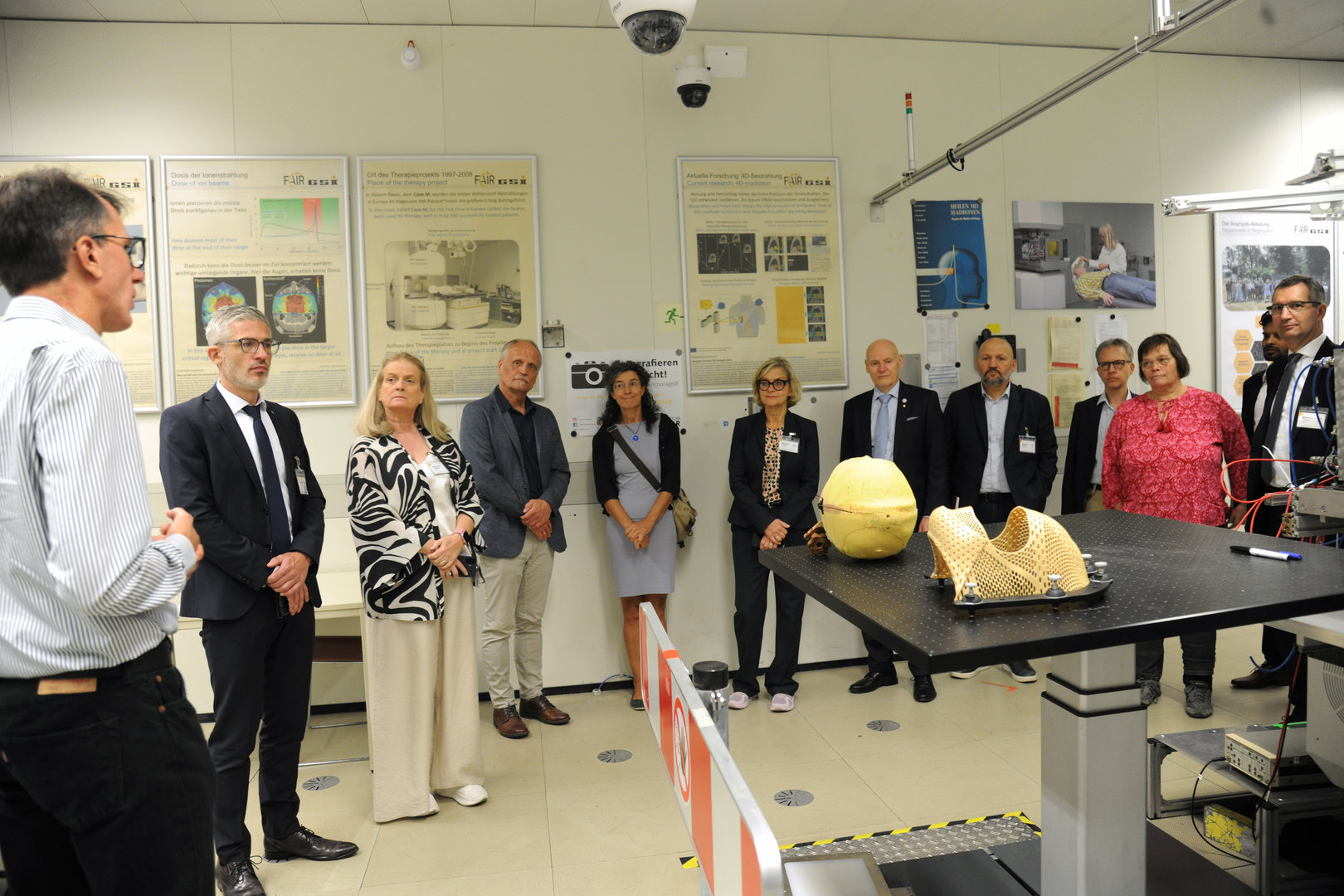
Following an introduction to the scientific mission and activities of GSI and FAIR, the delegation visited the FAIR construction site. The programme included the SIS100 accelerator, superconducting magnet technology and the Super-FRS experimental facility. The visitors also toured the GSI/FAIR Biophysics, where pioneering research and technology with ion beams laid the foundations for carbon-ion cancer therapy in Europe, with 440 patients treated at GSI between 1997 and 2008.
The visit also reflects key priorities of the High-Tech Agenda Germany (HTAD), from strategic investment in research infrastructures and knowledge and technology transfer to talent and European cooperation. By bringing together scientific and technological capabilities at German and European level, GSI/FAIR and the JRC can help translate advances in research into innovation and future value, while contributing to solutions for complex challenges, including in health (from cancer treatment to human health in deep space) and fusion energy technologies.
“Major research infrastructures such as GSI and FAIR are not only centres of scientific excellence. They develop advanced technologies, bring together international talent and create capabilities of strategic importance for Germany and Europe. Closer cooperation with the Joint Research Centre offers an important opportunity to build on these strengths, accelerate the path from research to application and contribute to solutions for major societal challenges,” said Professor Thomas Nilsson.
Discussions during the visit identified a broad range of areas where the expertise and infrastructures of the JRC and GSI/FAIR could complement each other, ranging from accelerator and detector technologies, nuclear research and target preparation to advanced materials, health applications, data and digital technologies.
The discussions also addressed Science for EU Policies and the broader role that major research infrastructures can play in supporting European competitiveness, strategic foresight, skills development and international scientific cooperation.
GSI, FAIR and JRC are currently developing a Memorandum of Understanding (MoU) to provide a structured framework for long-term cooperation. Encompassing both scientific and technological collaboration and Science for EU Policies, the MoU would connect areas of shared scientific expertise with broader European priorities. The visit marked an important step towards translating shared interests into concrete future activities. (CP)


