


Decelerated Ions: Scientists from GSI/FAIR and TU Darmstadt take a major step forward in research on highly charged particles
31.08.2026 |
This news is based on a press release by TU Darmstadt
Researchers at the Technical University of Darmstadt and the GSI Helmholtzzentrum für Schwerionenforschung have succeeded for the first time in decelerating highly charged ions from the GSI accelerator to low energies and subsequently storing them in a Penning trap. They were also successful in performing the first-ever electron cooling of highly charged ions in such a trap. The results have now been published in the journal “Physical Review X (PRX)”.
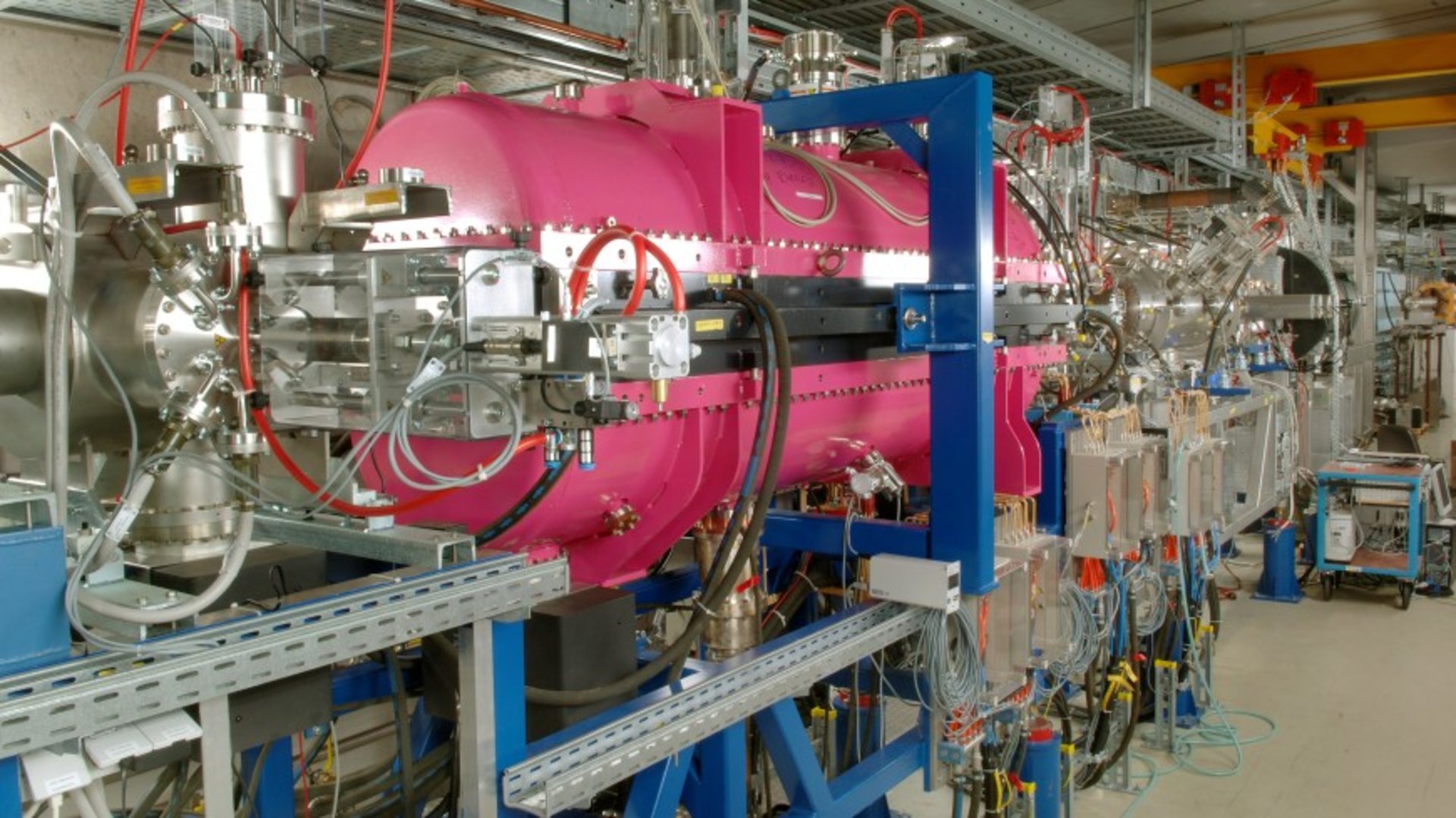
Highly charged ions are typically produced at high energies and travel at high velocities. However, many experiments in atomic, nuclear, and fundamental physics require these ions to be strongly decelerated, captured, and cooled. The HITRAP facility at GSI was specifically developed for this purpose and will provide unique opportunities for experiments with slow highly charged ions.
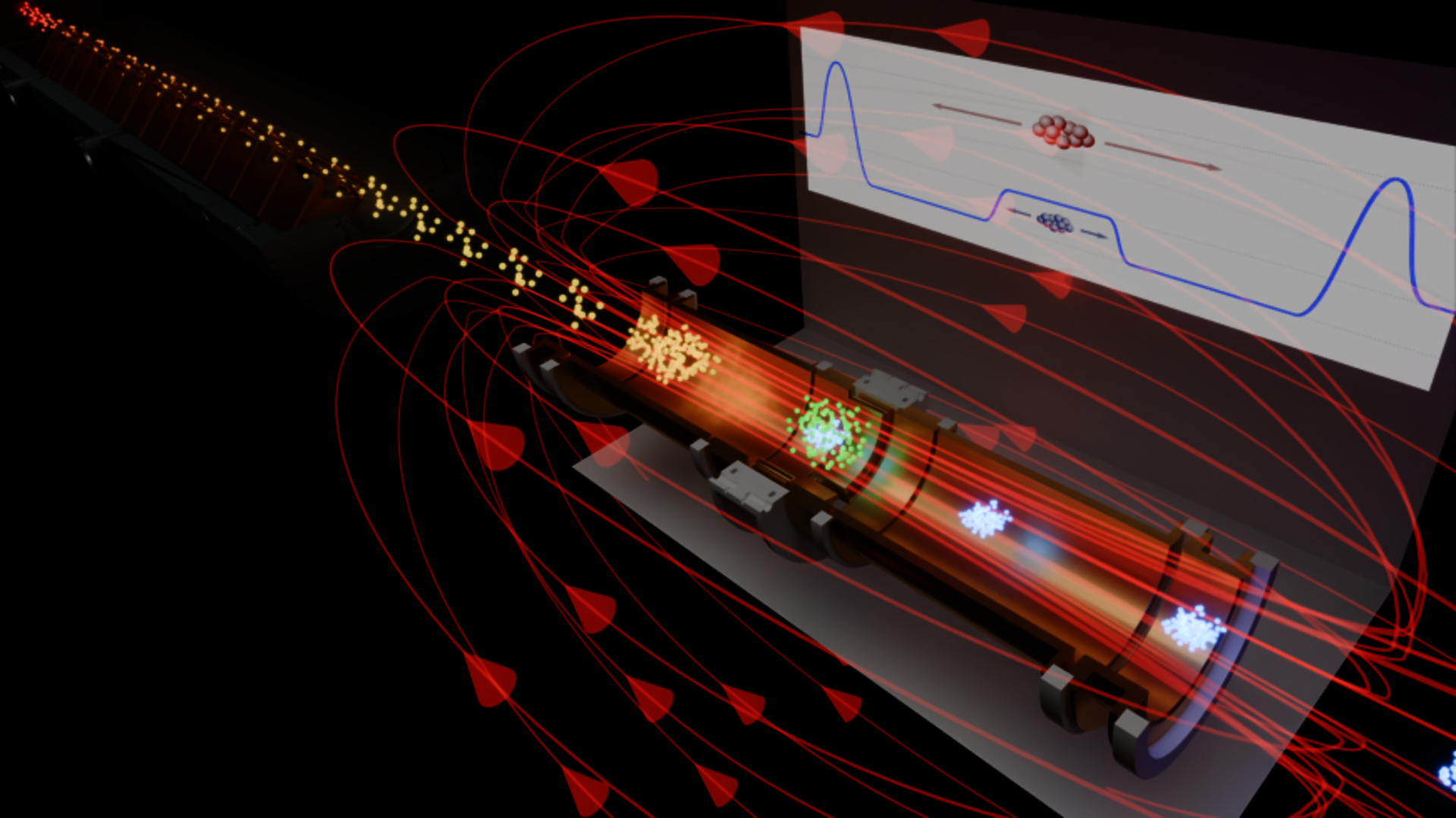
In the work now published, carried out in close collaboration with GSI’s Decelerator Division, researchers succeeded for the first time in decelerating and trapping fully ionized argon ions from the accelerator system over several stages. “In the experiment we conducted, we used Argon ions from which we had stripped away all electrons, leaving only the bare atomic nuclei,” reports Dr. Simon Rausch, leading author of the publication, who earned his Ph.D. in Professor Wilfried Nörtershäuser’s research group at the Department of Physics at TU Darmstadt. “The production took place at about 30 percent of the speed of light, and before we could trap the ions, we first had to reduce their kinetic energy by a factor of about 10,000.” This was achieved in the decelerator structure of the HITRAP facility. The ions were then stored in the HITRAP Cooling Trap for several seconds. “This marked the first time the entire path of accelerator-produced highly charged ions—all the way to their storage in a Penning trap—was demonstrated”, says Rausch.
The researchers also achieved the first observation of electron cooling of highly charged ions in a Penning trap. This technique reduces the ions’ kinetic energy and constitutes a key prerequisite for future high-precision experiments.
The newly published results establish the technological foundations for a broad range of experiments at HITRAP. Their significance was already demonstrated in the first user experiment at the facility, where slow highly charged gold ions were employed for materials science studies. The milestones described in “Physical Review X” provide the basis for a unique research platform for precision studies with heavy highly charged ions.
Prior to that, however, HITRAP will be used as an interim injector until 2028 as the project PARTIH for the international accelerator center FAIR currently under construction at GSI. Afterwards, the facility is to be rebuilt in its original form as HITRAP and continue the research program using the beam from the GSI accelerator complex. (TUD/BP)
More information
The work was funded by the German Federal Ministry of Research, Technology and Space and supported by the Helmholtz Research Academy Hesse for FAIR (HFHF).
Scientific publication in the journal Physical Review X
Press release of TU Darmstadt
More about the project PARTIH


