


SIBAF project at GSI/FAIR: €9.7 million in funding for innovative fusion materials research and accelerator development
20.08.2026 |
With funding from the Federal Ministry of Research, Technology and Space (BMFTR), the new project SIBAF (Supraleitender Ionenbeschleuniger als BAsistechnologie für die Fusionsforschung) will establish a unique accelerator-based infrastructure for the rapid qualification of advanced materials for future fusion power plants. As part of the funding program “Basistechnologien für die Fusion – auf dem Weg zu einem Fusionskraftwerk” (Basic technologies for fusion – on the path to a fusion power plant), SIBAF will receive €9.7 million over three years, of which €8.1 million will support activities at the GSI Helmholtzzentrum für Schwerionenforschung and the international accelerator center FAIR, currently under construction. Alongside GSI, which coordinates the project, Goethe University Frankfurt is the project partner.
Future fusion reactors require materials capable of withstanding extreme temperatures and intense neutron exposure over long operating periods. Developing and qualifying such materials is one of the key technological challenges on the path toward fusion energy.
While neutron irradiation experiments remain indispensable, they are expensive and available only at a limited number of facilities. Heavy-ion irradiation provides a complementary approach, enabling radiation damage to be generated faster under precisely controlled conditions while reducing sample activation and simplifying subsequent sample analysis.
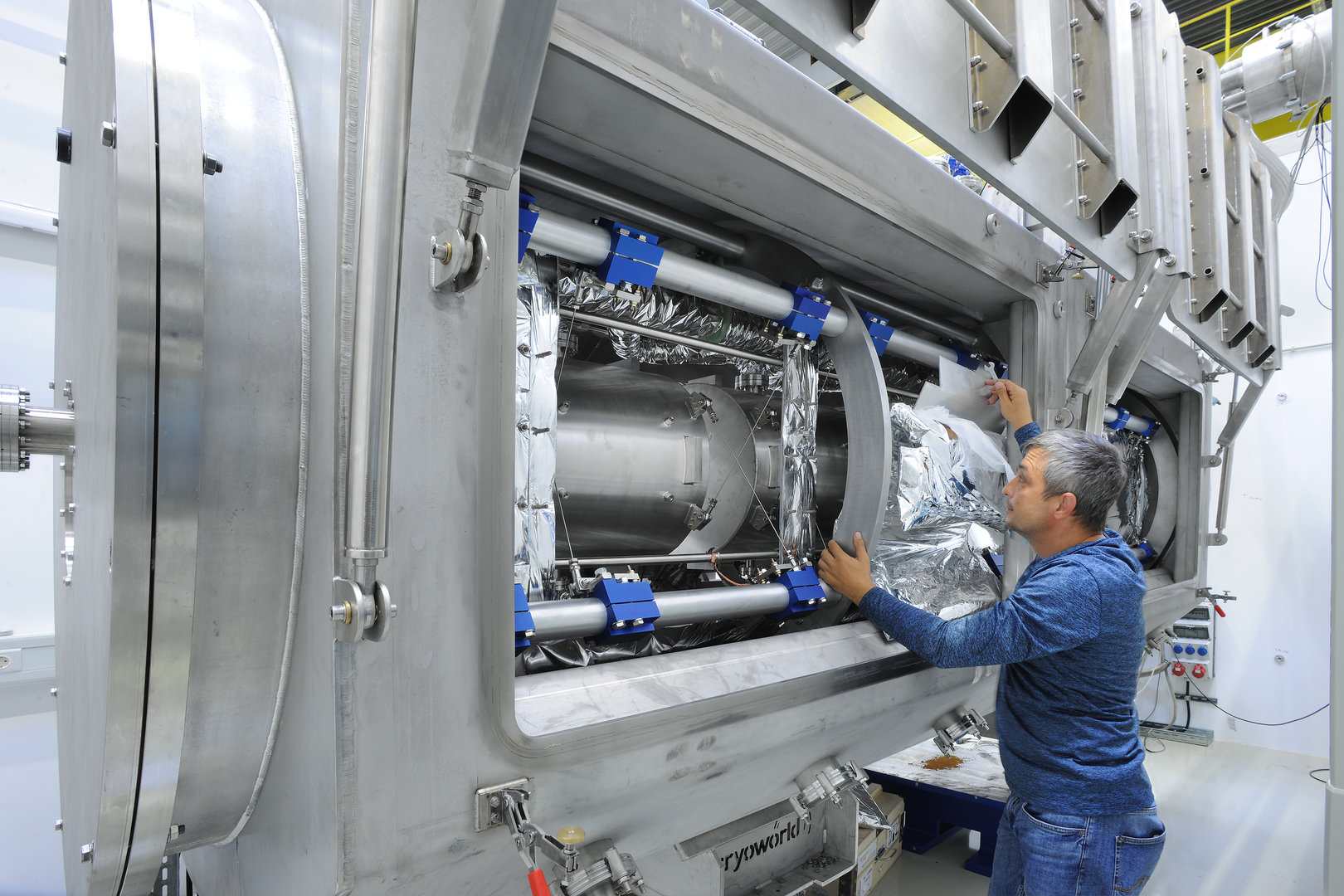
To enable these studies, SIBAF will further develop the future superconducting continuous-wave accelerator HELIAC (Helmholtz LInear ACcelerator), which is currently partly under construction on the GSI/FAIR campus. Based on HELIAC’s first cryomodule and GSI/FAIR’s existing high-charge-state injector (HLI), the project will establish a dedicated irradiation facility equipped with temperature-controlled sample environments and automated sample handling. By combining state-of-the-art superconducting accelerator technology with advanced irradiation and materials characterization capabilities, the facility will enable faster, more reproducible, and significantly more energy-efficient qualification of candidate fusion materials. GSI/FAIR and Goethe University are contributing their complementary expertise to establish HELIAC as a unique infrastructure in Europe for the ion-beam qualification of fusion materials.
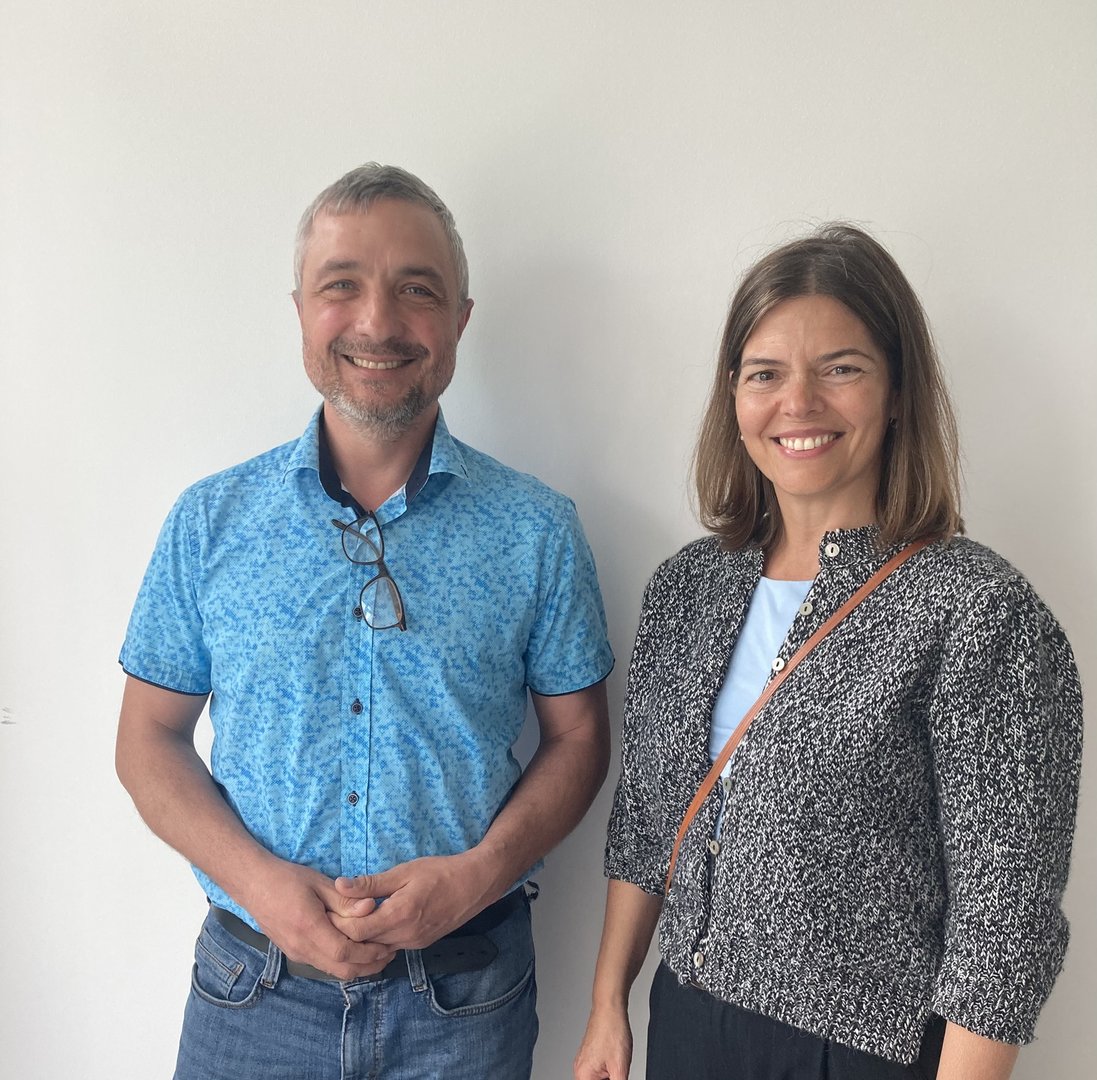
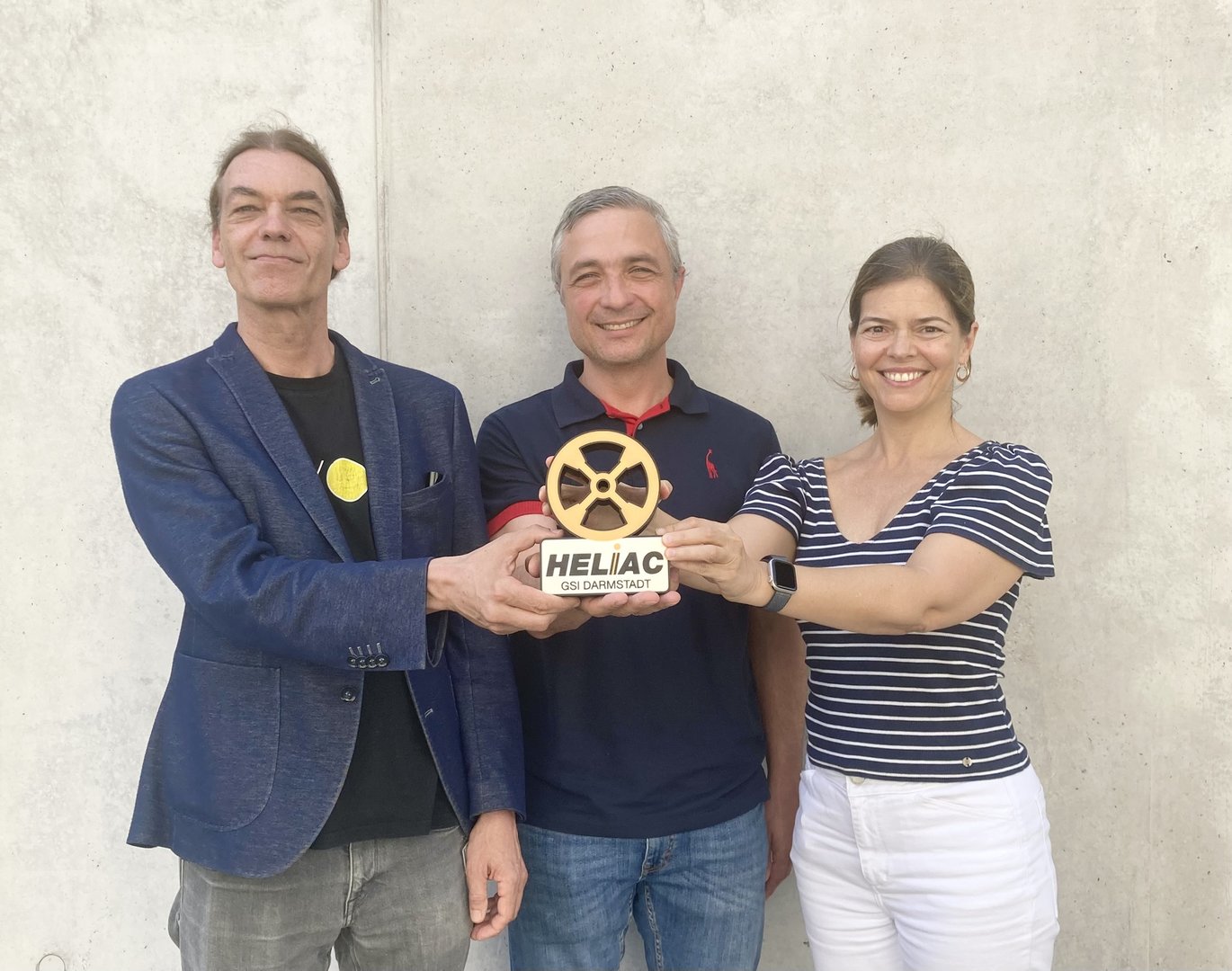
The project is coordinated by Dr. Maksym Miski-Oglu, head of the cw-Linac working group at GSI/FAIR. He says: “SIBAF will transfer the expertise in superconducting linear accelerator technology built up over many years into practical applications. We are excited that our developments will directly support the search for materials needed for future fusion power plants.”
Professor Maria Eugenia Toimil-Molares, Head of Materials Research, emphasizes: „The new HELIAC-based irradiation facility will ideally complement GSI/FAIR’s unique ion-beam infrastructure for materials research. Together, these facilities will provide unique opportunities to investigate radiation effects and developing materials for extreme radiation environments. Continuous-wave heavy-ion irradiation will enable faster and better controlled damage accumulation, significantly contributing to the qualification of advanced materials for future fusion reactors.”
The Scientific Managing Director of GSI and FAIR, Professor Thomas Nilsson, adds: “This funding recognizes the strength of accelerator technologies and materials research at GSI/FAIR and its growing importance for future energy technologies. SIBAF will significantly contribute to the development and qualification of materials for fusion applications while also providing excellent training opportunities for the next generation of scientists and engineers in fusion materials and ion accelerator technology. SIBAF will strengthen Germany’s contribution to international fusion research.”
The consortium gratefully acknowledges the important contribution of Professor Winfried Barth to the conception, preparation, and initial submission of the SIBAF project proposal. (BP)
About the BMFTR funding program
The funding guideline “Basistechnologien für die Fusion – auf dem Weg zu einem Fusionskraftwerk” supports the development of key technologies required for the successful future demonstration of fusion power plants. It is part of the funding programme “Fusion 2040 – Research on the Way to the Fusion Power Plant”, which aims to establish the scientific and technological foundations for the construction and operation of the world’s first fusion power plant in Germany. Funding for fusion research forms part of the German Government’s High-Tech Agenda for Germany.


