


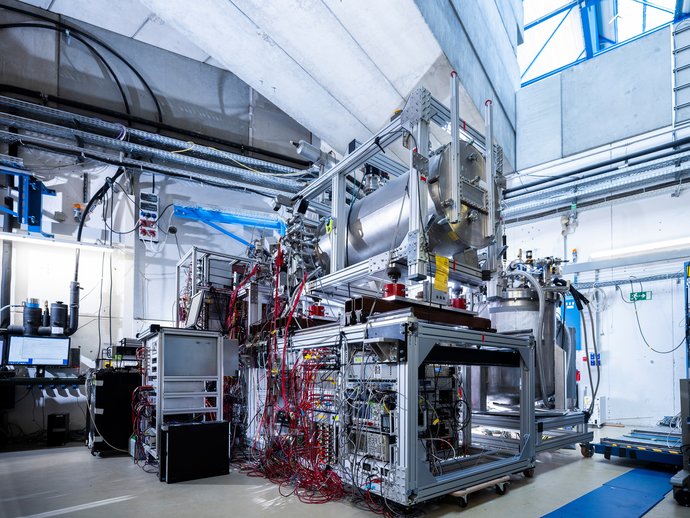
An international research team led by the University of Edinburgh, in collaboration with researchers from GSI/FAIR, Justus Liebig University Gießen (JLU), and other partner institutions, has developed a new experimental approach to studying short-lived radioactive molecules. This work lays the cornerstone for a new generation of precision experiments capable of investigating fundamental questions in physics — ranging from the search for physics beyond ...
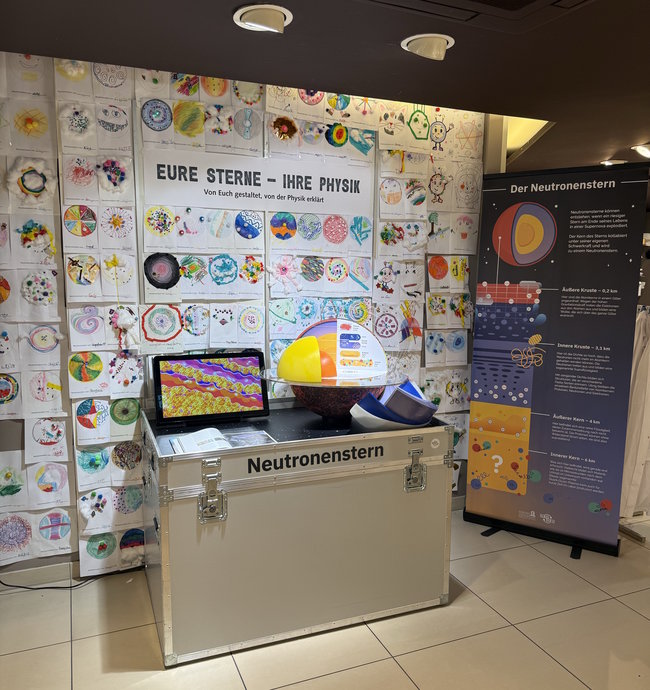
The 2026 summer outcome for the GSI/FAIR SCIENCE POP-UP is extremely positive: The activities in the interactive hands-on space were among the summer attractions in downtown Darmstadt. Despite the sometimes very hot temperatures, more than 1,200 science enthusiasts of all ages visited the exhibition space in Darmstadt’s pedestrian zone during the school vacation and took the opportunity to learn about cutting-edge research using particle accelerators.
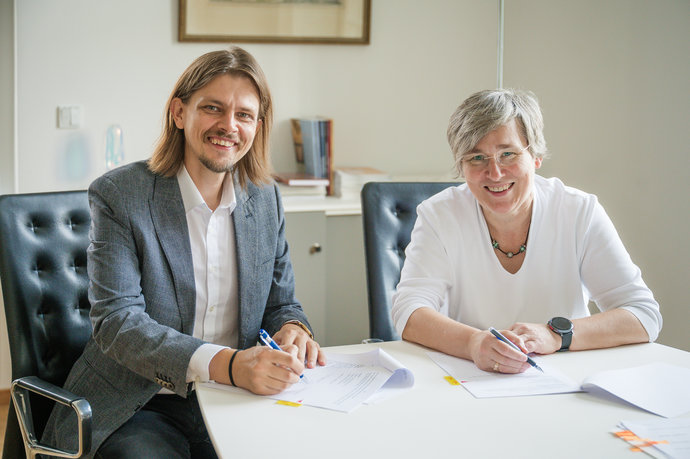
Physicist Professor Maxim Mai has been appointed to the professorial chair of Theoretical Hadron Physics at Justus Liebig University Gießen (JLU), starting on September 1, 2026. This is a joint appointment with the GSI Helmholtzzentrum für Schwerionenforschung in Darmstadt, to which JLU has been closely linked through a cooperative partnership for more than 15 years. The professorship is being established as part of the German Research Foundation’s (DFG) Heisenberg Program.
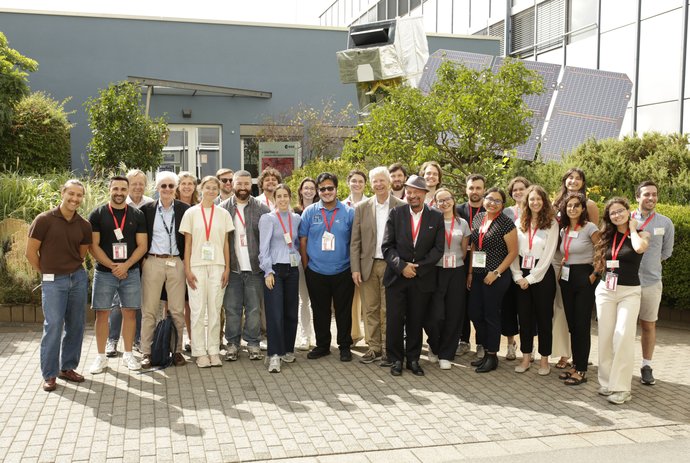
How can astronauts and satellites be protected from cosmic radiation? What part do particle accelerators play in this? These questions are the focus of the “ESA-FAIR Space Radiation Summer School 2026”, which is currently being held in Darmstadt. This renowned event is the world’s leading training program in the field of space radiation research and brings together young researchers from more than ten countries to spend two weeks intensively addressing the challenges posed by cosmic radiation...
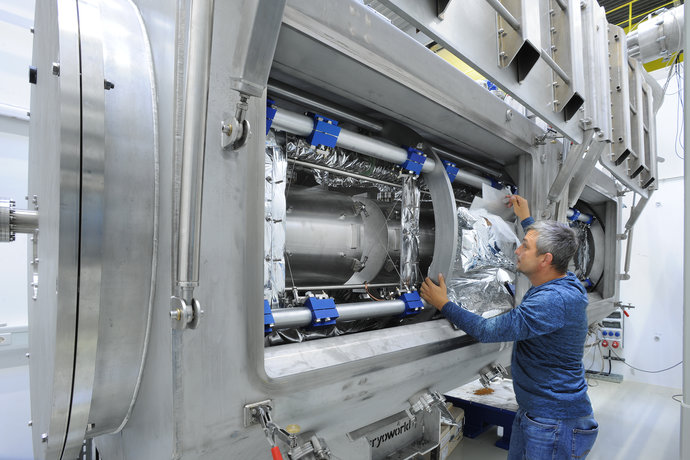
With funding from the Federal Ministry of Research, Technology and Space (BMFTR), the new project SIBAF (Supraleitender Ionenbeschleuniger als BAsistechnologie für die Fusionsforschung) will establish a unique accelerator-based infrastructure for the rapid qualification of advanced materials for future fusion power plants. As part of the funding program “Basistechnologien für die Fusion – auf dem Weg zu einem Fusionskraftwerk” (Basic technologies for fusion – on the path to a fusion power…
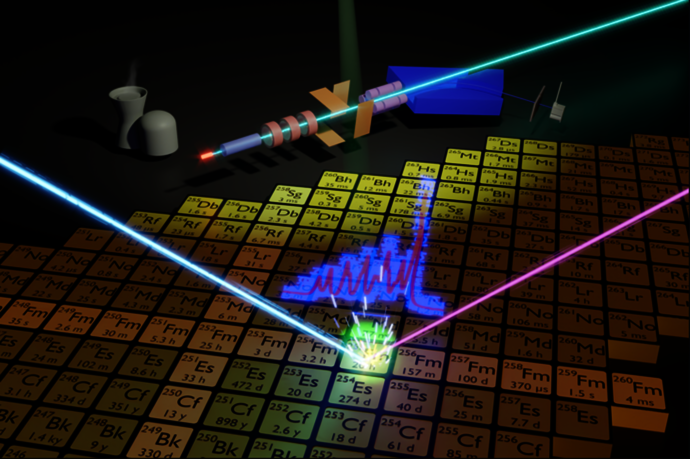
First high-precision measurements of the fermium-255 nucleus validate modern nuclear models and advance the search for superheavy elementsFor the first time, researchers have determined the shape of the actinide nucleus of fermium‑255 and measured its structure with high precision and resolution. This breakthrough, published in Physical Review Letters, supports modern theoretical models and opens new possibilities for understanding the behavior of the heaviest atomic nuclei.
Focus on the Universe – GSI/FAIR's lecture series “Wissenschaft für Alle” in the second term of 2026
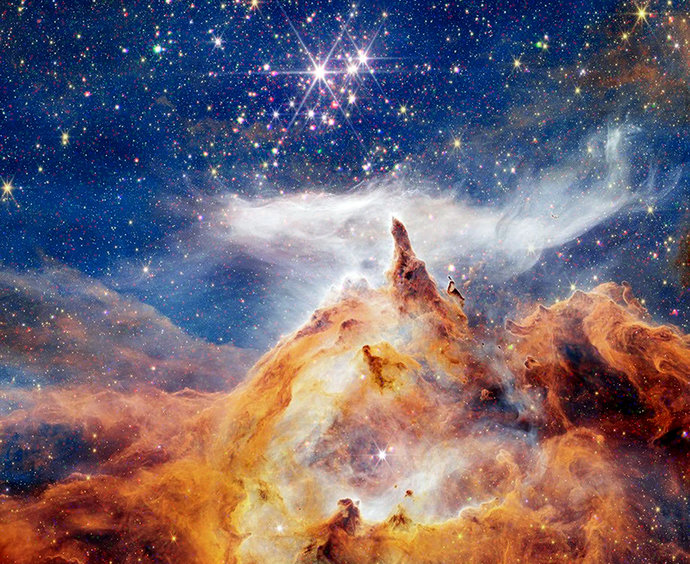
GSI/FAIR will continue its popular public lecture series “Wissenschaft für Alle” in a hybrid format in the second term of 2026. Interested parties can either attend the event in the lecture hall of GSI/FAIR following a registration or dial into the broadcast of the event via video conference using an internet-enabled device such as a laptop, cell phone or tablet. The program begins on Wednesday, August 19, 2026, with a lecture by Professor Hannah Elfner on the cosmic origin of matter.
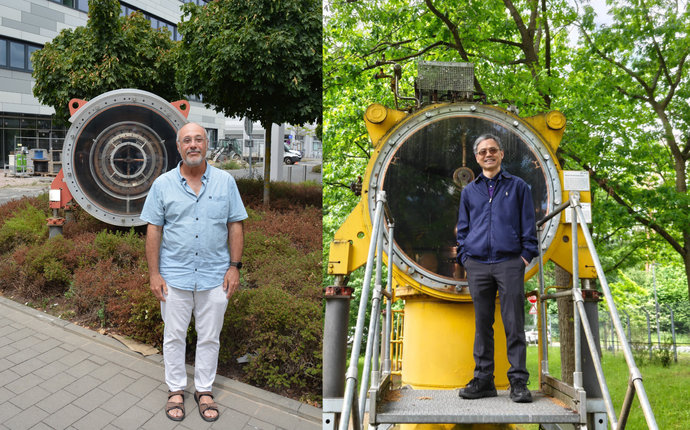
The GSI Helmholtzzentrum für Schwerionenforschung in Darmstadt and the future FAIR accelerator facility continue to attract world-leading scientists. This year, two winners of the prestigious Humboldt Research Award are conducting research at the Darmstadt site: Professor Yong-Zhong Qian (University of Minnesota, USA) was already on site, and Dr. Peter Jacobs (Lawrence Berkeley National Laboratory, USA) is expected to arrive in the second half of 2026.
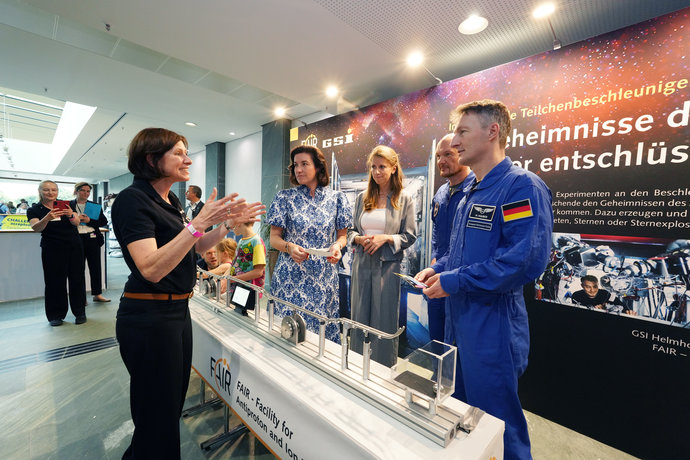
“Challenge accepted! Research has the answer!” That was not only the motto of the Open House hosted by the Federal Ministry of Research, Technology and Space (BMFTR) on June 20 and 21 in Berlin, but also a key theme at the modern information booth where the GSI Helmholtzzentrum für Schwerionenforschung and the international accelerator center FAIR presented their work at the event. GSI and FAIR enthused visitors with an interactive challenge in a particle accelerator game and other hands-on…


