


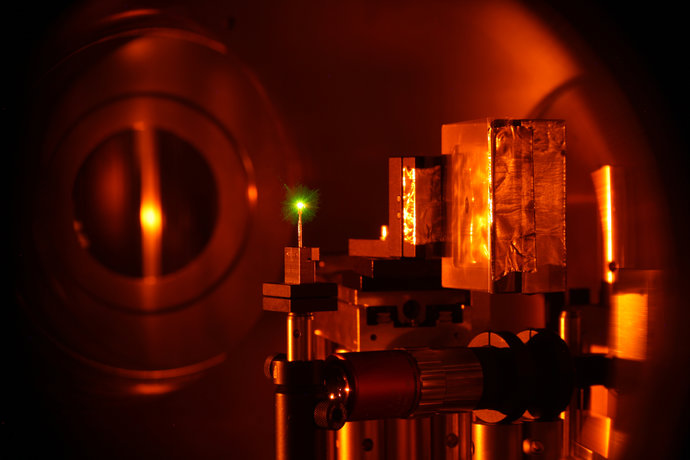
The French research organization CNRS (Centre National de la Recherche Scientifique) and three research centers of the Helmholtz Association, among them GSI Helmholtzzentrum für Schwerionenforschung, have joined forces to form the Dark Matter Lab (DMLab), an international research laboratory (IRL) dedicated to the study of dark matter. The DMLab is coordinated on the German side by DESY.
How are the building blocks of our life created? What weapons can help humanity in the fight against cancer? What are planets composed of in their innermost core? What is currently happening on the construction site for one of the world's largest research projects? Answers to these and many other exciting questions can be found at the Open House, to which the GSI Helmholtzzentrum für Schwerionenforschung and the future accelerator center FAIR invite on Saturday, 15 July 2023, from 10 a.m. to 4…
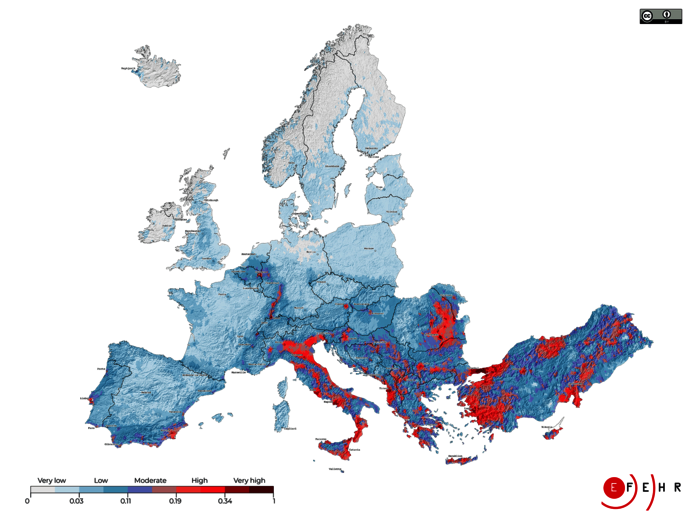
Can nuclear physics improve the prediction of earthquakes? That is the goal of the European research project artEmis, in which the GSI Helmholtzzentrum für Schwerionenforschung is participating together with twelve other institutes. Within the framework of artEmis, which is supported by an EU grant (Euratom) of two million euros until 2027, the foundation for a reliable early warning system for earthquakes is to be laid. A network of sensors measuring radon levels and other parameters in…
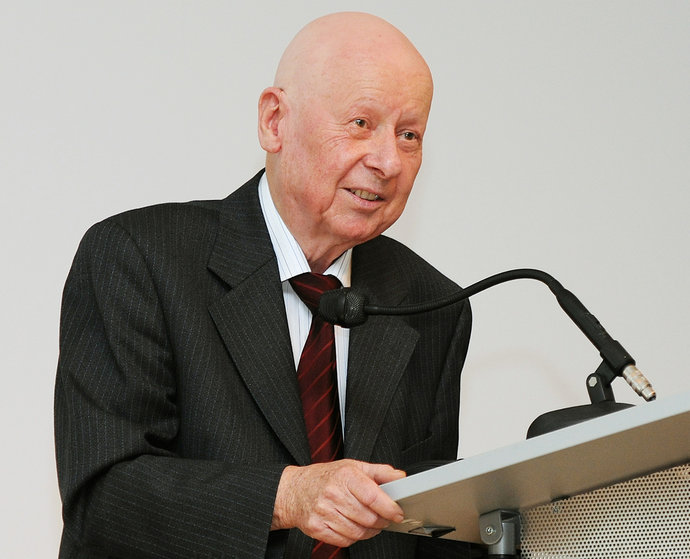
Professor Gerhard Kraft, biophysicist and pioneer of modern heavy ion therapy, passed away in Heidelberg on Saturday, March 18, 2023 at the age of 81. GSI and FAIR received the news with deep sadness and mourn the loss of one of their most renowned scientists. The initiator and decisive pioneer of tumor therapy with ion beams established the biophysical research department at GSI in the early 1980s, which he headed from 1981 to 2008. For his exceptional merits, especially in cancer research and…
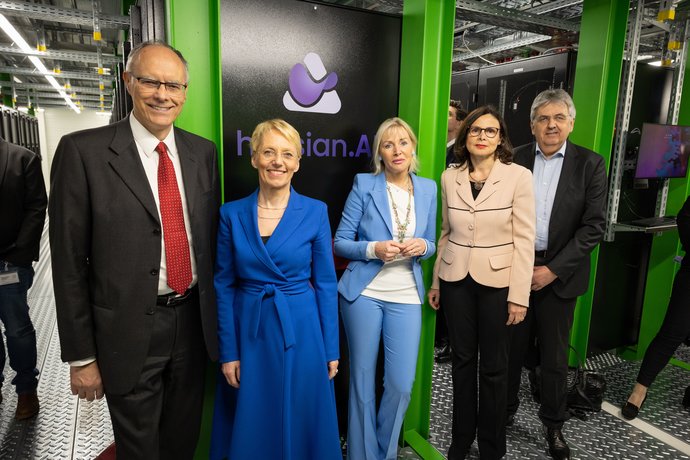
Hessen's Digital Minister Prof. Dr. Kristina Sinemus today inaugurated the AI Innovation Lab at the Green IT Cube of the GSI Helmholtzzentrum für Schwerionenforschung in Darmstadt. Funded with approximately 10 million euros, the project serves as a focal point for companies, startups and academia with the central goal of providing access to an AI supercomputing infrastructure.
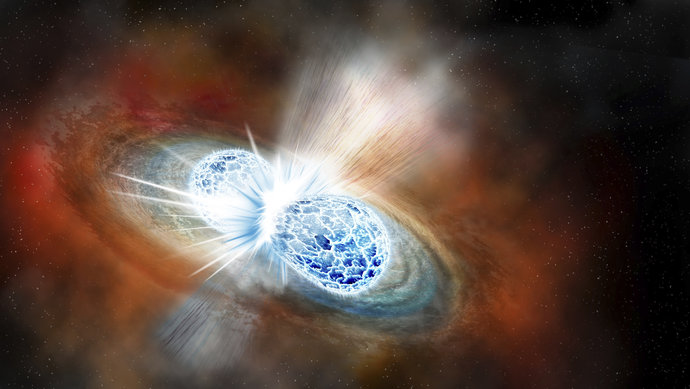
When neutron stars collide, they produce an explosion that, contrary to what was believed until recently, is shaped almost like a perfect sphere. Although how this is possible is still a mystery, the discovery may provide a new key to measuring the age of the Universe. The discovery was made by an international collaboration with participation of researchers of the GSI Helmholtzzentrum für Schwerionenforschung in Darmstadt and led by astrophysicists from the University of Copenhagen. The result…
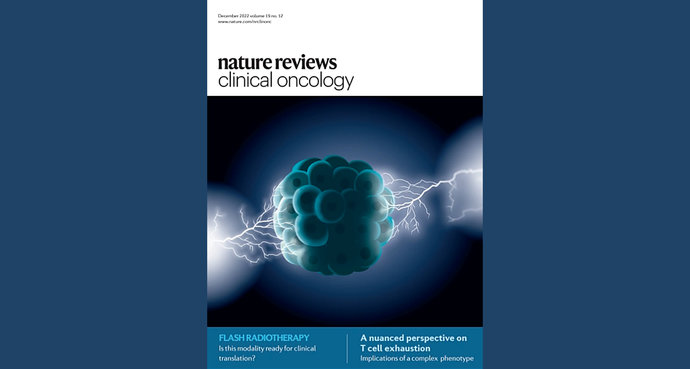
It could become a powerful weapon in the fight against cancer and open up completely new possibilities for tumor therapy with charged particles. FLASH irradiation – the application of an ultra-high radiation dose in a very short time – is in strong focus worldwide and is being advanced with high expertise at GSI and FAIR. FLASH clinical implementation is one of the top 10 Breakthroughs of the Year 2022 according to “Physics Word”. In its December issue, the world’s leading high-impact journal…
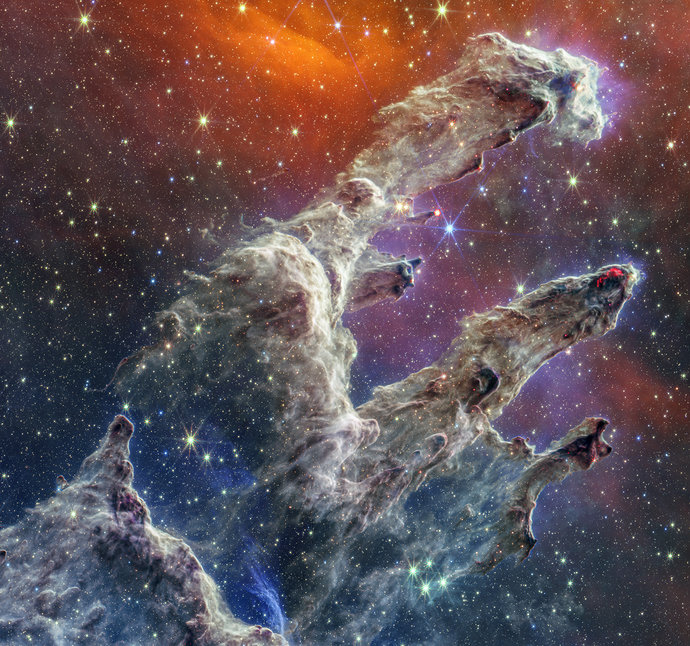
The lecture program of the series “Wissenschaft für Alle” by GSI and FAIR will continue in the first half of 2023. This time, the lectures will be about the limits of physics — both about exploring them and going beyond them. Interested parties can either attend the event in the lecture hall of GSI/FAIR following a registration or dial into the broadcast of the event via video conference using an internet-enabled device such as a laptop, cell phone or tablet. The program will begin ...
The Facility for Antiproton and Ion Research (FAIR) congratulates our colleagues at the National Ignition Facility for the breakthrough in Inertial Confinement Fusion research.


