


Millions in funding for ultra-precise mass measurements of heavy, highly charged ions: Dr. Rima Schüssler heads a Young Investigator Group
09.11.2026 |
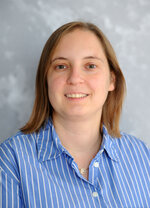
Since this year, Dr. Rima Schüssler has been leading a new Helmholtz Investigator Group (HIG) at the Helmholtz Institute Jena (HI Jena), an institute of the GSI Helmholtzzentrum für Schwerionenforschung located on the campus of Friedrich Schiller University in Jena. The team will perform high-precisison mass measurements on heavy, highly charged ions (HCIs) with the goal of testing quantum electrodynamics (QED)—and thus the Standard Model of particle physics—in strong fields with unprecedented accuracy. The Helmholtz Association is funding the group with one million euros over five years. It is the fourth early-career research group to be established at GSI/FAIR in recent years—a sign of the special importance and excellence of early-career support at GSI and FAIR.
High-precision mass measurements of highly charged ions—the focus of Dr. Rima Schüssler’s new research group—make valuable contributions to a wide range of fields in physics, such as determining the mass of neutrinos, searching for physics beyond the Standard Model, and testing Einstein’s equivalence principle (E=mc²). Such precise measurements can only be performed using individual ions in a Penning trap. In this process, the ion’s motional frequency is measured in strong magnetic fields, which depends on its mass. To date, the application of this method has been limited to ions with intermediate mass or charge states.
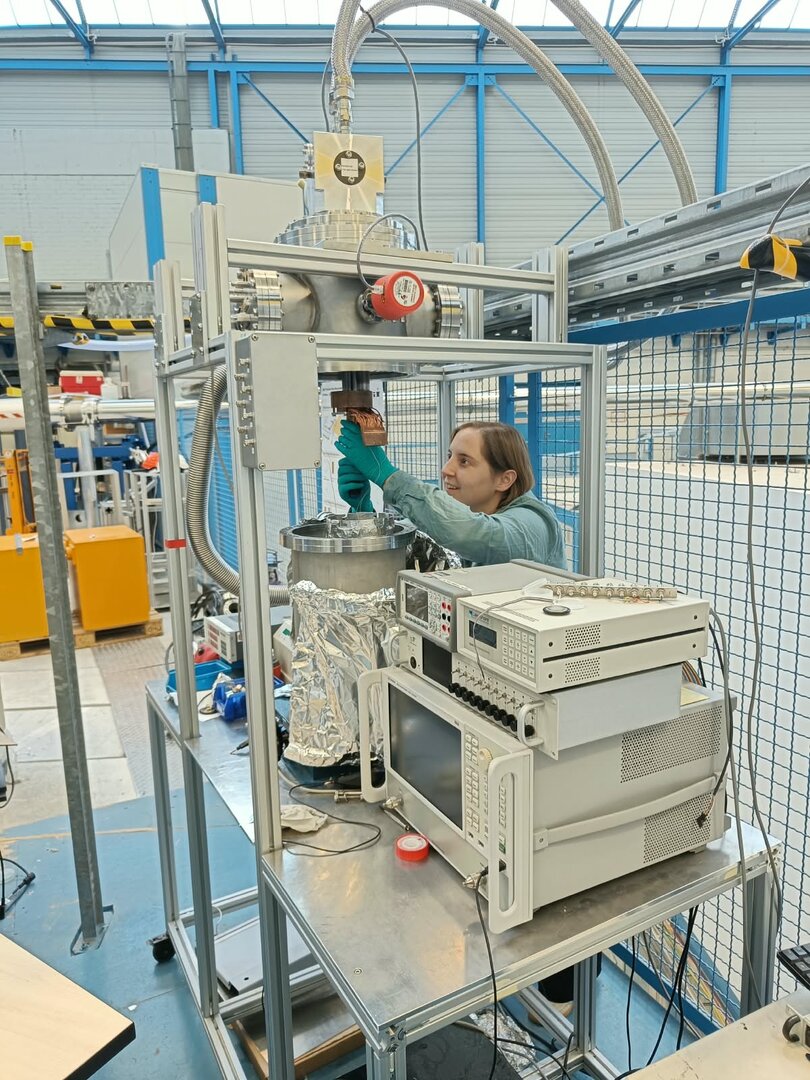
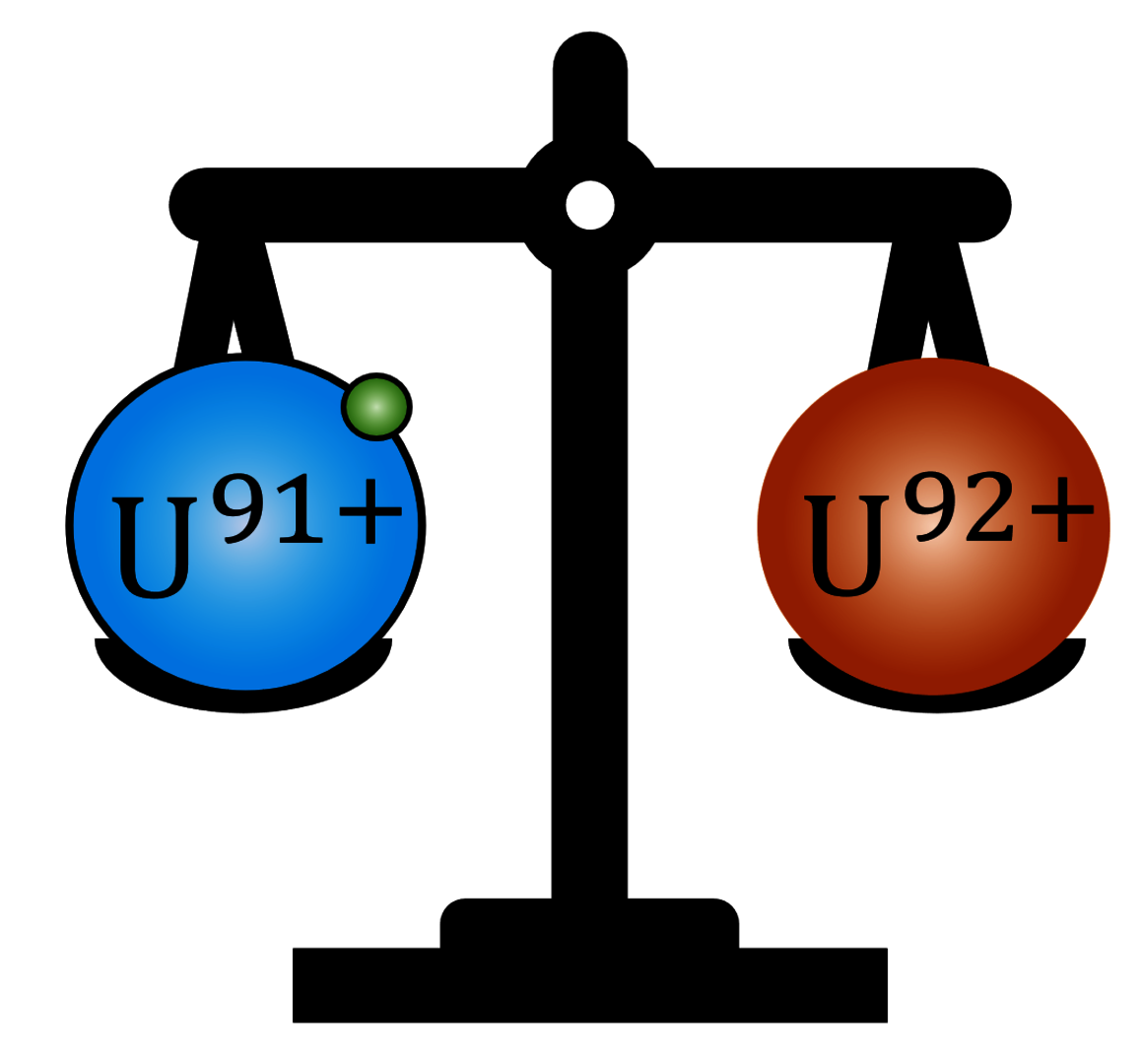
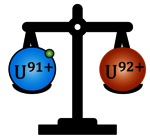
The early-career research group therefore plans to set up a Penning trap mass spectrometer at the HITRAP facility at GSI/FAIR. HITRAP is a facility unique in the world that decelerates heavy ions from the accelerator—regardless of their charge state—to the point where they can be trapped. The combination of ions from HITRAP with high-precision mass measurements offers a unique opportunity to study quantum electrodynamics in strong fields. In this process, the binding energy of the electrons is determined through a mass measurement.
With a relative uncertainty of less than 10-11, the planned measurements will allow these electron binding energies to be determined with an accuracy of less than one electronvolt—even for the heaviest ions. In addition, a mass measurement offers a completely complementary approach to tests of QED using X-ray measurements, such as those already conducted at the ESR storage ring at GSI/FAIR, thereby allowing systematics in both approaches to be verified.
The proposed state-of-the-art Penning trap system with multiple traps makes it possible to store and measure various highly charged ions simultaneously. The ions come either directly from the HITRAP facility at GSI/FAIR for the measurement of the heaviest HCIs in the highest charge states, or from an offline ion source that supplies medium-mass or medium-charge HCIs. To store the ions for hours or even days, the traps are cooled to cryogenic temperatures of just a few Kelvin.
During the five-year duration of the HIG, mass measurements will initially be conducted using the offline ion source to commission the experiment. For the final year, binding energy measurements using ions from the accelerator facility are planned.
Although HITRAP will be used as an interim injector until 2028 as the project PARTIH for the international accelerator center FAIR currently under construction at GSI, the facility is afterwards to be rebuilt in its original form as HITRAP and will continue the research program using the beam from the GSI accelerator complex.
“The new penning trap setup at HITRAP offers a unique opportunity to extend the application of high-precision mass measurements to the heaviest ions in the highest charge states. We look forward to using our measurements not only to test QED but also to further advance precision physics at HITRAP,” says Dr. Rima Schüssler.
Professor Thomas Stöhlker, director of the Helmholtz Institute Jena and head of the research division for Atomic, Quantum and Fundamental Physics at GSI/FAIR, emphasizes: “The high-precision mass measurements of highly charged ions, made possible by HITRAP, address fundamental questions about our universe. By putting quantum electrodynamics to the test with unprecedented precision, the team is making a decisive contribution to verifying the Standard Model of particle physics and strengthening our leading international position in basic research.”
Professor Thomas Nilsson, the Scientific Managing Director of GSI and FAIR, offers his congratulations: “The approval of this million grant is a great success and a well-deserved honor for Dr. Rima Schüssler. With her expertise, she has presented a forward-looking concept to push the boundaries of what can be measured. It is a crucial task for GSI/FAIR to ensure scientific excellence through targeted support for early-career researchers and to provide optimal support to talented top researchers like Dr. Rima Schüssler.”
With Dr. Rima Schüssler’s new HIG, GSI/FAIR is further expanding its role as a talent factory for the physics of tomorrow. In addition to her group, there is another Helmholtz Junior Research Group led by Jun.-Prof. Dr. Peter Micke at HI Jena, which aims to conduct precision measurements at HITRAP (started in 2023). Furthermore, in the field of fusion research using high-power lasers, the two early-career research groups led by Dr. Jonas Ohland (2025) and Dr. Yannik Zobus (2026)—both funded by the Federal Ministry of Research, Technology, and Space—are successfully pursuing their research priorities. (BP)
About Dr. Rima Schüssler
Dr. Rima Schüssler is an internationally recognized expert in precision mass spectrometry using Penning traps, with experience in cryogenic technology, high vacuum, detection systems, and data analysis. During her doctoral studies at MPIK Heidelberg (Professor Klaus Blaum’s group), she made a significant contribution to the development of the PENTATRAP Penning trap mass spectrometer and detected metastable electronic states in highly charged ions—a finding that was published in *Nature* and opened up new perspectives for optical clocks in HCIs. After completing her Ph.D., she conducted research at the University of Amsterdam on quantum computing with trapped ions in Paul traps. She maintains close ties with groups in Heidelberg, Darmstadt, Amsterdam, and Paris, among others, and is a member of the ECHo (neutrino mass) and SPARC/APPA (precision research at GSI/FAIR) collaborations, as well as the organizing committee of the European Conference on Trapped Ions (ECTI 2025).
About the Helmholtz Investigator Groups (HIG)
With the HIGs, the Helmholtz Association supports outstanding postdocs and offers them the opportunity to establish their own research groups. Selection is carried out by an international panel of reviewers.


