


3D gold nanowire networks replicate nature

11.09.2025 |
A research team led by Professor María Eugenia Toimil-Molares, head of the department “Materials Research” at GSI/FAIR and professor at the Technical University of Darmstadt, has developed innovative surfaces made of gold nanowires whose wetting behavior can be specifically controlled. These materials, fabricated by electrodeposition and ion-track nanotechnology, open up exciting possibilities for applications in microfluidic devices, liquid transport systems, and sensor technologies. The findings have been published in the journal Small.
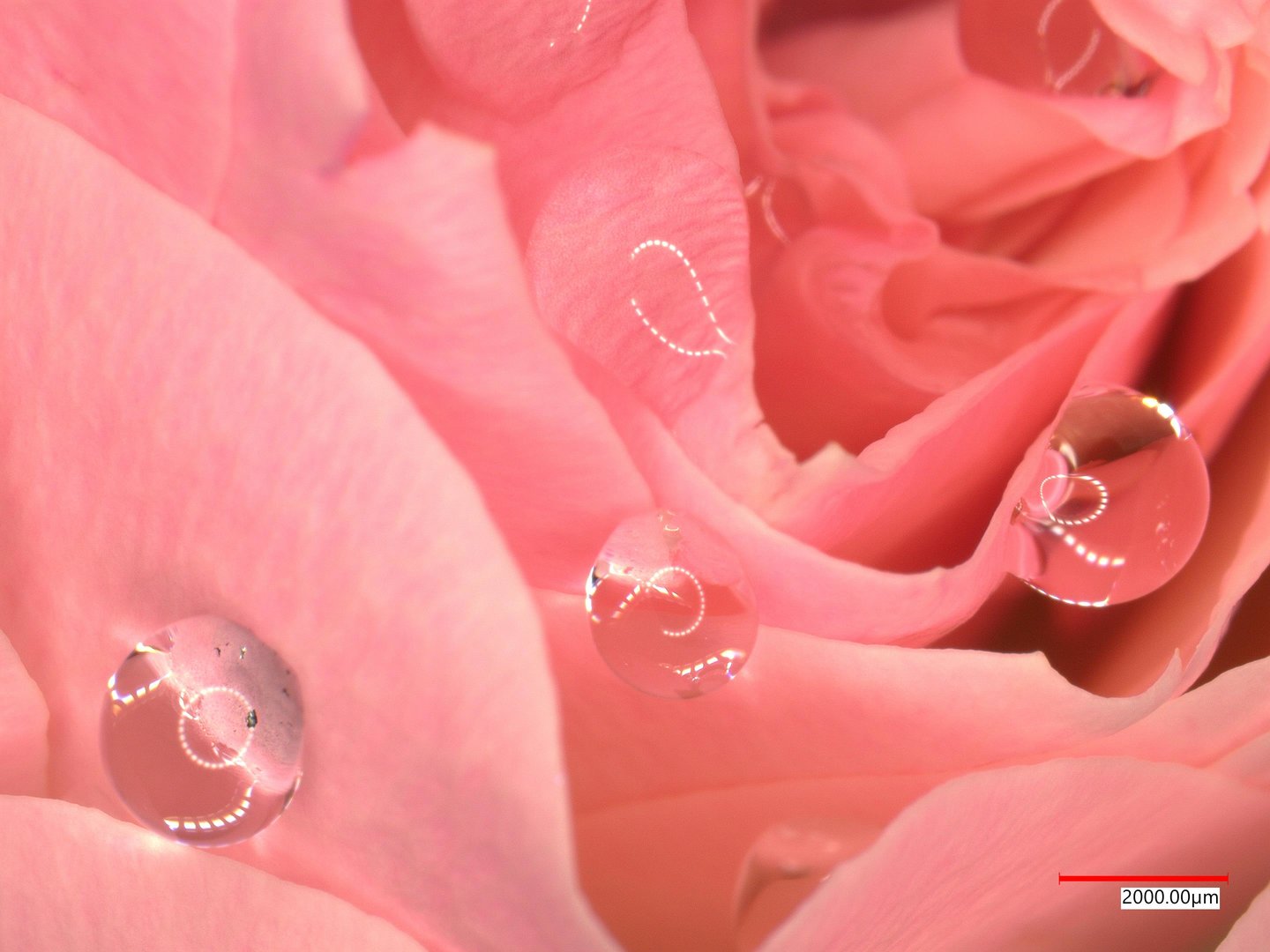
When it comes to designing smart, water-repellent surfaces, nature has always been a powerful source of inspiration. The lotus leaf, for example, repels water so efficiently that water droplets roll right off, a phenomenon known as the lotus effect. In contrast, rose petals also repel water, but with high adhesion, therefore holding droplets firmly in place on the surface — this is referred to as the rose-petal effect. This behavior arises from special and complex surface structures often with hierarchical roughness at both the micro- and the nanoscale.
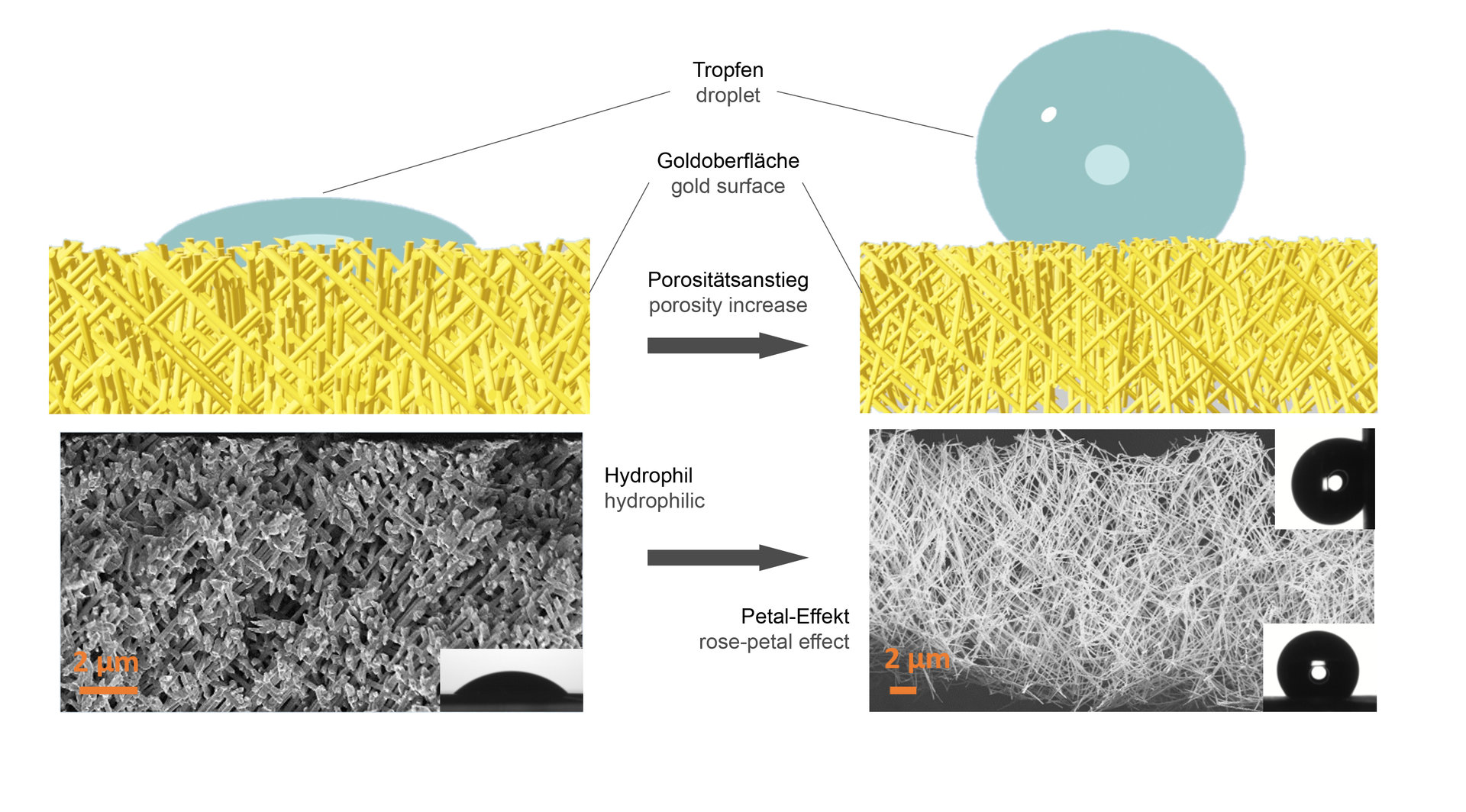
In this new study, the researchers engineered freestanding networks of interconnected gold nanowires with tunable porosity ranging from just 20 up to 98 percent. Using contact angle measurements, they demonstrated how these nanostructured porous films can be designed to exhibit a wide range of wetting behaviors, from superhydrophilic to hydrophobic. At high porosities, the films mimic the rose petal effect, firmly holding water droplets, even when flipped upside down. Importantly, the chemical stability of gold ensures that these functional properties remain intact over time, making them ideal for applications requiring long-term functionality of the material.
“Potential applications span all fields where controlling surface wetting is crucial —from microfluidics and self-cleaning surfaces to energy-efficient condensation systems,” explains Dr. Mohan Li, first author of the publication, who explored 3D gold nanowire networks as part of her recently completed PhD thesis.
In the GSI/FAIR Materials Research department, biomimetics and advanced nanotechnology are combined to replicate nature’s designs and engineer novel functional nanostructures, including 3D nanowire networks and nano channel-based sensors. The present work was conducted in collaboration with the Institute for Nano- and Microfluidics of the Technical University Darmstadt. (CP)


