


From the space station to the research laboratory: Astronauts visit GSI and FAIR
08.09.2025 |
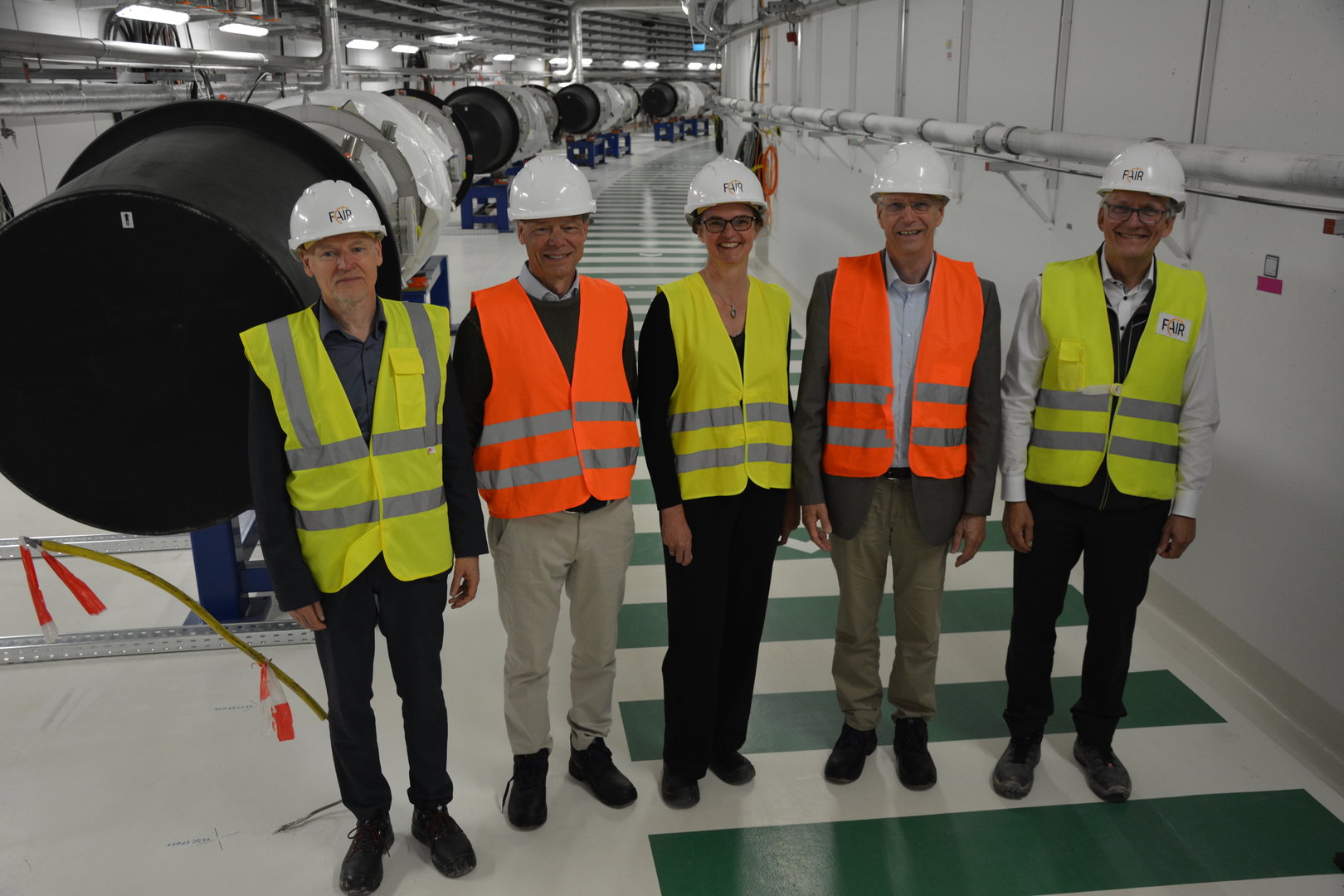
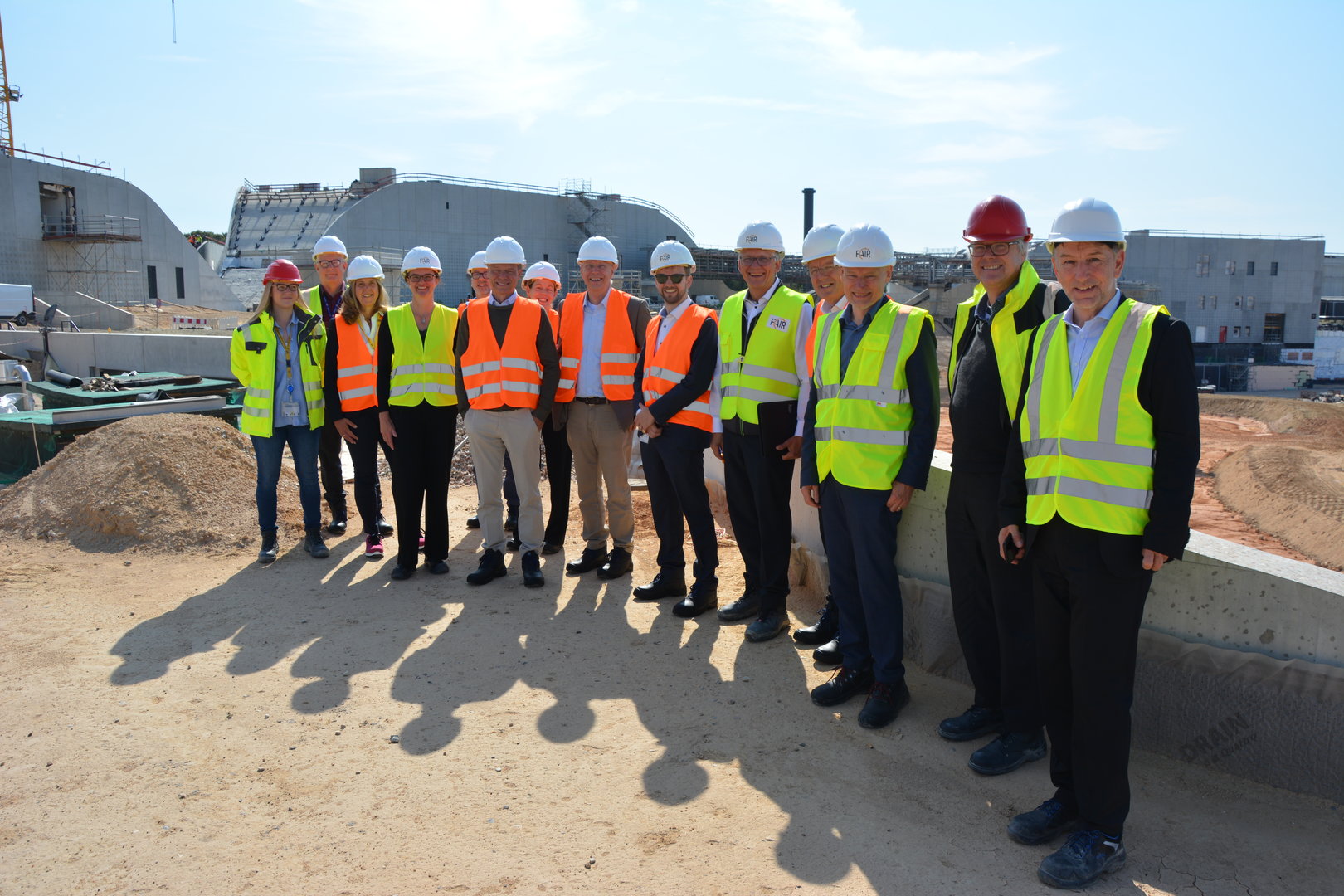
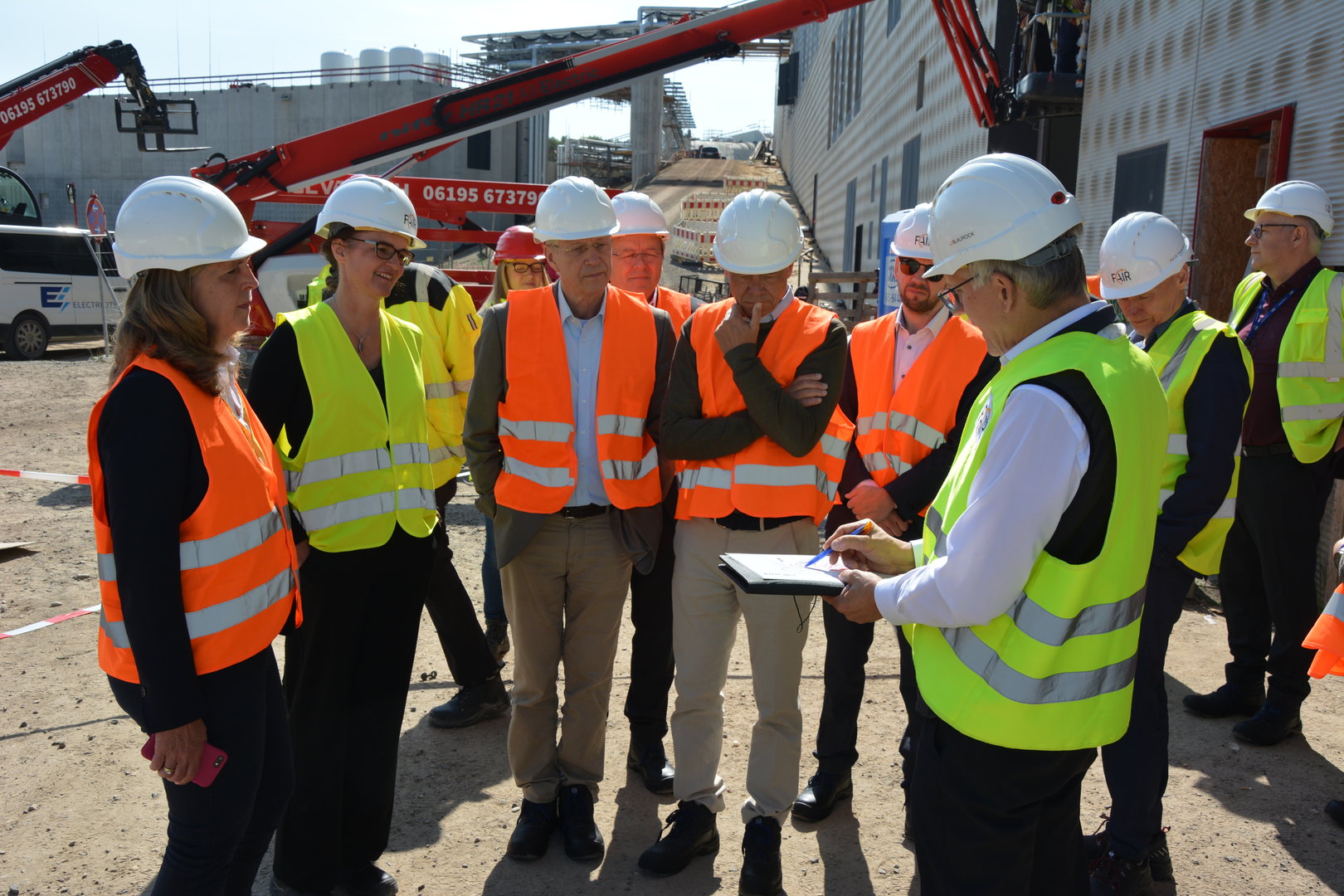
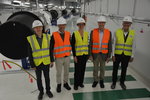
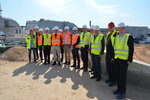
They already saw Earth from 400 kilometers above in space – now two astronauts, together with international space experts, visited the accelerator facilities of GSI and FAIR, where scientists explore the universe in the laboratory. During their visit to the GSI Helmholtzzentrum für Schwerionenforschung and the international accelerator center FAIR currently under construction here, they were welcomed by the management and scientists from GSI/FAIR. They had the possibility to gain exclusive insights into one of the world’s leading research infrastructures, which provides answers to the fundamental questions of the universe.
Dr. Thomas Reiter, ESA astronaut from Germany and former ESA-Director for Satellite Operation and Human Spaceflight, and Professor Christer Fuglesang, ESA astronaut from Sweden and director of the KTH Space Center participated in the visit. Professor Johann-Dietrich Wörner, former ESA Director General and Space coordinator of the Hessian state government, and Dr. Piers Jiggens, Science Lead of Radiation at ESA, were also among the guests. The guests were welcomed by Professor Thomas Nilsson, Scientific Managing Director of GSI and FAIR, Dr. Katharina Stummeyer, Administrative Managing Director of GSI and FAIR, and Jörg Blaurock, Technical Managing Director of GSI and FAIR. Many leading experts from GSI/FAIR’s departments also participated.
Current and future FAIR research is highly relevant to space exploration. For years, there has been close cooperation between the European Space Agency (ESA) and GSI/FAIR in the field of cosmic radiation. The existing accelerator facility at GSI/FAIR in Darmstadt is the only one in Europe capable of producing all ion beams found in the solar system – from hydrogen, the lightest, to uranium, the heaviest.
Professor Thomas Nilsson gave an insight into the future: “FAIR opens up a new range of possibilities, enabling experiments with an even broader spectrum of particle energies and intensities. In the future, our facilities will be able to simulate the composition of cosmic rays like no other facility in the world, setting new standards. We are delighted to welcome our guests, whose visit underscores our close ties to space research.”
Research into cosmic radiation and its effects on humans, electronics and materials is crucial for future-oriented space travel, ensuring that astronauts and satellites are optimally protected during the exploration of our solar system. Moreover, the research provides valuable insights into the risks of radiation exposure on Earth.
Dr. Thomas Reiter said, “I am impressed by the perspectives that the cooperation between GSI/FAIR and ESA opens up for space travel, for example through a special simulator for cosmic radiation, the GCR simulator. FAIR also offers unique research conditions that are highly attractive to industry partners involved in space travel." Beamtime at GSI/FAIR is already being used today by interested parties from industry through individual beamtime offers.
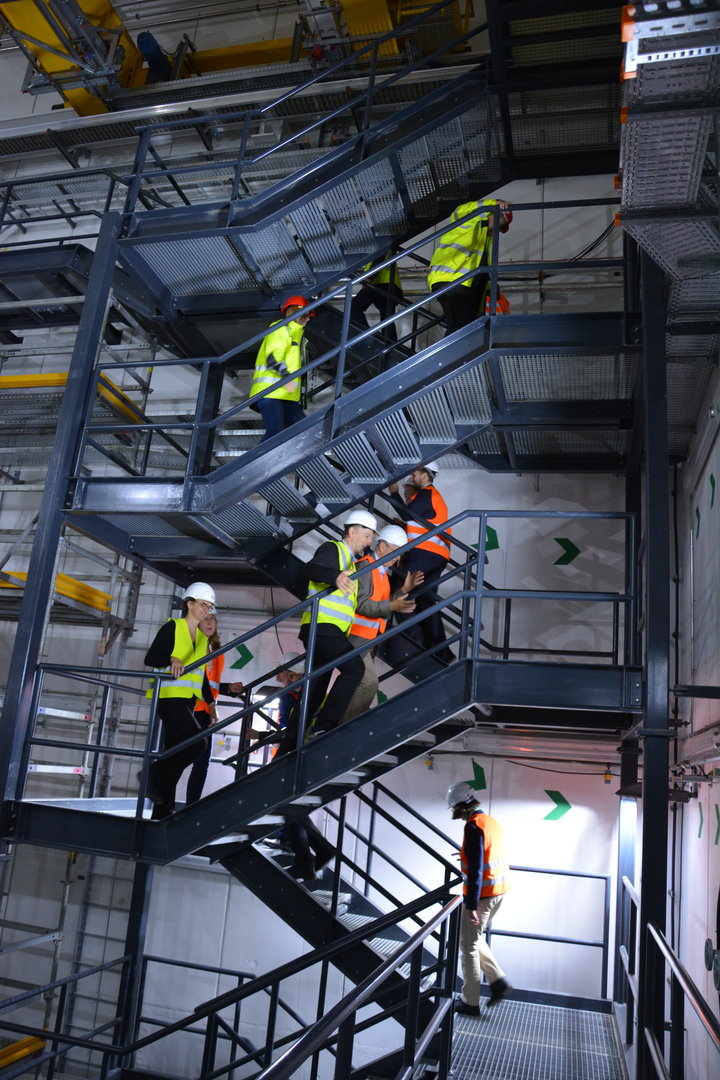
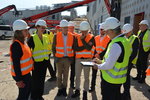
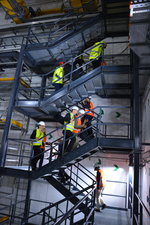
Following an introductory presentation, the guests were given an extensive tour program on the FAIR construction site. Work on installing high-tech components in the buildings is in full progress, and most of it is now complete. The visitors were able to see the underground FAIR accelerator ring, where many high-tech components have already been installed, as well as the future CBM experimental hall, which also will be used for space radiation experiments. Further stops were the transfer building, the central hub for beam guidance and distribution, as well as the Super-FRS experimental halls and the NUSTAR facilities for future experiments with exotic nuclei, which will allow the investigation of stellar events, for example.
The guests were visiting Darmstadt for the “ESA FAIR Space Radiation Summer School 2025,” where they contributed to the program as speakers. The joint summer school organized by ESA and GSI/FAIR is one of the leading training programs in the field of radiation research, bringing together young scientists from all over the world in Darmstadt to address the challenges of cosmic radiation. The two-week event, which attracts high-profile speakers every year, is one of several projects within the GSI/FAIR-ESA cooperation agreement. The agreement was concluded in 2018 and was based on years of highly successful and reliable cooperation between ESA and GSI in many research projects. (BP)


