


ESA-FAIR Summer School 2025: Renowned program for international young talents in the field of cosmic radiation
02.09.2025 |
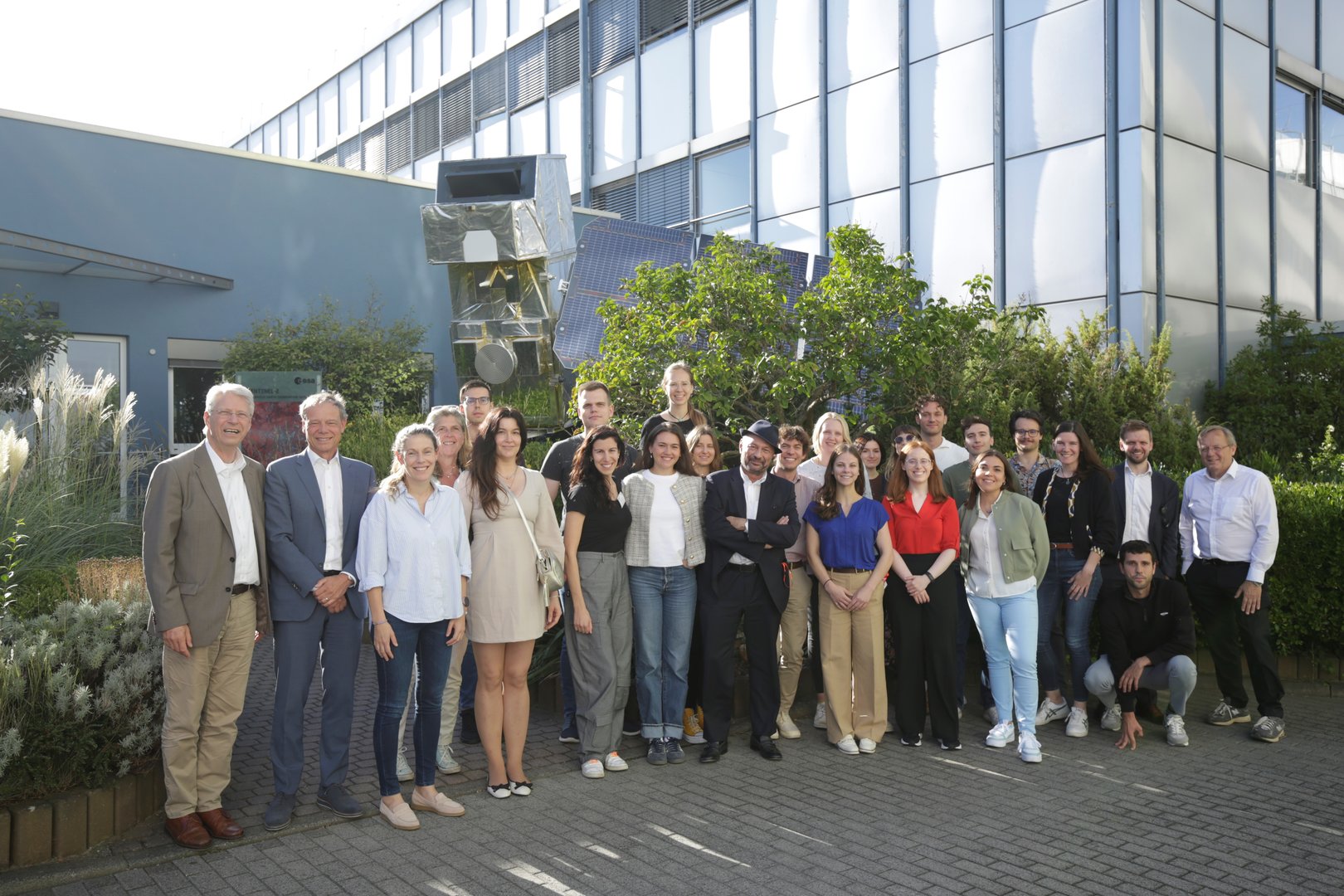
A new round started for the ESA-FAIR Space Radiation Summer School 2025, one of the leading training programs in the field of radiation research. The renowned program brings together young scientists from all over the world to spend two weeks intensively exploring the challenges of cosmic radiation – a topic that is crucial for the future of space travel. The first-class summer school for radiation research is jointly organized by the European Space Agency (ESA) and the international accelerator center FAIR, currently being built at the GSI Helmholtzzentrum für Schwerionenforschung.
This year, 16 young researchers from 11 countries, including Canada and several European countries, are taking part. They can look forward to a unique learning environment that perfectly combines scientific excellence, practical application, and international cooperation. The aim is to train students in the fundamentals of heavy ion biophysics for terrestrial and space applications, for example in the areas of detection, monitoring, and protection from space radiation. Research into cosmic radiation and its effects on humans, electronics, and materials is substantial for pioneering space travel.
The main topics of this year’s Summer School include space radiation activities at ESA, space radiation physics and biology, applied physics at GSI/FAIR, particle accelerators, and particle therapy. In a unique combination of lectures and practical workshops, participants can deepen their knowledge of radiation research. The two-week summer school will take place at both the ESA Satellite Control Center ESOC and the GSI/FAIR campus in Darmstadt. The aim is not only to provide participants with specialist knowledge, but also to actively involve them in cutting-edge international research.
The scientifically outstanding program was opened by Dr. Piers Jiggens, Science Lead of Radiation at ESA, and Professor Marco Durante, Head of GSI’s Biophysics Department. Participants will benefit from lectures by leading experts, including ESA astronauts Dr. Thomas Reiter from Germany and Dr. Christer Fuglesang from Sweden, as well as former ESA Director General Professor Johann-Dietrich Wörner. Highlights include an excursion to ESA’s European Astronaut Center in Cologne, insights into ESA missions, laboratory visits, and hands-on workshops.
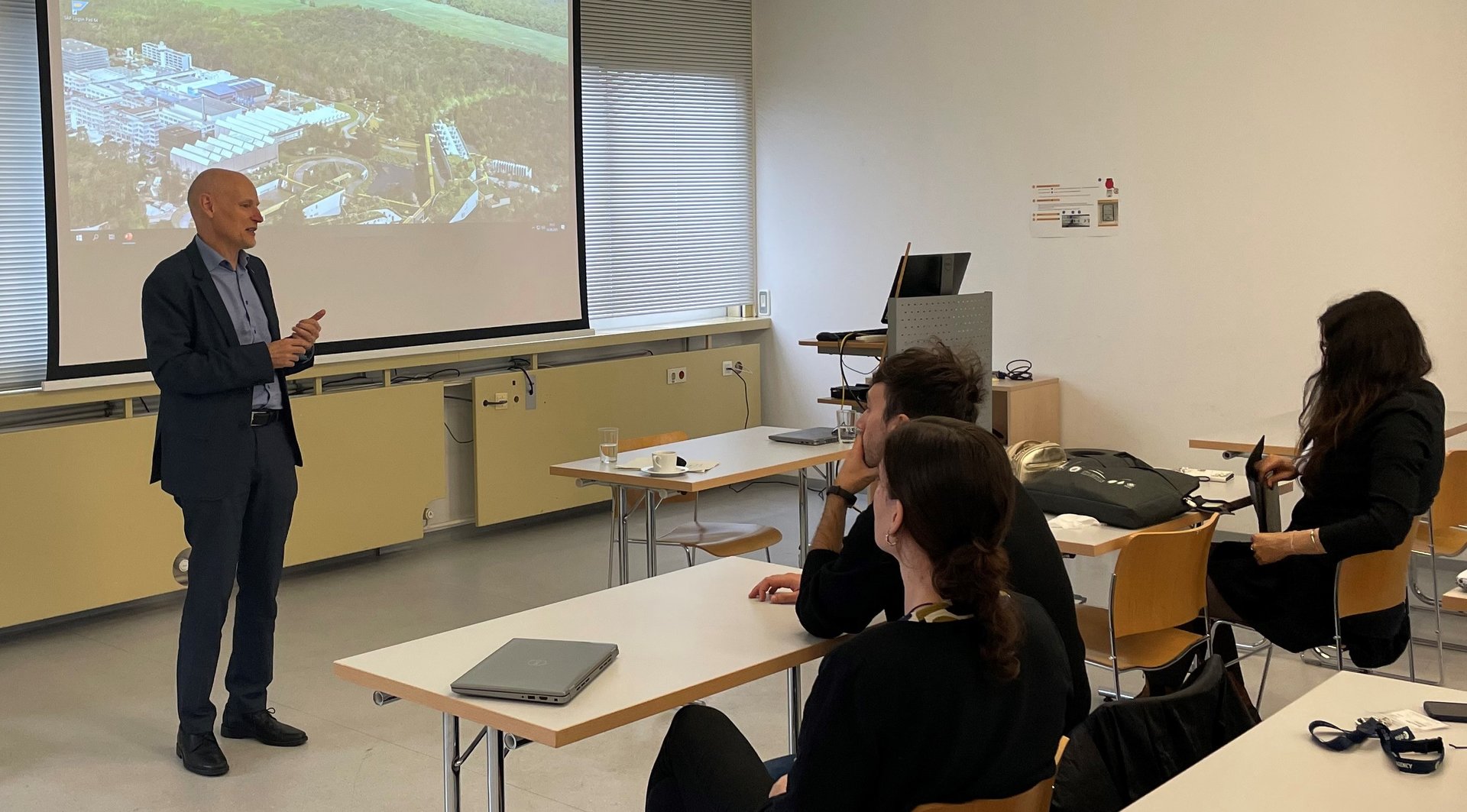
During the first week, the focus was on activities at ESA's European Space Operations Center (ESOC). During the second week, the groups switched to the GSI/FAIR campus, where they were welcomed by Professor Thomas Nilsson, Scientific Managing Director of GSI/FAIR. Subsequently, Dr. Radek Pleskac gave an insight into the FAIR project.
In interdisciplinary teams, participants develop their own experiment ideas during the annual summer school and have the opportunity to participate in laboratory activities simulating cosmic radiation. Particular attention is paid to the development of experimental ideas as part of the ESA-IBER program, which deals with the biological effects of space radiation. The program enables research groups to use GSI’s accelerator facilities for their experiments.
The ESA-FAIR Space Radiation Summer School is the result of the close cooperation between ESA and FAIR on joint cosmic radiation research and one of several projects within the GSI/FAIR-ESA cooperation agreement. The geographical proximity of ESA and GSI/FAIR in Darmstadt offers ideal conditions for a strong regional science cluster in one of the key research fields of the future. (BP)


