


An international research team has achieved an important milestone for astrophysics at GSI/FAIR in Darmstadt: In the CRYRING@ESR storage ring, scientists were able to measure nuclear reactions at extremely low energies for the first time, mirroring the conditions inside stars. This novel experimental approach lays the foundation for decoding the formation of elements in the universe with even greater precision in the future.
![[Translate to English:]](/fileadmin/_processed_/4/f/csm_DSC_7327-a_ab3b041875.jpg "[Translate to English:]")
Girls’Day at GSI/FAIR was again a huge success this year. Sixty-nine schoolgirls aged eleven to seventeen participated and explored the international research center, the accelerator facilities and experiments, as well as the technical infrastructure. Girls’Day is a nationwide event designed to encourage girls to learn about careers where women have traditionally been underrepresented.
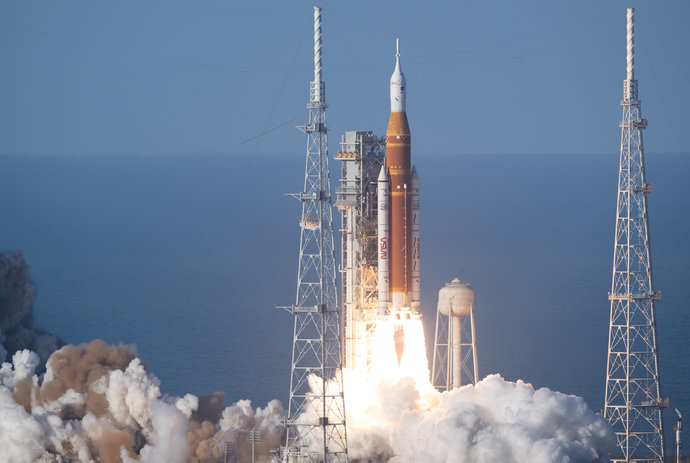
The GSI Helmholtzzentrum für Schwerionenforschung and the international accelerator facility FAIR have made an important contribution to the success of the Artemis II Moon mission. A camera specially developed for use in space was successfully tested in advance under realistic conditions at the GSI and FAIR particle accelerator. The camera — a specially modified model of the Nikon Z9 — was subjected to extensive radiation testing by NASA at the GSI/FAIR particle accelerator in March 2025. During…
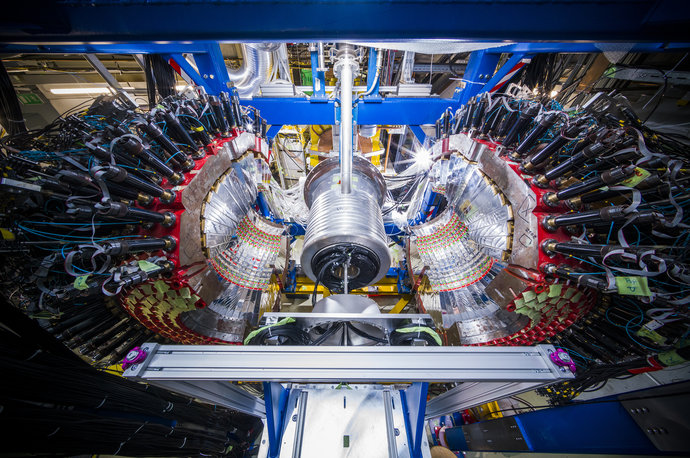
An international research team has found evidence of the existence of an exotic atomic nucleus state in an experiment at the GSI/FAIR research center in Darmstadt. Although such a state has long been predicted theoretically, it has never been observed before. The system consists of an atomic nucleus of the carbon isotope ¹¹C and an η′ meson (etaprime meson) — a short-lived particle composed of a quark and an antiquark. This system is bound exclusively by the strong interaction, i.e., the force…
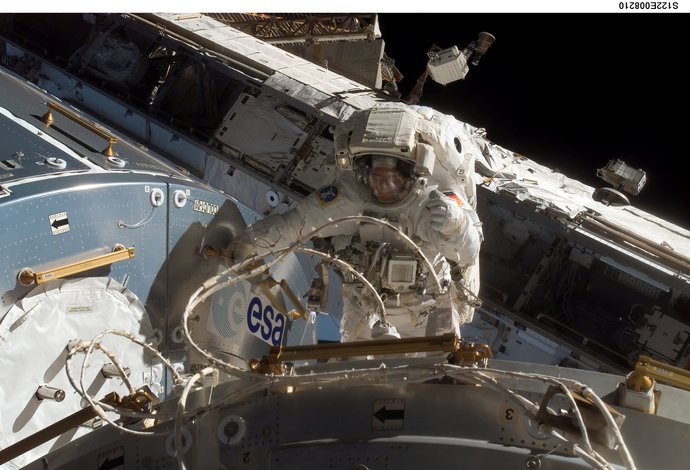
Cosmic rays are one of the greatest challenges for space travel and pose a considerable risk to humans and materials. For the first time on European soil, an international research team in collaboration with the European Space Agency (ESA) has succeeded in providing a simulator for Galactic Cosmic Rays at the GSI/FAIR accelerator facility in Darmstadt, Germany. The results have been published in two articles in the journal “Life Sciences in Space Research.”
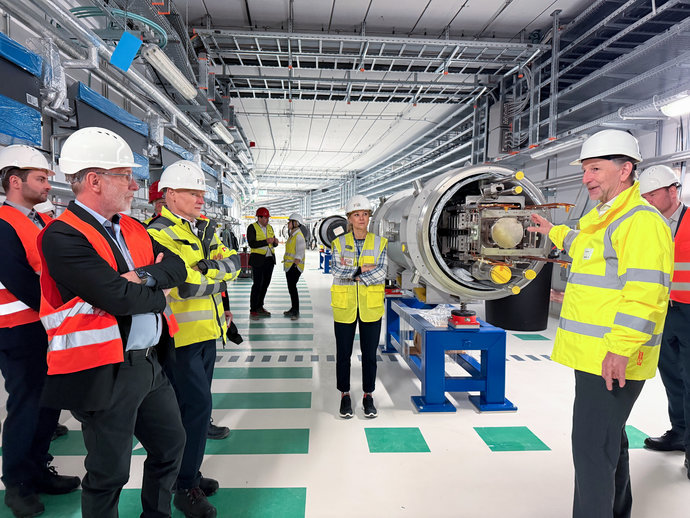
On 10 March 2026, Professor Martin Keller, President of the Helmholtz Association, visited GSI and FAIR in Darmstadt on the occasion of taking office. The purpose of the visit was to gain in-depth insight into the structures and research activities at the site, and to engage directly with the people driving them – especially staff members and early-career researchers. The guest of honour at the event was Hessian Minister of Science and Research, Art and Culture, Timon Gremmels.
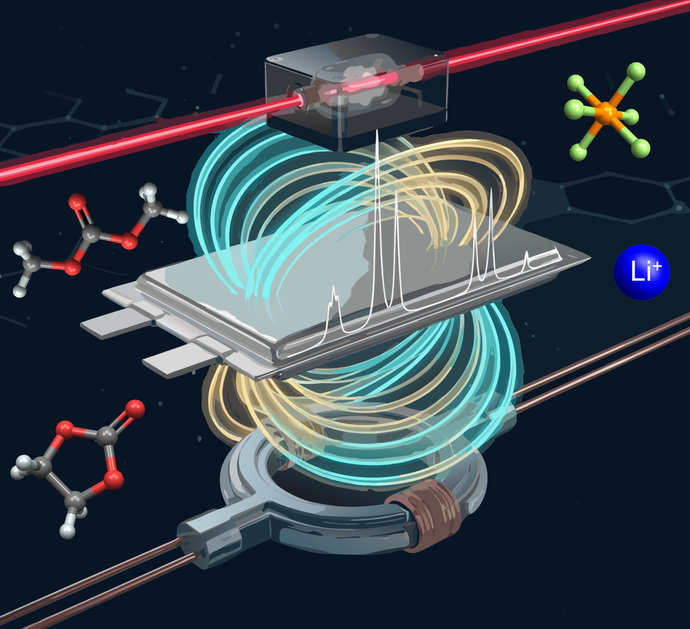
Rechargeable batteries are everywhere — from portable electronic devices and electric vehicles to renewable energy storage. Battery failures are often due to the loss or chemical degradation of the electrolyte. An international research team involving the Helmholtz Institute Mainz, a branch of the GSI Helmholtzzentrum für Schwerionenforschung in Darmstadt, Johannes Gutenberg University Mainz, Physikalisch-Technische Bundesanstalt in Berlin, and New York University has now addressed the question…
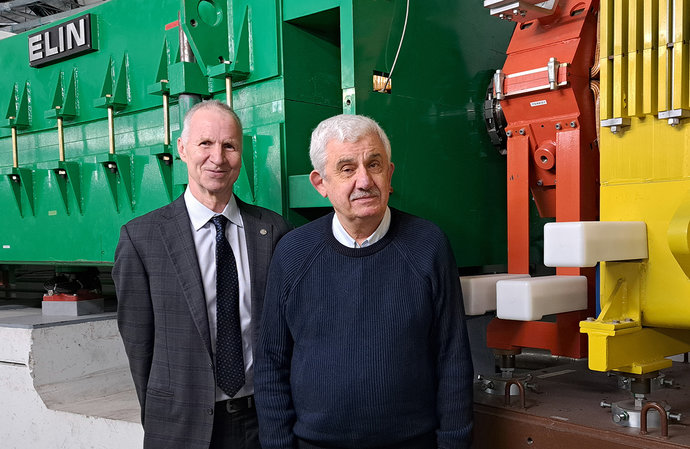
Chemical elements, new isotopes, tiny particles — the GSI Helmholtzzentrum für Schwerionenforschung in Darmstadt, Germany, is renowned for its discoveries, including a total of six superheavy elements. Now there is a new world record to report: The research center, where the international accelerator facility FAIR is currently being built, leads the world rankings in the discovery of nuclear isomers. The statistics were compiled by Professor Michael Thoennessen from Michigan State University,…
Following the fire at GSI on February 5, 2026, the GSI Supervisory Board held an extraordinary meeting on February 13 to assess the situation and discuss and decide on immediate measures. The focus is now on directly necessary repair and maintenance measures, alternative solutions for restoring research operations, the commissioning of FAIR, and bridging options for researchers who are dependent on short-term experimental operation at the accelerator.


